Category: On Demand

  • How to Reduce Video File Size for On Demand by IPSTUDIO™

    How to Reduce Video File Size for On Demand by IPSTUDIO™

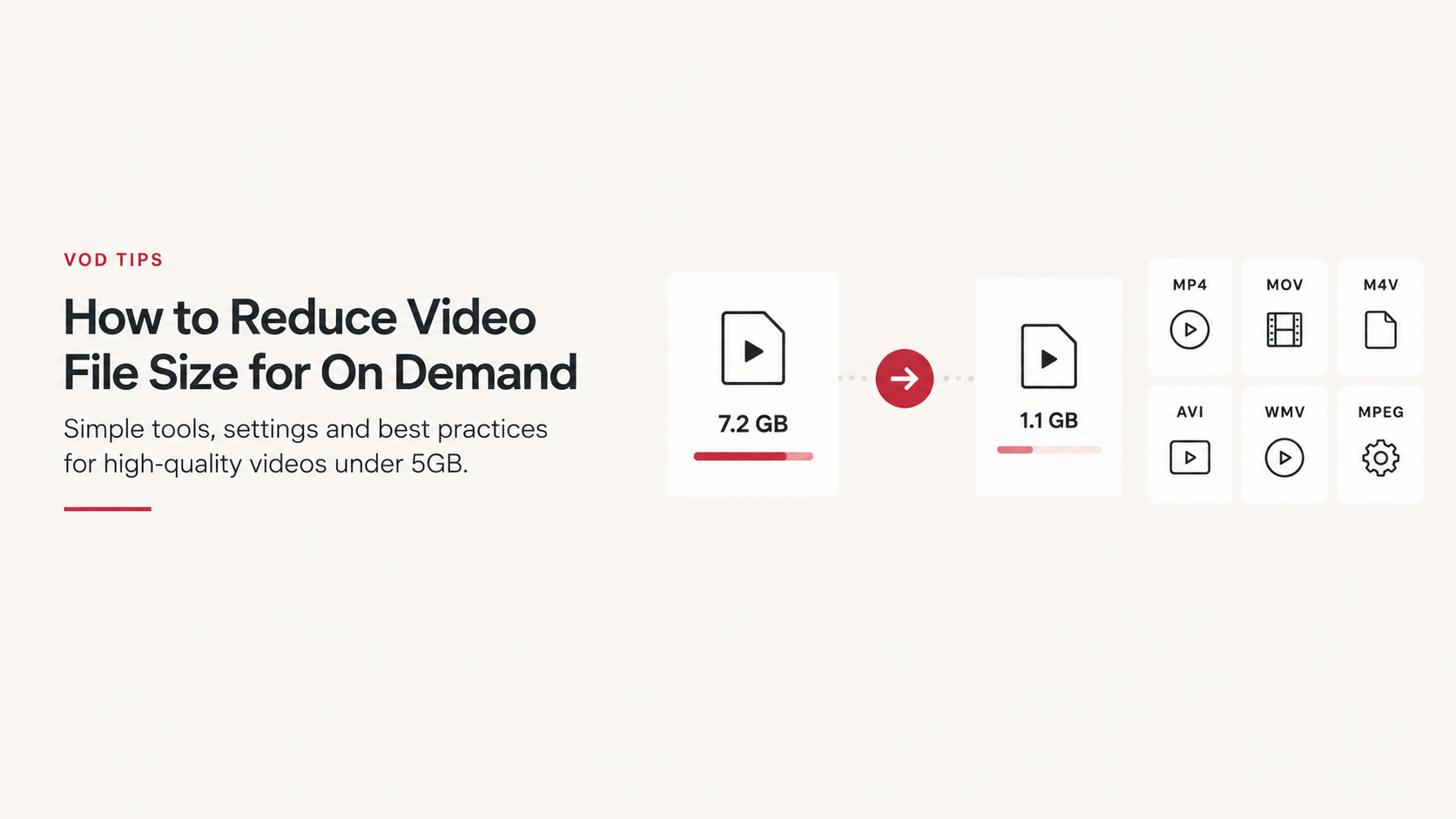
    When uploading videos to On Demand by IPSTUDIO™, each individual video file must be 5GB or smaller.

    If your video exceeds 5GB, don’t worry, you usually don’t need to re-record it. Reducing the resolution, bitrate, or using a more efficient video codec can significantly reduce the file size while maintaining excellent quality for streaming.

    This guide covers our recommended video settings, supported file formats, and several ways to reduce large video files before uploading.

    Recommended Video Settings

    For most fitness and on-demand video content, we recommend recording and exporting at:

    • Resolution: 1080p (1920 × 1080)
    • Frame rate: 30 FPS
    • Video codec: H.264
    • Audio codec: AAC
    • Preferred format: MP4
    • Maximum individual file size: 5GB

    1080p provides excellent quality for streaming without the much larger files created by 4K recording.

    If your camera or phone is currently recording in 4K or 60 FPS, changing the recording settings to 1080p at 30 FPS can substantially reduce the size of future recordings.

    Supported Video Formats

    On Demand by IPSTUDIO™ accepts most major standard video formats, including:

    • MP4
    • MOV / QuickTime
    • M4V
    • AVI
    • WMV
    • MPG / MPEG

    Other standard video formats and codecs may also be accepted. For the most consistent results, however, we recommend uploading an MP4 or MOV file encoded using H.264 video and AAC audio.

    H.264 is particularly well suited to web video because it provides a strong balance between visual quality, file size, compatibility, and processing time.

    Why Is My Video File So Large?

    Video file size is primarily determined by four things:

    Resolution: A 4K video contains approximately four times as many pixels as a 1080p video, which can result in substantially larger files.

    Frame rate: Recording at 60 FPS captures twice as many frames per second as 30 FPS. For most studio classes and fitness content, 30 FPS provides smooth playback without the additional file size of 60 FPS.

    Bitrate: Bitrate determines how much video data is stored for each second of footage. Higher bitrates generally mean higher quality—but also larger files.

    Codec: The codec determines how the video is compressed. Modern codecs such as H.264 and H.265/HEVC can dramatically reduce file size compared with lightly compressed or production-quality formats.

    Professional recording formats such as Apple ProRes can create particularly large files and generally should be converted to a streaming-friendly format before uploading.

    Option 1: Reduce File Size with HandBrake

    HandBrake is a free, open-source video compression tool available for Mac and Windows. It is our recommended option when you need more control over video compression.

    Recommended HandBrake Settings

    1. Open your video in HandBrake.
    2. Select the Fast 1080p30 preset as a starting point.
    3. Set the format to MP4.
    4. Set the resolution to 1920 × 1080.
    5. Select H.264 (x264) as the video encoder.
    6. Use 30 FPS or match the original frame rate if it is already 30 FPS or lower.
    7. Use a constant frame rate.
    8. Keep the audio encoded as AAC.
    9. Choose where you want the new file saved.
    10. Select Start Encode.

    Once processing is complete, check the new file size before uploading it to On Demand by IPSTUDIO™.

    Need an Even Smaller File?

    If the resulting file is still larger than 5GB, you have several options.

    First, increase HandBrake’s RF (Constant Quality) value slightly. A higher RF value creates a smaller file, although increasing it too far will reduce visual quality.

    You can also try H.265/HEVC, which can provide comparable visual quality at a smaller file size than H.264. H.265 generally takes longer to encode, however, and H.264 remains our preferred option when broad compatibility is the priority.

    Another option is reducing the video’s bitrate. For typical 1080p streaming video, you generally do not need the extremely high bitrates generated by cameras or production-quality exports.

    Option 2: Reduce File Size with QuickTime on Mac

    Mac users can also use QuickTime Player for a simple conversion.

    1. Open the video in QuickTime Player.
    2. Select File → Export As → 1080p.
    3. If available, choose either:
      • Greater Compatibility for H.264, or
      • Smaller File Size for HEVC/H.265.
    4. Choose a destination and save the new file.
    5. Check the resulting file size before uploading.

    QuickTime exports video as a .MOV file rather than an MP4, which is fine for upload.

    For most users, exporting a large 4K recording as 1080p is one of the easiest ways to dramatically reduce its size.

    Option 3: Re-Export from Your Video Editor

    If the video was edited in software such as Adobe Premiere Pro, Final Cut Pro, DaVinci Resolve, or iMovie, it is generally better to create a smaller export directly from the original project rather than compressing an already exported video.

    Look for settings similar to:

    Format: MP4
    Codec: H.264
    Resolution: 1920 × 1080
    Frame rate: 30 FPS or source frame rate
    Audio: AAC
    Scan: Progressive

    If your software offers variable bitrate (VBR), it can help allocate more data to complex scenes and less data to simple scenes, improving compression efficiency.

    Should I Upload 4K Video?

    For On Demand by IPSTUDIO™ content, 1080p is recommended.

    Unless you have a specific production requirement for 4K, recording directly in 1080p at 30 FPS simplifies your publishing workflow and helps prevent files from exceeding the 5GB upload limit.

    Tips for Keeping Future Videos Under 5GB

    The easiest way to deal with oversized files is to prevent them from becoming oversized in the first place.

    Before recording your next class:

    • Set your camera or phone to 1080p instead of 4K.
    • Use 30 FPS instead of 60 FPS unless higher frame rates are specifically needed.
    • Avoid recording in ProRes or other professional high-bitrate formats unless you plan to edit and compress the footage afterward.
    • Export finished videos using H.264 for a good balance of quality and file size.
    • Keep audio encoded as AAC.
    • Avoid repeatedly exporting and recompressing the same file, as each lossy re-encode can reduce quality.
    • Keep your original high-quality recording separately if you want to retain a master copy.

    What If My Video Is Still Over 5GB?

    If your finished video remains over the 5GB individual file limit, try the following in order:

    1. Export or convert the video to 1080p.
    2. Convert the video to H.264 MP4.
    3. Reduce the bitrate or increase the HandBrake RF value slightly.
    4. Use H.265/HEVC if additional compression is necessary.
    5. For unusually long recordings, consider dividing the content into multiple videos where appropriate.

    The goal isn’t to create the smallest possible file. It’s to find a good balance between video quality, upload size, processing time, and streaming performance.

    Our Recommended Setup

    For the majority of studios using On Demand by IPSTUDIO™, we recommend keeping things simple:

    Record: 1080p / 30 FPS
    Export: MP4 / H.264 / AAC
    Maximum file size: 5GB per video

    These settings provide high-quality video while keeping files manageable for uploading, processing, and streaming through On Demand by IPSTUDIO™.
  • Building Member Retention Through Weekly Content Releases

    Building Member Retention Through Weekly Content Releases

    Your on-demand library shouldn’t just attract members at launch. It should give them a reason to keep coming back.

    Retention is one of the most important metrics in boutique fitness.

    Studios spend significant time and money acquiring members, but long-term growth depends on keeping those members engaged.

    On-demand fitness can support that goal, particularly when studios treat content as an ongoing experience rather than a one-time library.

    The Problem With the Static Video Library

    A studio launches on-demand with 30 or 50 workouts.

    Members explore it.

    Then nothing changes.

    Over time, even a strong library can start to feel stale.

    Streaming platforms have conditioned consumers to expect new content. Fitness doesn’t need to match the volume of major entertainment platforms, but the same principle applies:

    New content creates a reason to return.

    Consistency Beats Volume

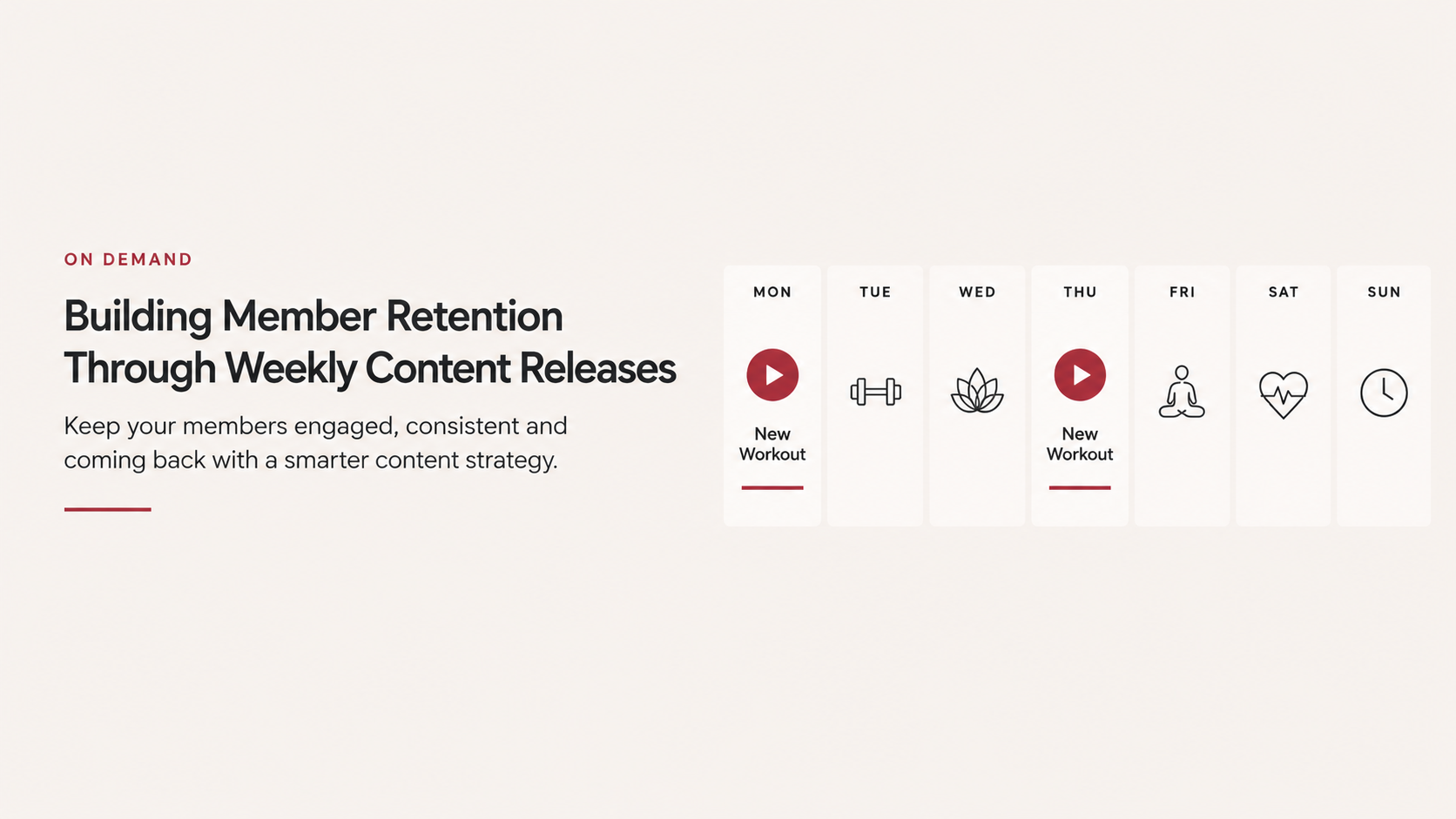
    You don’t necessarily need to publish five workouts every week.

    One meaningful release each week can establish a predictable rhythm.

    For example:

    Monday: New workout
    Wednesday: Highlight the workout on social
    Friday: Feature it in member communications

    Now one piece of content generates multiple member touchpoints throughout the week.

    Over a year, one weekly release also creates more than 50 additional pieces of fitness content.

    That’s a substantial library without an unsustainable production schedule.

    Create Content Around Member Behavior

    Your releases shouldn’t be random.

    Think about when members need additional support.

    January might focus on consistency.

    Summer might feature travel-friendly workouts.

    The holidays might emphasize shorter classes.

    Recovery content could follow demanding studio challenges.

    Beginner series can support new-member acquisition periods.

    This turns on-demand from an archive into an extension of your programming strategy.

    Use Series to Build Habits

    Individual workouts are useful. Series can be even more powerful.

    Consider:

    • 7-Day Core Series
    • 4-Week Strength Program
    • Beginner Foundations
    • Mobility Week
    • Instructor Spotlight
    • 20-Minute Workout Series

    Series give members a reason to continue to the next piece of content.

    Instead of asking, “What should I take today?” the member already has a next step.

    That reduces decision fatigue while creating another opportunity for consistent engagement.

    Bring Your Instructors Beyond the Studio

    Instructor relationships are one of boutique fitness’s strongest retention advantages.

    Members develop connections with the people who coach them.

    On-demand allows those relationships to continue outside scheduled class times.

    A member traveling for work can still train with their favorite instructor. Someone who missed class can stay connected from home. A new member can become familiar with instructors before walking into their first session.

    Digital content shouldn’t replace that human connection.

    It can extend it.

    Connect Digital and In-Studio Experiences

    The most effective strategy isn’t necessarily “in-person versus digital.”

    It’s connected fitness.

    A studio challenge can include an on-demand recovery workout.

    An instructor can recommend a digital mobility session after class.

    A new member can receive a beginner collection after joining.

    A member traveling for two weeks can continue participating remotely.

    The physical studio remains the center of the community while digital content fills the gaps between visits.

    Give Members Something to Look Forward To

    Retention is ultimately about maintaining value over time.

    Weekly content releases communicate something important:

    There’s always something new happening here.

    That doesn’t require a massive production team or hundreds of videos. It requires a sustainable publishing rhythm and content that reflects what members actually need.

    With On Demand by IPSTUDIO™, boutique fitness studios can extend their member experience beyond the studio and build a digital content strategy designed for ongoing engagement.

    Don’t just build a library.

    Build a reason to come back.

  • AI Search for Fitness Studios: How Members Are Finding Studios in a New Era of Search

    AI Search for Fitness Studios: How Members Are Finding Studios in a New Era of Search

    Google isn’t the only place prospective members are asking where to work out anymore.

    For years, fitness studio search strategy was relatively straightforward.

    Someone searched Google for:

    “Pilates near me.”

    “Best cycling studio in Las Vegas.”

    “Beginner Lagree classes.”

    Studios optimized their websites and local listings to appear in those results.

    That behavior isn’t disappearing, but a new discovery experience is emerging.

    Consumers can now ask AI assistants conversational questions such as:

    “What’s a good Pilates studio near me for beginners?”

    “Find me a strength-focused fitness studio with early morning classes.”

    “What’s the difference between these three Pilates studios?”

    Instead of receiving only a page of links, users may receive a synthesized answer.

    That changes how fitness brands should think about being discovered online.

    SEO Is Expanding Beyond Traditional Search

    Traditional SEO focuses heavily on helping search engines understand and rank pages.

    AI-powered discovery adds another consideration:

    Can machines clearly understand your business?

    Your website should make basic questions easy to answer:

    • What does your studio offer?
    • Where are you located?
    • Who is it for?
    • What class types do you offer?
    • What makes the experience different?
    • Who are your instructors?
    • How does pricing work?
    • How does someone get started?

    If this information is buried inside images, vague marketing language or disconnected booking platforms, understanding your business becomes harder for both people and machines.

    Clear Content Matters More Than Clever Content

    Boutique fitness branding often relies on short lifestyle-oriented phrases.

    “Find your fire.”

    “Become your strongest self.”

    “Movement reimagined.”

    Those phrases can reinforce a brand, but they don’t necessarily explain the business.

    A strong website needs both branding and clarity.

    For example:

    Less useful:
    “Discover a better you.”

    More useful:
    “Reformer Pilates classes for all experience levels in Downtown Las Vegas.”

    The second statement immediately provides useful context.

    Your website can still have personality. Just don’t make visitors )or search systems) guess what you actually do.

    Build Strong Class and Service Pages

    A single paragraph listing every service isn’t enough for many studios.

    Dedicated pages can clearly explain individual offerings such as:

    • Reformer Pilates
    • Lagree
    • Indoor Cycling
    • Barre
    • Yoga
    • Strength Training

    Each page creates an opportunity to explain:

    • What the class is
    • Who it’s designed for
    • What someone should expect
    • Where it’s available
    • How to get started

    This is useful for traditional search, AI discovery and most importantly prospective members.

    Location Pages Become Even More Important

    Multi-location fitness brands should give each studio a meaningful digital presence.

    A strong location page can include:

    • Address
    • Neighborhood or market
    • Class offerings
    • Schedule
    • Pricing
    • Amenities
    • Instructors
    • Contact information
    • Frequently asked questions

    Useful local information helps both members and search systems understand what makes each location relevant.

    Answer Real Member Questions

    AI search is conversational.

    Your website content should increasingly reflect the questions people actually ask.

    Examples include:

    • Is Pilates good for beginners?
    • What should I bring to my first class?
    • What’s the difference between Lagree and Pilates?
    • Do I need grip socks?
    • How early should I arrive?
    • Which membership is best if I attend twice per week?
    • Can beginners take this class?

    These questions can become:

    • FAQs
    • Blog posts
    • Class-page content
    • Getting-started guides
    • Location-specific information

    You’re not writing content for robots.

    You’re documenting the knowledge prospective members genuinely need.

    Keep Your Information Consistent

    AI-powered discovery can pull signals from across the web.

    That makes consistency important.

    Studios should regularly review information across their:

    • Website
    • Google Business Profile
    • Booking platform
    • Social profiles
    • Business directories

    Location names, addresses, services and other important details should agree wherever possible.

    Conflicting information creates confusion for members and machines alike.

    Build Authority Through Useful Content

    Studios have knowledge that generic fitness websites don’t.

    Your instructors understand movement.

    Your team understands your methodology.

    Your operators understand the local community.

    Turn that expertise into useful content.

    Instead of publishing articles solely because you want to “do SEO,” answer meaningful questions related to your business and expertise.

    Over time, that creates a stronger body of information around your brand.

    Don’t Abandon Traditional SEO

    AI search does not mean studios should suddenly stop caring about Google.

    The fundamentals still matter:

    • Fast websites
    • Mobile usability
    • Local SEO
    • Helpful content
    • Clear site architecture
    • Accurate business information
    • Strong location and service pages

    In many ways, preparing for AI discovery means getting these fundamentals right rather than chasing a completely new set of tricks.

    The Fitness Website Is Becoming a Source of Truth

    The role of the studio website is evolving.

    It isn’t only somewhere to send traffic after someone discovers your brand.

    It increasingly serves as the authoritative digital representation of your business for members, traditional search engines and emerging AI discovery experiences.

    That makes clear, structured and useful website content more valuable than ever.

    Fitness studios don’t need to predict exactly how AI search will evolve.

    They need to make sure that when someone (or something) asks what their studio is, what it offers and why someone should visit, the internet has a clear answer.

  • How to Plan Your First Month of On-Demand Content

    How to Plan Your First Month of On-Demand Content

    You don’t need hundreds of videos to launch an effective on-demand fitness experience. You need the right content, organized around how your members actually train.

    Launching an on-demand library can feel overwhelming. How many classes do you need? How long should they be? Which instructors should you feature? How often should you publish something new?

    For most boutique fitness studios, the best approach is to start focused.

    Your first month should give members enough variety to find something they want to take while establishing a sustainable rhythm for your team.

    Start With Your Members, Not Your Camera

    Before recording anything, think about why your members would use on-demand content.

    A member might want to:

    • Take a full class when they can’t make it to the studio
    • Fit a 15-minute workout into a busy day
    • Continue training while traveling
    • Add mobility or recovery to their routine
    • Revisit a favorite instructor
    • Try a class type before taking it in person

    Those use cases should shape your initial library.

    The goal isn’t simply to recreate your studio schedule online. Digital content gives you the opportunity to serve moments that your physical schedule can’t.

    Build a Balanced Starter Library

    Instead of recording 20 versions of the same workout, create variety.

    For example, an initial library might include:

    Full-length classes
    Give members an experience similar to attending the studio.

    Express workouts
    Create 10–30 minute options for busy days.

    Beginner content
    Help newer members understand movements, equipment and class formats.

    Targeted workouts
    Think core, upper body, lower body, mobility or recovery.

    Instructor variety
    Feature different personalities and teaching styles from your studio.

    A smaller, thoughtfully organized library will usually be more useful than a large collection members struggle to navigate.

    Plan Your First Four Weeks

    You don’t need to publish everything on day one.

    Consider launching with a core collection and then adding content weekly.

    Week 1: Establish the experience
    Publish several foundational workouts representing your primary class types and instructors.

    Week 2: Add convenience
    Introduce shorter workouts and content designed for busy schedules.

    Week 3: Add variety
    Release targeted workouts, specialty formats or additional instructors.

    Week 4: Give members a reason to return
    Introduce a new series, challenge or featured workout.

    Now your on-demand experience feels active rather than static.

    Create a Repeatable Production Workflow

    Consistency matters more than perfection.

    Establish a simple workflow:

    Plan → Record → Edit → Upload → Categorize → Publish → Promote

    Batching content can make this dramatically easier. Instead of setting up equipment every week, record several workouts during one production session and release them gradually.

    Your content calendar can then stay active without requiring constant filming.

    Organize Content for Discovery

    Members shouldn’t have to scroll endlessly to find a workout.

    Useful collections might include:

    • 30 Minutes or Less
    • Beginner
    • Full Body
    • Strength
    • Mobility & Recovery
    • Instructor Collections
    • Most Recent

    Think of your library like a streaming service rather than a folder of videos.

    Good organization increases the likelihood that members actually use the content you’re creating.

    Promote Every Release

    Uploading a workout doesn’t mean members will discover it.

    Use your existing channels to introduce new content:

    • Email
    • Social media
    • Website
    • Studio signage
    • Instructor announcements
    • Mobile app

    A simple weekly “New this week” message can give members another reason to interact with your brand.

    Don’t Wait for a Perfect Library

    One of the easiest mistakes is delaying launch because you don’t have enough content.

    Start with a useful foundation. Learn what members watch. Then build around actual engagement.

    Your first month isn’t about creating the final version of your on-demand library.

    It’s about establishing the habit, for both your members and your team.

    With a clear content strategy and a connected platform like On Demand by IPSTUDIO™, your digital library can become an extension of the studio experience that keeps members connected wherever they are.

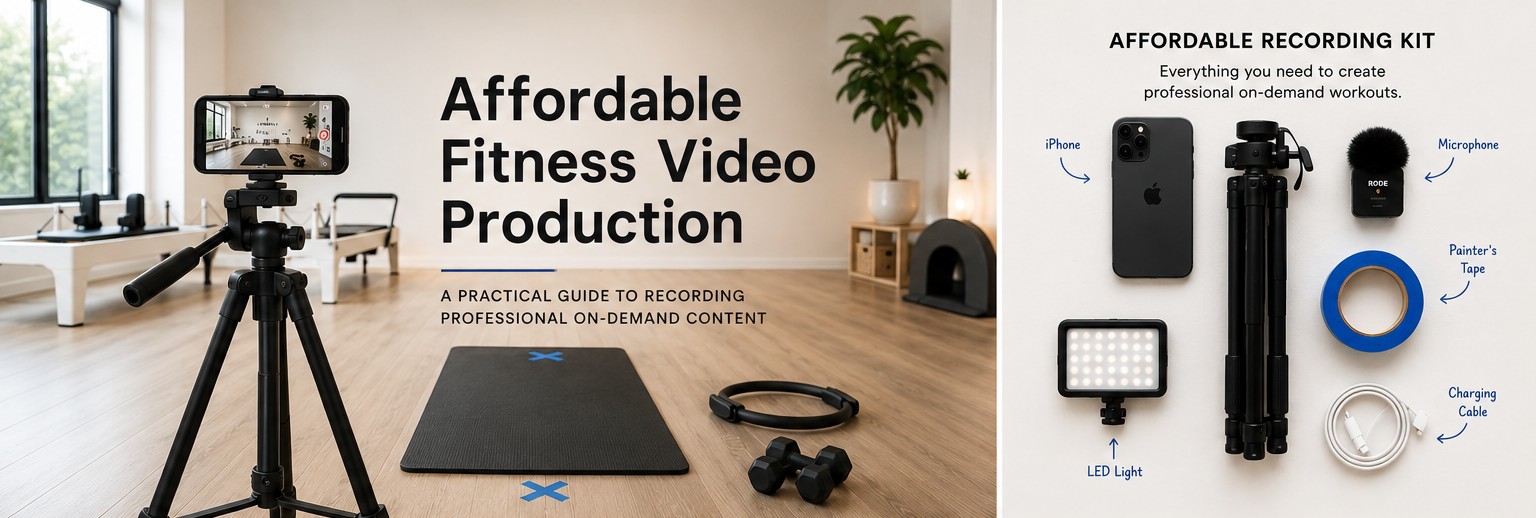
  • A Practical Guide for Recording Professional On-Demand Content

    A Practical Guide for Recording Professional On-Demand Content

    Launching an on-demand library doesn’t require a production crew, expensive cameras, or a dedicated studio. Many of the most successful boutique fitness brands create engaging content with equipment they already own by focusing on consistency instead of complexity.

    If you’re just getting started, this guide will help you build a repeatable recording process that produces professional-looking classes while keeping costs low.

    Start With the Camera You Already Own

    One of the biggest misconceptions about filming on-demand classes is that you need a DSLR or cinema camera.

    You probably don’t.

    Modern iPhones and flagship Android phones record excellent video that is more than capable of producing a polished member experience.

    A few recommendations:

    • Record in 1080p (Full HD). This provides excellent image quality while keeping file sizes manageable.
    • Use 30 FPS unless you have a specific reason to film at 60 FPS.
    • Clean the camera lens before every recording.
    • Disable notifications or use Airplane Mode so recording isn’t interrupted.
    • Make sure plenty of storage is available before class begins.

    For nearly every boutique fitness studio, 1080p is the sweet spot between quality, upload speed, editing time, and streaming performance.

    Stability Matters More Than Camera Quality

    Nothing makes a video feel amateur faster than a shaky camera.

    Invest in a sturdy tripod and leave it assembled whenever possible.

    Benefits include:

    • Consistent framing
    • Less editing
    • Professional appearance
    • Easier instructor positioning
    • Better continuity between videos

    A simple tripod is one of the highest-value purchases you can make for your recording setup.

    Mark Your Floor

    One of the easiest tricks used by production crews is also one of the cheapest.

    Use painter’s tape or discreet floor markers to identify:

    • Instructor position
    • Camera location
    • Mat placement
    • Equipment placement
    • Lighting locations

    When every recording starts in exactly the same place:

    • Videos look consistent
    • Camera framing stays identical
    • Editing becomes easier
    • Members know what to expect

    Your audience notices consistency—even if they don’t realize why.

    Build a Repeatable Recording System

    The best studios don’t reinvent the process every time they record.

    Instead, create a simple checklist.

    For example:

    Before Recording

    • Set tripod in marked position
    • Clean camera lens
    • Turn on lights
    • Check microphone
    • Enable Airplane Mode
    • Confirm battery level
    • Verify recording settings (1080p)

    During Recording

    • Begin recording before instructor enters
    • Pause briefly before speaking
    • Keep movements inside the frame
    • Smile and maintain energy throughout

    After Recording

    • Review the first minute
    • Rename the file
    • Upload immediately
    • Back up the original footage

    The fewer decisions you make each filming day, the faster you’ll build your content library.

    Keep Your Camera Position Consistent

    Avoid moving the camera around between workouts.

    Instead, establish one “hero” angle that works for your space.

    Try to keep:

    • Camera height consistent
    • Distance from instructor consistent
    • Horizon level
    • Room centered
    • Lighting unchanged

    Members quickly become familiar with your filming style, making the library feel more cohesive.

    Prioritize Great Audio

    Members will tolerate average video much longer than poor audio.

    If your budget allows for one upgrade, make it a microphone.

    Affordable options include:

    • Wireless lavalier microphones
    • Clip-on USB-C or Lightning microphones
    • Shotgun microphones for quiet studios

    Even inexpensive microphones typically produce a noticeable improvement over the phone’s built-in mic.

    Use Natural Light Whenever Possible

    Lighting dramatically affects perceived quality.

    Whenever possible:

    • Face windows instead of having windows behind you.
    • Record during consistent daylight hours.
    • Avoid harsh overhead shadows.
    • Add inexpensive LED panel lights if your room is dim.

    Good lighting often has a bigger impact than upgrading your camera.

    Keep the Background Clean

    Your workout should be the focus—not clutter.

    Before filming:

    • Remove water bottles and bags
    • Hide cleaning supplies
    • Straighten props
    • Check mirrors for unwanted reflections
    • Eliminate distracting signage

    A clean space instantly elevates production value.

    Record Multiple Classes in One Session

    Changing outfits between classes can create the appearance of multiple filming days while maximizing efficiency.

    Batch recording helps you:

    • Build your library faster
    • Reduce setup time
    • Stay consistent
    • Keep instructors in “recording mode”

    Many successful studios film an entire month’s worth of content over one or two dedicated production days.

    Don’t Chase Perfection

    Members are looking for helpful workouts—not Hollywood productions.

    Minor mistakes are usually fine if:

    • Audio is clear
    • Video is stable
    • Instruction is engaging
    • The workout is valuable

    Publishing consistently is far more important than endlessly reshooting content.

    Create Click-Worthy Video Thumbnails

    Your thumbnail is often the first thing members see before deciding to press play.

    A strong thumbnail can significantly improve engagement.

    Recommended Size

    1200 × 628 pixels

    This size works well across websites, social sharing, and most on-demand platforms.

    Thumbnail Best Practices

    Use:

    • A bright, well-lit action shot
    • The instructor clearly visible
    • Plenty of empty space for text
    • Consistent branding
    • High contrast between text and background

    Avoid:

    • Blurry screenshots
    • Tiny text
    • Overcrowded layouts
    • Multiple competing images
    • Dark or underexposed photos

    Include Helpful Information

    Keep text short and easy to scan.

    Examples:

    • Pilates Foundations
    • Upper Body Strength
    • Full Body Flow
    • Beginner Mobility
    • 20 Minute Core
    • Power Yoga

    Including duration or difficulty level can also help members quickly choose the right class.

    Examples:

    • 30 Min • Intermediate
    • 15 Min • Beginner
    • 45 Min • Advanced

    Maintain a Consistent Thumbnail Style

    Every thumbnail should feel like part of the same library.

    Try to standardize:

    • Logo placement
    • Font
    • Text size
    • Color palette
    • Image style
    • Title position

    A consistent design makes your content library feel more polished and easier to browse.

    Focus on Consistency Over Equipment

    Great on-demand libraries aren’t built by buying expensive gear—they’re built through repeatable systems.

    A smartphone, tripod, good lighting, clear audio, and a consistent production process are enough to create a professional content library that members will enjoy returning to.

    Start simple, improve over time, and focus your energy on creating valuable classes rather than chasing perfect production quality. The more streamlined your recording workflow becomes, the easier it is to keep your on-demand library fresh with new content.

  • Why Every Boutique Studio Needs an On Demand Strategy

    Digital fitness is no longer optional — it’s part of the modern member experience.

    The fitness industry changed permanently over the past few years. Members now expect flexibility in how, when and where they engage with fitness content.

    Even studios with strong in-person attendance are increasingly discovering that on demand content improves retention, engagement and recurring revenue.

    Streaming is no longer just an add-on feature. It has become part of the overall studio ecosystem.

    Members Want Flexibility

    Today’s members often balance:

    • Work schedules
    • Travel
    • Family obligations
    • Hybrid routines

    They may not always make it into the studio physically, but they still want to stay connected to the brand and instructors they trust.

    On demand content allows studios to maintain engagement even when members are outside the studio walls.

    That ongoing connection matters.

    Retention Happens Between Visits

    One of the biggest advantages of digital content is increased member touchpoints.

    Instead of interacting with a studio only during physical visits, members can engage through:

    • At-home workouts
    • Recovery content
    • Stretching classes
    • Beginner programs
    • Challenges
    • Instructor-led series

    More engagement typically leads to stronger retention.

    Studios building consistent digital habits often create deeper long-term member relationships.

    Streaming Creates New Revenue Opportunities

    On demand platforms can support:

    • Digital memberships
    • Hybrid memberships
    • Paid content libraries
    • Challenges and programs
    • Remote member access
    • Supplemental recurring revenue

    Many studios are now serving both local and non-local audiences simultaneously.

    The physical studio is no longer the only revenue channel.

    Connected Experiences Matter

    Disconnected streaming experiences often create operational headaches for both members and staff.

    Modern platforms like On Demand by IPSTUDIO™ focus on creating connected experiences through:

    • Unified member accounts
    • Membership-based content access
    • Integrated login experiences
    • Website and app continuity

    Members increasingly expect digital convenience across all touchpoints.

    Content Extends Brand Value

    Your instructors, training style and community are valuable beyond the physical studio itself.

    Streaming content allows studios to:

    • Scale instructor impact
    • Reinforce brand identity
    • Build stronger member loyalty
    • Stay top of mind between visits

    The strongest boutique fitness brands are becoming media brands as much as physical locations.

    The Future Is Hybrid

    Boutique fitness is no longer strictly in-person or digital.

    It’s both.

    Studios investing in hybrid member experiences are building stronger long-term positioning while increasing flexibility for modern consumers.

    The future belongs to connected fitness ecosystems that combine physical experiences with digital engagement.

  • 🚀V4 On Demand by IPSTUDIO™

    🚀V4 On Demand by IPSTUDIO™

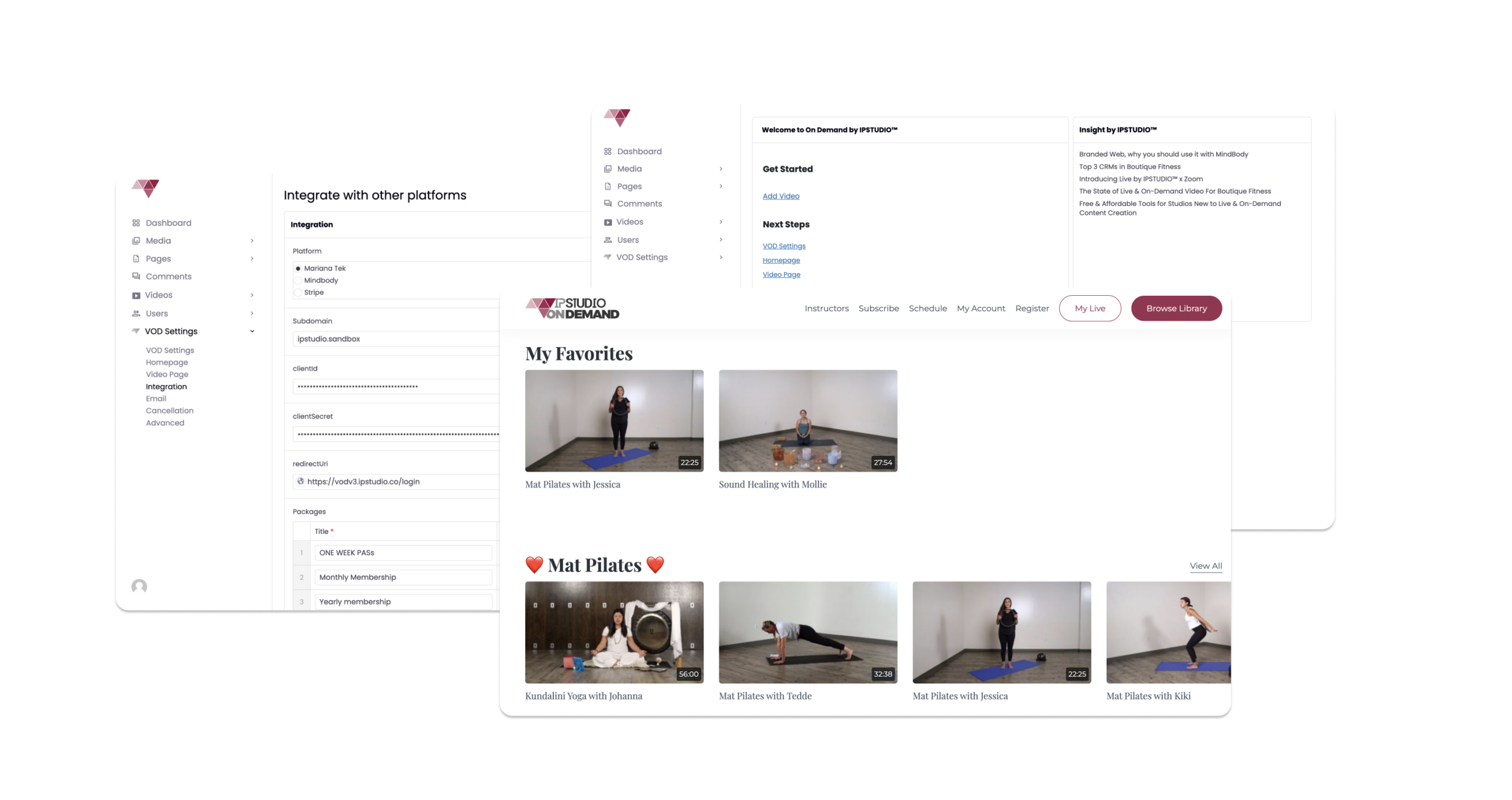
    Introducing V4 On Demand by IPSTUDIO™ – the ultimate solution for fitness studios looking to streamline their video on demand (VOD) experience and administration. Our innovative platform integrates seamlessly with Mariana Tek, Mindbody and Stripe making it easier than ever to manage and distribute your fitness focused VOD content.

    With V4 On Demand, fitness studios can now enjoy a faster and more efficient VOD experience. Our platform allows you to easily upload and organize your content, so you can quickly find and distribute the videos you need. Plus, with our intuitive user interface, you’ll be able to navigate and manage your VOD library with ease.

    But V4 On Demand is more than just a VOD management tool – it’s also a powerful marketing tool that can help you grow your business. Our platform allows you to create custom categories, so you can target specific members or class types.

    And with our integration with Mariana Tek and Mindbody, you can easily connect your VOD library to your existing member management systems, which makes it easier for you to manage your VOD platform.

    Our platform also allows for easy access to your VOD content on all devices with our responsive design and includes casting to Smart TVs like Google Chromecast and Apple TV. Whether your members are watching on a desktop, tablet, or mobile device, they’ll be able to access your VOD library with ease.

    In addition, with our built-in payment gateway, you can easily charge members for access to your VOD content, which can help you generate new revenue streams for your business.

    Overall, V4 On Demand is the perfect solution for fitness studios looking to streamline their VOD experience and generate new revenue streams. With our innovative platform, you’ll be able to create a better user experience for your members, and grow your business at the same time. So why wait? Sign up for V4 On Demand today and start enjoying the benefits of an easier, faster, and better VOD experience!

    Get in touch today for a demo at hello@ipstudio.co

  • Free & Affordable Tools for Studios New to Live & On-Demand Content Creation

    Free & Affordable Tools for Studios New to Live & On-Demand Content Creation

    Live streaming and on-demand libraries aren’t a pandemic pivot anymore.

    They’re a retention strategy.

    Today’s members expect flexibility:

    • Traveling but still want their workouts
    • Missed class and want to catch up
    • Prefer hybrid (in-studio + at home)
    • Want bonus content beyond the weekly schedule

    If done correctly, Live + On-Demand becomes:

    • A retention engine
    • A lead generator
    • A premium upsell opportunity
    • A multi-location value booster

    If done poorly, it becomes:

    • Random uploads
    • Clunky external platforms
    • Low engagement
    • High churn

    This guide walks through how to do it right — without overcomplicating it.

    Step 1: Get Clear on the Goal

    Before buying equipment, ask:

    • Are we retaining members?
    • Are we launching a digital-only tier?
    • Are we supporting multi-location access?
    • Are we increasing app engagement?
    • Are we creating premium programs?

    Gear doesn’t drive revenue.

    Strategy does.

    Affordable Equipment That Actually Works

    You do not need to build a movie studio.

    You need reliable tools that deliver clean audio and stable video.

    Webcams (Fast, Reliable, No Complexity)

    If you’re streaming from a laptop, a high-quality webcam is often enough.

    Popular options include:

    • Logitech Brio
    • Logitech StreamCam

    Why studios like them:

    • Plug and play
    • Crisp HD
    • No capture card required
    • Affordable

    For many studios, this is the smartest starting point.

    Dedicated Cameras (Better for On-Demand Libraries)

    If you’re building a structured on-demand library, you may want more control.

    Two strong options:

    • Zoom Q2n-4K Handy Video Recorder
      Budget-friendly, built-in mic, reliable.
    • Sony ZV-E10
      Higher image quality and excellent autofocus for instructors who move around.

    If using HDMI output, you’ll need a simple capture card (HDMI → USB).

    Beginner-Friendly Streaming Cameras

    The Mevo Start is popular for studios that want:

    • App control
    • Auto-tracking
    • Clean livestream setup without heavy tech

    If you want “set it and teach,” this is worth exploring.

    Audio: The Most Overlooked Upgrade

    Poor audio destroys perceived quality — instantly.

    Good audio builds professionalism.

    Options include:

    • Wireless headset mic (best for instruction clarity)
    • Rode Wireless GO II
    • Lavalier mic under shirt

    If you invest in only one upgrade, make it audio.

    Lighting (Don’t Skip This)

    You don’t need a Hollywood setup.

    You need:

    • 1–2 LED panels
    • Light facing the instructor (not behind)
    • Even front lighting

    Even a modest lighting investment dramatically improves quality.

    Budget Option: Use an iPhone

    Modern iPhones shoot up to 4K — but for studio content:

    • Shoot 1080p
    • 30fps
    • Good lighting
    • External mic if possible

    For many studios, this is more than sufficient.

    Software: Keep It Simple

    Editing

    • iMovie (Mac)
    • CapCut
    • Adobe Premiere Pro

    Most studios only need:

    • Trim
    • Add intro/outro
    • Adjust audio
    • Export

    Overproducing delays consistency.

    Live Streaming

    • Streamlabs
    • Zoom
    • Native in-app livestream tools (if supported by your booking system)

    Simple, stable, repeatable systems outperform flashy setups that break mid-class.

    Monetization: Where Studios Win or Lose

    Here’s the real question:

    How are members accessing this content?

    Strong models we’re seeing in 2026:

    • Included in unlimited membership
    • $29–$59/month digital-only tier
    • Premium “Hybrid+” membership
    • Program-based bundles
    • Challenge-specific content
    • Multi-location access enhancement

    The key is integration.

    If members leave your ecosystem to access video, engagement drops.

    If it lives inside your app or website experience, retention increases.

    What Actually Moves Revenue

    Let’s be direct:

    1. Consistency beats perfection
    2. Clear audio beats 4K resolution
    3. Weekly structured drops beat random uploads
    4. In-app integration beats external hosting
    5. Strategy beats equipment

    Studios that win with On-Demand treat it like programming — not a side project.

    Think:

    • 6-week reformer progression
    • Beginner foundations series
    • Mobility track
    • Travel workouts
    • Instructor-exclusive content
    • Seasonal challenges

    That’s how LTV increases.

    How IPSTUDIO Supports Studios

    At IPSTUDIO, we don’t just help studios upload videos.

    We help you:

    • Integrate Live + On-Demand directly into your member ecosystem
    • Align with your booking system
    • Optimize UX across web + app
    • Create structured monetization pathways
    • Launch cleanly and professionally

    If you’re ready to turn Live + On-Demand into a real revenue channel — not just a content library — let’s talk.

    hello@ipstudio.co