Category: SEO & Growth

  • AI Search for Fitness Studios: How Members Are Finding Studios in a New Era of Search

    AI Search for Fitness Studios: How Members Are Finding Studios in a New Era of Search

    Google isn’t the only place prospective members are asking where to work out anymore.

    For years, fitness studio search strategy was relatively straightforward.

    Someone searched Google for:

    “Pilates near me.”

    “Best cycling studio in Las Vegas.”

    “Beginner Lagree classes.”

    Studios optimized their websites and local listings to appear in those results.

    That behavior isn’t disappearing, but a new discovery experience is emerging.

    Consumers can now ask AI assistants conversational questions such as:

    “What’s a good Pilates studio near me for beginners?”

    “Find me a strength-focused fitness studio with early morning classes.”

    “What’s the difference between these three Pilates studios?”

    Instead of receiving only a page of links, users may receive a synthesized answer.

    That changes how fitness brands should think about being discovered online.

    SEO Is Expanding Beyond Traditional Search

    Traditional SEO focuses heavily on helping search engines understand and rank pages.

    AI-powered discovery adds another consideration:

    Can machines clearly understand your business?

    Your website should make basic questions easy to answer:

    • What does your studio offer?
    • Where are you located?
    • Who is it for?
    • What class types do you offer?
    • What makes the experience different?
    • Who are your instructors?
    • How does pricing work?
    • How does someone get started?

    If this information is buried inside images, vague marketing language or disconnected booking platforms, understanding your business becomes harder for both people and machines.

    Clear Content Matters More Than Clever Content

    Boutique fitness branding often relies on short lifestyle-oriented phrases.

    “Find your fire.”

    “Become your strongest self.”

    “Movement reimagined.”

    Those phrases can reinforce a brand, but they don’t necessarily explain the business.

    A strong website needs both branding and clarity.

    For example:

    Less useful:
    “Discover a better you.”

    More useful:
    “Reformer Pilates classes for all experience levels in Downtown Las Vegas.”

    The second statement immediately provides useful context.

    Your website can still have personality. Just don’t make visitors )or search systems) guess what you actually do.

    Build Strong Class and Service Pages

    A single paragraph listing every service isn’t enough for many studios.

    Dedicated pages can clearly explain individual offerings such as:

    • Reformer Pilates
    • Lagree
    • Indoor Cycling
    • Barre
    • Yoga
    • Strength Training

    Each page creates an opportunity to explain:

    • What the class is
    • Who it’s designed for
    • What someone should expect
    • Where it’s available
    • How to get started

    This is useful for traditional search, AI discovery and most importantly prospective members.

    Location Pages Become Even More Important

    Multi-location fitness brands should give each studio a meaningful digital presence.

    A strong location page can include:

    • Address
    • Neighborhood or market
    • Class offerings
    • Schedule
    • Pricing
    • Amenities
    • Instructors
    • Contact information
    • Frequently asked questions

    Useful local information helps both members and search systems understand what makes each location relevant.

    Answer Real Member Questions

    AI search is conversational.

    Your website content should increasingly reflect the questions people actually ask.

    Examples include:

    • Is Pilates good for beginners?
    • What should I bring to my first class?
    • What’s the difference between Lagree and Pilates?
    • Do I need grip socks?
    • How early should I arrive?
    • Which membership is best if I attend twice per week?
    • Can beginners take this class?

    These questions can become:

    • FAQs
    • Blog posts
    • Class-page content
    • Getting-started guides
    • Location-specific information

    You’re not writing content for robots.

    You’re documenting the knowledge prospective members genuinely need.

    Keep Your Information Consistent

    AI-powered discovery can pull signals from across the web.

    That makes consistency important.

    Studios should regularly review information across their:

    • Website
    • Google Business Profile
    • Booking platform
    • Social profiles
    • Business directories

    Location names, addresses, services and other important details should agree wherever possible.

    Conflicting information creates confusion for members and machines alike.

    Build Authority Through Useful Content

    Studios have knowledge that generic fitness websites don’t.

    Your instructors understand movement.

    Your team understands your methodology.

    Your operators understand the local community.

    Turn that expertise into useful content.

    Instead of publishing articles solely because you want to “do SEO,” answer meaningful questions related to your business and expertise.

    Over time, that creates a stronger body of information around your brand.

    Don’t Abandon Traditional SEO

    AI search does not mean studios should suddenly stop caring about Google.

    The fundamentals still matter:

    • Fast websites
    • Mobile usability
    • Local SEO
    • Helpful content
    • Clear site architecture
    • Accurate business information
    • Strong location and service pages

    In many ways, preparing for AI discovery means getting these fundamentals right rather than chasing a completely new set of tricks.

    The Fitness Website Is Becoming a Source of Truth

    The role of the studio website is evolving.

    It isn’t only somewhere to send traffic after someone discovers your brand.

    It increasingly serves as the authoritative digital representation of your business for members, traditional search engines and emerging AI discovery experiences.

    That makes clear, structured and useful website content more valuable than ever.

    Fitness studios don’t need to predict exactly how AI search will evolve.

    They need to make sure that when someone (or something) asks what their studio is, what it offers and why someone should visit, the internet has a clear answer.
  • How Website Speed Impacts Fitness Studio Conversions

    Website speed influences much more than user experience. It affects search rankings, engagement, and ultimately how many prospective members complete a booking.

    First Impressions Happen Fast

    Visitors decide within seconds whether to continue browsing. Slow-loading pages often result in higher bounce rates before users even see your offerings.

    Speed Supports SEO

    Search engines consider page performance when evaluating websites. Faster websites generally provide a better user experience, contributing to stronger search visibility.

    Optimize Images

    Large image files are one of the biggest causes of slow websites. Compress media appropriately without sacrificing quality.

    Remove Unnecessary Scripts

    Too many plugins, tracking scripts, or animations can significantly reduce performance. Regular audits help keep websites efficient.

    Monitor Performance

    Review website performance periodically using tools like PageSpeed Insights to identify opportunities for improvement.

    A fast website benefits both visitors and search engines.

  • Local SEO for Pilates, Yoga and Boutique Fitness Studios

    If someone searches for “Pilates near me” or “Yoga studio in Austin,” your website and Google Business Profile should help your studio appear among the top local results. Local SEO is one of the highest-return marketing investments for boutique fitness businesses because it connects you with people actively looking for classes nearby.

    Optimize Your Google Business Profile

    Keep your business name, address, phone number, website, hours, and photos current. Encourage members to leave reviews and respond thoughtfully to feedback. An active profile signals credibility to both Google and prospective members.

    Build Location-Focused Pages

    If you operate in multiple neighborhoods or cities, create dedicated pages for each location. Include unique descriptions, directions, amenities, instructors, and class offerings rather than duplicating content.

    Keep Information Consistent

    Ensure your business name, address, and phone number are identical across your website, Google Business Profile, and online directories. Consistency strengthens local search signals.

    Create Helpful Local Content

    Publishing articles about community events, studio updates, wellness tips, or local partnerships demonstrates relevance and keeps your website active.

    Mobile Experience Matters

    Most local searches happen on mobile devices. A fast, responsive website with clear booking actions helps convert visitors into members.

    Local SEO isn’t about gaming search engines—it’s about making it easy for nearby members to discover, trust, and choose your studio.

  • Why Fitness Studio Websites Should Be Mobile-First

    Most prospective members won’t experience your fitness studio for the first time in person. They’ll experience it on their phone.

    Whether someone discovers your studio through Google, Instagram, a friend’s text message, or a local search, the first impression almost always happens on a mobile device. If your website isn’t built with mobile users in mind, you’re likely losing members before they ever book their first class.

    A mobile-friendly website is no longer a “nice-to-have.” It’s one of the most important investments a fitness studio can make for marketing, member experience, and long-term growth. Most boutique fitness traffic now comes from mobile devices, making mobile-first design essential rather than optional. (IPSTUDIO)

    What Does “Mobile-First” Actually Mean?

    Many websites are designed for desktop computers first and then squeezed down to fit smaller screens.

    Mobile-first design flips that process.

    Instead of asking, “How does this website look on a phone?”, you ask:

    • Can someone book a class with one hand?
    • Is pricing immediately visible?
    • Can someone find your schedule in under five seconds?
    • Are buttons large enough to tap?
    • Does every page load quickly on cellular data?

    Every design decision starts with the mobile experience because that’s where most visitors begin their journey.

    Your Website Is Your Front Desk

    Imagine walking into a beautiful studio where nobody greets you, the schedule is hidden, pricing is confusing, and it takes five minutes before someone helps you.

    Most people would leave.

    The same thing happens online.

    Your website acts as your digital front desk. It should immediately answer the questions every prospective member has:

    • What classes do you offer?
    • Where are you located?
    • How much does it cost?
    • How do I book?
    • Why should I choose your studio?

    If visitors have to pinch, zoom, or hunt for information on their phone, many simply return to Google and visit the next studio.

    Mobile Speed Directly Impacts Conversions

    Every extra second your website takes to load increases the chance that a visitor leaves before seeing what you offer. Fast websites don’t just feel better—they improve conversion rates, user satisfaction, and search visibility. (Zen Planner)

    For fitness studios, speed matters because many visitors are:

    • Walking between meetings
    • Sitting in their car before work
    • Comparing multiple studios
    • Looking for tonight’s class

    They aren’t waiting ten seconds for a homepage animation to finish.

    They’re moving on.

    Mobile Experience Affects Google Rankings

    Google primarily evaluates websites using their mobile version when determining search rankings. That means a poor mobile experience can reduce your visibility in local search results. (Zen Planner)

    If two Pilates studios offer similar classes, the one with the faster, better mobile experience often has an advantage in search.

    Mobile optimization helps improve:

    • Local SEO
    • User engagement
    • Bounce rate
    • Time on site
    • Organic traffic

    Those improvements compound over time.

    Keep the Booking Journey Simple

    One of the biggest mistakes fitness studios make is creating unnecessary friction.

    A visitor should be able to go from discovering your studio to booking their first class in just a few taps.

    That means:

    • Clear “Book Now” buttons
    • Mobile-friendly schedules
    • Simple pricing pages
    • Easy-to-complete forms
    • Integrated booking experiences

    Every additional click creates another opportunity for someone to abandon the process.

    Thumb-Friendly Navigation Matters

    Designing for mobile isn’t just about shrinking content.

    People interact with phones differently than computers.

    Good mobile navigation uses:

    • Large tap targets
    • Sticky navigation where appropriate
    • Clear calls to action
    • Short paragraphs
    • Readable font sizes
    • Plenty of spacing

    The easier your website is to use, the more likely visitors are to become members.

    Mobile-First Doesn’t Mean Mobile-Only

    Desktop users still matter.

    Many prospective members will research your studio from work or compare membership options on a larger screen.

    The goal isn’t to ignore desktop.

    The goal is to ensure your website performs exceptionally well on every device by designing for the smallest screen first and expanding from there.

    Signs Your Website Isn’t Mobile-First

    If any of these sound familiar, it may be time to revisit your website:

    • Text is difficult to read without zooming
    • Buttons are too small to tap comfortably
    • Booking requires multiple redirects
    • Images load slowly
    • Navigation feels cluttered
    • Important information sits below large banners
    • Google Search Console reports mobile usability issues

    Small usability problems often translate into lost bookings.

    Mobile-First Is Good Business

    A great fitness website doesn’t exist to win design awards.

    It exists to help people discover your brand, trust your studio, and book their first class.

    When your website is fast, easy to navigate, and designed around the way people actually browse today, everything improves:

    • More organic traffic
    • Better Google visibility
    • Higher booking conversion rates
    • Lower bounce rates
    • A stronger first impression
    • A better overall member experience

    As member expectations continue to rise, the studios investing in mobile-first websites today will be better positioned to grow tomorrow. Modern fitness websites are increasingly viewed as connected member experiences rather than static marketing sites. (IPSTUDIO)

  • How Boutique Fitness Studios Can Use AI to Improve Marketing, Retention and Member Experience

    AI is no longer just a copywriting tool, it’s becoming part of the modern fitness operating system.

    Over the past few years, AI tools like ChatGPT have dramatically changed how businesses create content, communicate with customers and streamline operations.

    But in boutique fitness, the opportunity goes far beyond generating social captions or writing newsletters.

    Studios are beginning to use AI to:

    • Improve website conversion
    • Speed up marketing workflows
    • Personalize member communication
    • Support retention initiatives
    • Generate SEO content
    • Build stronger digital member experiences

    The studios that learn how to integrate AI effectively into their workflows will likely operate faster, communicate better and scale more efficiently than those who don’t.

    AI Should Support Your Brand, Not Replace It

    One of the biggest misconceptions about AI is that it should completely replace human creativity.

    In reality, the best results happen when AI supports:

    • Brand strategy
    • Operator knowledge
    • Instructor expertise
    • Community voice
    • Marketing execution

    AI works best as a multiplier.

    Studios still need:

    • Strong branding
    • Clear positioning
    • Authentic messaging
    • Quality experiences
    • Human connection

    The goal is not robotic content.

    The goal is operational leverage.

    Using AI for Website Content

    Most studio websites struggle because the messaging is:

    • Generic
    • Unclear
    • Overwritten
    • Inconsistent
    • Not conversion-focused

    AI can help studios create:

    • Homepage copy
    • SEO landing pages
    • Location pages
    • Membership descriptions
    • FAQ sections
    • Blog posts
    • Calls to action

    The key is giving AI the right context.

    Instead of asking:

    “Write me a fitness homepage.”

    Better prompts include:

    • Your target demographic
    • Training style
    • Studio personality
    • Market positioning
    • Desired conversion goal

    The more specific the context, the stronger the output.

    AI + SEO Is Becoming a Major Advantage

    Content velocity matters more than ever.

    Studios consistently publishing useful content around:

    • Fitness education
    • Studio updates
    • Local SEO
    • Wellness insights
    • Beginner guides
    • Instructor expertise

    often build stronger long-term search visibility.

    AI can help studios:

    • Generate article structures
    • Expand newsletters into blogs
    • Create SEO-focused metadata
    • Identify keyword opportunities
    • Repurpose existing content

    This allows smaller teams to maintain more consistent content output without dramatically increasing workload.

    Improving Member Communication

    Studios spend enormous amounts of time answering repetitive questions.

    AI can help streamline communication around:

    • First visit expectations
    • Membership information
    • Studio policies
    • Waitlist workflows
    • Intro offers
    • Email sequences
    • Retention messaging

    This creates:

    • Faster response times
    • More consistent communication
    • Better member experiences

    The strongest operators are increasingly combining automation with personalization.

    AI Will Not Replace Community

    Boutique fitness has always been relationship-driven.

    Community, coaching and accountability remain irreplaceable.

    What AI can do is reduce operational friction so teams can spend more time focused on:

    • Coaching
    • Member relationships
    • Experience quality
    • Retention
    • Growth

    The future of fitness is not less human.

    It’s better supported humans operating more efficiently.

    Where We See the Industry Going

    Over the next few years, AI will likely become embedded throughout the fitness ecosystem:

    • Websites
    • Marketing systems
    • Member communication
    • Content creation
    • Search experiences
    • Retention workflows
    • Digital products

    Studios that embrace these tools early will have a significant operational advantage.

    The winners will not necessarily be the studios using the most AI.

    They’ll be the studios using AI most intentionally.

    Final Thoughts

    AI is rapidly becoming one of the most important operational tools available to boutique fitness brands.

    Used correctly, it can help studios:

    • Move faster
    • Communicate better
    • Improve SEO
    • Create stronger digital experiences
    • Scale marketing efforts more efficiently

    But the studios that stand out will still be the ones with:

    • Strong brands
    • Clear positioning
    • Great instructors
    • Consistent experiences
    • Real community

    AI amplifies what already exists.

    The best fitness brands will use it to strengthen the member experience, not replace it.

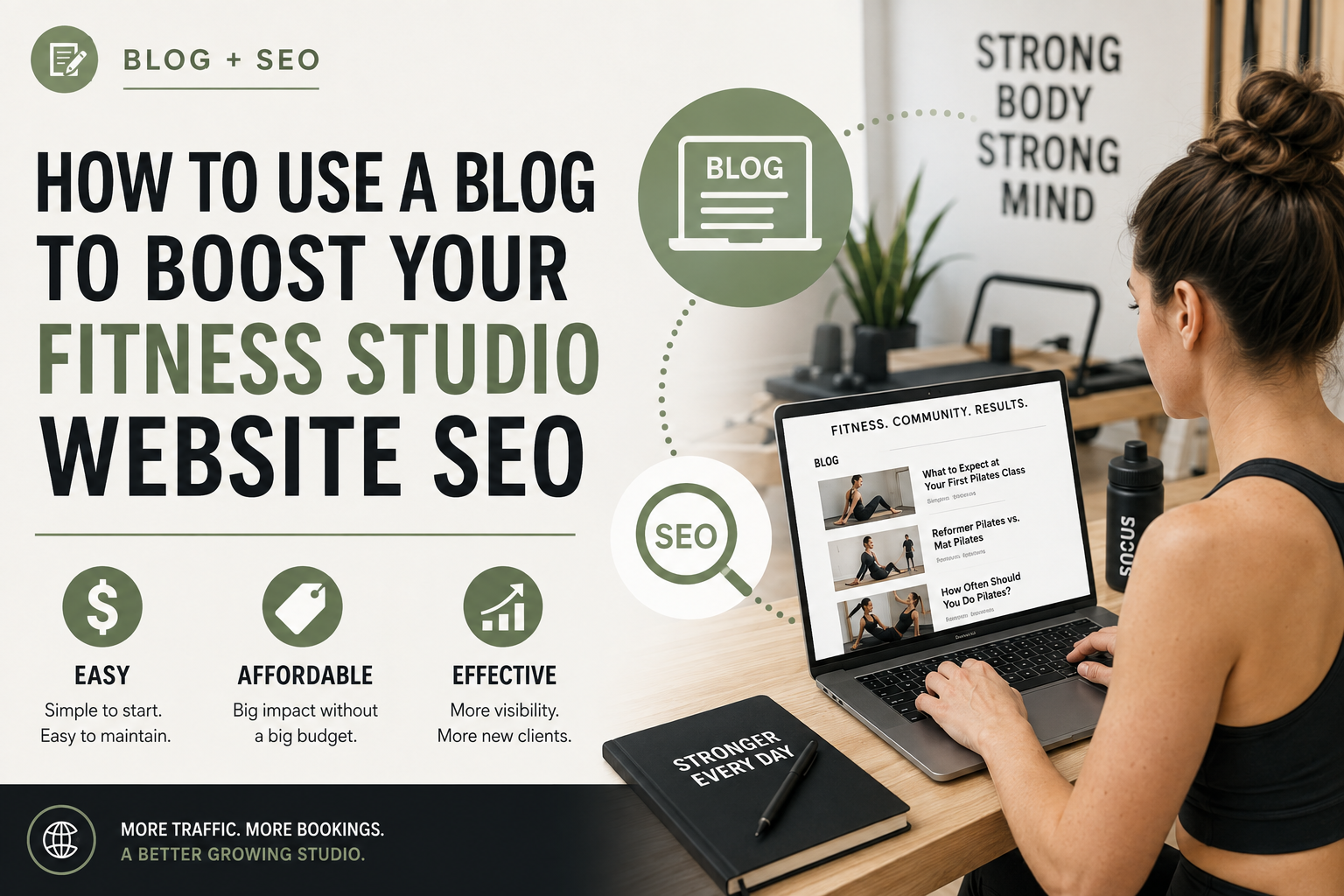
  • How to Use a Blog to Boost Your Fitness Studio’s SEO

    How to Use a Blog to Boost Your Fitness Studio’s SEO

    Your fitness studio website shouldn’t just look good, it should help new clients find you.

    One of the simplest and most affordable ways to improve your website’s visibility on Google is also one of the most overlooked: blogging.

    You don’t need to become a full-time content creator or publish something every week. A small library of useful, well-written articles can help your website show up for more searches, answer questions prospective clients are already asking, and build authority for your studio over time.

    Here’s how it works, and how to make blogging manageable.

    Why Blogging Helps Fitness Studio SEO

    Think about how someone searches for a fitness studio.

    They may search directly for:

    • Pilates studio in Austin
    • Reformer Pilates near me
    • Spin classes in Denver
    • Best yoga studio in Scottsdale

    But those aren’t the only searches happening.

    Potential clients are also asking questions like:

    • What should I expect at my first Pilates class?
    • Is reformer Pilates good for beginners?
    • What should I wear to hot yoga?
    • How often should I take Pilates?
    • What’s the difference between Lagree and Pilates?
    • How do I prepare for my first cycling class?

    These searches create opportunities.

    Your homepage and class pages can only cover so much. A blog gives your website additional pages that can answer these specific questions and appear in relevant search results.

    Over time, those articles also help search engines better understand what your studio offers, where you operate, and what topics your website is an authority on.

    Blogging Is More Affordable Than You Might Think

    SEO can sound like something that requires a large marketing budget, an agency, or complicated software.

    Blogging doesn’t.

    If your website already has a blog, the primary investment is creating useful content. You can start with the knowledge your team already has.

    Your instructors answer questions every day. Your front desk explains memberships, class formats, and what first-timers should expect. Your studio probably already creates educational content for Instagram, newsletters, or other marketing channels.

    Much of that knowledge can become searchable website content.

    And unlike a social post that may disappear from your audience’s feed within a few days, a useful blog article can continue attracting visitors through search for months—or even years.

    What Should a Fitness Studio Write About?

    Start with your customers, not with keywords.

    Ask yourself: What does someone want to know before they book their first class?

    Those questions are often some of your best blog topics.

    For a Pilates studio, that might include:

    • Reformer Pilates vs. mat Pilates
    • What to expect at your first reformer class
    • Pilates for beginners
    • How often should you do Pilates?
    • What to wear to Pilates
    • Benefits of Pilates
    • Private sessions vs. group classes

    A cycling studio could cover first-ride preparation, cycling shoes, class intensity, recovery, or different class formats.

    A yoga studio could create resources around beginner yoga, class styles, heated vs. non-heated classes, equipment, flexibility, or preparing for your first class.

    The goal isn’t to write about everything related to fitness. Write about the subjects most closely connected to what your studio actually does.

    Make Your Content Local

    For a fitness studio, local visibility matters.

    You generally don’t need thousands of website visitors from around the country. You need the right people in your market discovering your studio.

    That makes local content particularly valuable.

    Instead of only writing:

    “A Beginner’s Guide to Reformer Pilates”

    you might publish:

    “A Beginner’s Guide to Reformer Pilates in Austin”

    Where appropriate, naturally mention your neighborhood, city, instructors, studio, or local community within the article.

    Don’t force your location into every sentence. Write naturally for a real person first, while giving search engines enough context to understand where your business operates.

    Connect Your Blog to the Rest of Your Website

    A blog shouldn’t be an island.

    If you write an article explaining what someone should expect during their first Pilates class, link readers directly to your Pilates class page or schedule.

    If you write about membership options, link to your pricing page.

    If you mention a specific studio, link to its location page.

    These internal links make it easier for visitors to take the next step while also helping search engines understand the structure and important pages of your website.

    A simple path might look like:

    Google Search → Helpful Article → Class Information → Schedule → Book

    That’s where SEO becomes more than website traffic. It becomes part of your customer journey.

    You Don’t Need to Post Every Week

    Consistency is useful, but quality matters more than volume.

    For most boutique fitness studios, publishing one or two genuinely useful articles per month is a much better strategy than trying to publish several low-quality posts every week.

    Start with 10–20 questions your team hears regularly.

    Turn each into an article.

    You now have months of potential content without having to constantly brainstorm new ideas.

    Even publishing once per month gives you 12 new searchable pages every year.

    A Few Simple Tips for Better Results

    Answer one clear question per article.
    A focused article usually has a better chance of being useful than trying to cover an entire fitness category at once.

    Use descriptive titles.
    “5 Things to Know Before Your First Reformer Pilates Class” tells both readers and search engines exactly what the page is about.

    Use headings.
    Break longer articles into clear sections so visitors can quickly scan for the information they need.

    Write like your studio.
    SEO content doesn’t need to sound robotic. Your blog should still reflect your studio’s personality and expertise.

    Include your location naturally.
    Your city, neighborhood, and studio locations can provide important context for local searches.

    Link to relevant pages.
    Guide readers toward classes, instructors, pricing, locations, schedules, and other useful parts of your website.

    Keep old articles updated.
    If pricing, policies, class formats, or recommendations change, update the article rather than letting outdated information remain online.

    Prioritize helpfulness over keyword stuffing.
    You don’t need to repeat “Pilates studio Austin” 15 times. Write the best answer to the question and make the topic and location clear.

    Turn Content You’re Already Creating Into Blog Posts

    You may already have more blog content than you realize.

    A strong Instagram caption can become the foundation of an article. A frequently asked question can become a 700-word guide. An instructor Q&A can become an educational post. A newsletter explaining a new class format can become an evergreen website resource.

    One idea can also work across multiple channels:

    Blog article → Email newsletter → Instagram post → Stories → Google Business Profile update

    Instead of constantly creating more content, get more mileage out of the content you’re already producing.

    Does Blogging Actually Work for Fitness Studios?

    Blogging isn’t an overnight SEO trick.

    A new article may take time to be discovered and gain visibility in search. But every useful article adds another relevant page to your website and another potential way for someone to discover your business.

    Publish 20 useful articles answering questions about your services, classes, instructors, and local market, and your website now has 20 additional opportunities to meet potential clients while they’re searching.

    That effect can compound over time.

    And because the content lives on a website you control, you’re building an asset for your studio rather than relying entirely on paid advertising or social media algorithms.

    Start Simple

    You don’t need an elaborate content strategy to get started.

    Pick five questions your studio gets all the time.

    Choose one.

    Write the clearest, most useful answer you can.

    Add a few headings, link to the relevant pages on your website, include a clear next step, and publish it.

    Then do it again next month.

    SEO is rarely about finding one magic tactic. It’s about consistently making your website more useful, relevant, and discoverable.

    For fitness studios, a simple blog is one of the easiest ways to start doing exactly that.

    Build a Website That Can Grow With Your Studio

    Your website should do more than provide basic information. It should help people discover your studio, understand what makes it different, and move easily from search to booking.

    IPSTUDIO Fitness Websites™ are built specifically for boutique fitness studios, with integrated booking experiences, mobile-first design, managed hosting, ongoing support, and a website foundation your studio can continue building on as you grow.