Tag: Hybrid Fitness

  • A Practical Guide for Recording Professional On-Demand Content

    A Practical Guide for Recording Professional On-Demand Content

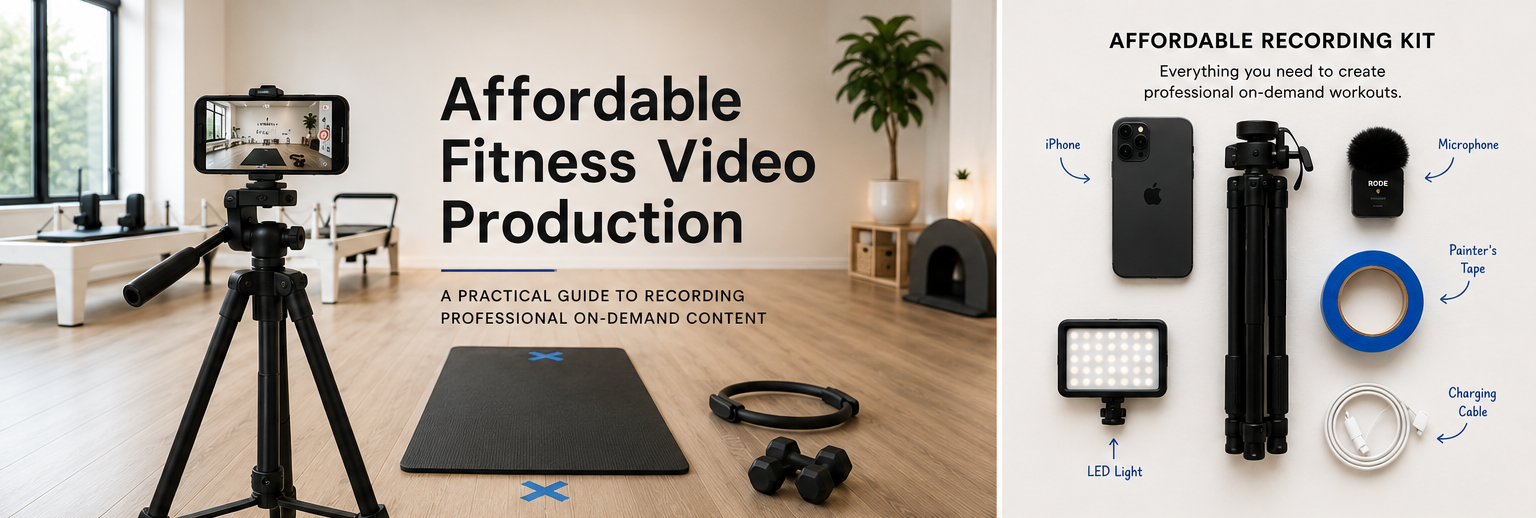
    Launching an on-demand library doesn’t require a production crew, expensive cameras, or a dedicated studio. Many of the most successful boutique fitness brands create engaging content with equipment they already own by focusing on consistency instead of complexity.

    If you’re just getting started, this guide will help you build a repeatable recording process that produces professional-looking classes while keeping costs low.

    Start With the Camera You Already Own

    One of the biggest misconceptions about filming on-demand classes is that you need a DSLR or cinema camera.

    You probably don’t.

    Modern iPhones and flagship Android phones record excellent video that is more than capable of producing a polished member experience.

    A few recommendations:

    • Record in 1080p (Full HD). This provides excellent image quality while keeping file sizes manageable.
    • Use 30 FPS unless you have a specific reason to film at 60 FPS.
    • Clean the camera lens before every recording.
    • Disable notifications or use Airplane Mode so recording isn’t interrupted.
    • Make sure plenty of storage is available before class begins.

    For nearly every boutique fitness studio, 1080p is the sweet spot between quality, upload speed, editing time, and streaming performance.

    Stability Matters More Than Camera Quality

    Nothing makes a video feel amateur faster than a shaky camera.

    Invest in a sturdy tripod and leave it assembled whenever possible.

    Benefits include:

    • Consistent framing
    • Less editing
    • Professional appearance
    • Easier instructor positioning
    • Better continuity between videos

    A simple tripod is one of the highest-value purchases you can make for your recording setup.

    Mark Your Floor

    One of the easiest tricks used by production crews is also one of the cheapest.

    Use painter’s tape or discreet floor markers to identify:

    • Instructor position
    • Camera location
    • Mat placement
    • Equipment placement
    • Lighting locations

    When every recording starts in exactly the same place:

    • Videos look consistent
    • Camera framing stays identical
    • Editing becomes easier
    • Members know what to expect

    Your audience notices consistency—even if they don’t realize why.

    Build a Repeatable Recording System

    The best studios don’t reinvent the process every time they record.

    Instead, create a simple checklist.

    For example:

    Before Recording

    • Set tripod in marked position
    • Clean camera lens
    • Turn on lights
    • Check microphone
    • Enable Airplane Mode
    • Confirm battery level
    • Verify recording settings (1080p)

    During Recording

    • Begin recording before instructor enters
    • Pause briefly before speaking
    • Keep movements inside the frame
    • Smile and maintain energy throughout

    After Recording

    • Review the first minute
    • Rename the file
    • Upload immediately
    • Back up the original footage

    The fewer decisions you make each filming day, the faster you’ll build your content library.

    Keep Your Camera Position Consistent

    Avoid moving the camera around between workouts.

    Instead, establish one “hero” angle that works for your space.

    Try to keep:

    • Camera height consistent
    • Distance from instructor consistent
    • Horizon level
    • Room centered
    • Lighting unchanged

    Members quickly become familiar with your filming style, making the library feel more cohesive.

    Prioritize Great Audio

    Members will tolerate average video much longer than poor audio.

    If your budget allows for one upgrade, make it a microphone.

    Affordable options include:

    • Wireless lavalier microphones
    • Clip-on USB-C or Lightning microphones
    • Shotgun microphones for quiet studios

    Even inexpensive microphones typically produce a noticeable improvement over the phone’s built-in mic.

    Use Natural Light Whenever Possible

    Lighting dramatically affects perceived quality.

    Whenever possible:

    • Face windows instead of having windows behind you.
    • Record during consistent daylight hours.
    • Avoid harsh overhead shadows.
    • Add inexpensive LED panel lights if your room is dim.

    Good lighting often has a bigger impact than upgrading your camera.

    Keep the Background Clean

    Your workout should be the focus—not clutter.

    Before filming:

    • Remove water bottles and bags
    • Hide cleaning supplies
    • Straighten props
    • Check mirrors for unwanted reflections
    • Eliminate distracting signage

    A clean space instantly elevates production value.

    Record Multiple Classes in One Session

    Changing outfits between classes can create the appearance of multiple filming days while maximizing efficiency.

    Batch recording helps you:

    • Build your library faster
    • Reduce setup time
    • Stay consistent
    • Keep instructors in “recording mode”

    Many successful studios film an entire month’s worth of content over one or two dedicated production days.

    Don’t Chase Perfection

    Members are looking for helpful workouts—not Hollywood productions.

    Minor mistakes are usually fine if:

    • Audio is clear
    • Video is stable
    • Instruction is engaging
    • The workout is valuable

    Publishing consistently is far more important than endlessly reshooting content.

    Create Click-Worthy Video Thumbnails

    Your thumbnail is often the first thing members see before deciding to press play.

    A strong thumbnail can significantly improve engagement.

    Recommended Size

    1200 × 628 pixels

    This size works well across websites, social sharing, and most on-demand platforms.

    Thumbnail Best Practices

    Use:

    • A bright, well-lit action shot
    • The instructor clearly visible
    • Plenty of empty space for text
    • Consistent branding
    • High contrast between text and background

    Avoid:

    • Blurry screenshots
    • Tiny text
    • Overcrowded layouts
    • Multiple competing images
    • Dark or underexposed photos

    Include Helpful Information

    Keep text short and easy to scan.

    Examples:

    • Pilates Foundations
    • Upper Body Strength
    • Full Body Flow
    • Beginner Mobility
    • 20 Minute Core
    • Power Yoga

    Including duration or difficulty level can also help members quickly choose the right class.

    Examples:

    • 30 Min • Intermediate
    • 15 Min • Beginner
    • 45 Min • Advanced

    Maintain a Consistent Thumbnail Style

    Every thumbnail should feel like part of the same library.

    Try to standardize:

    • Logo placement
    • Font
    • Text size
    • Color palette
    • Image style
    • Title position

    A consistent design makes your content library feel more polished and easier to browse.

    Focus on Consistency Over Equipment

    Great on-demand libraries aren’t built by buying expensive gear—they’re built through repeatable systems.

    A smartphone, tripod, good lighting, clear audio, and a consistent production process are enough to create a professional content library that members will enjoy returning to.

    Start simple, improve over time, and focus your energy on creating valuable classes rather than chasing perfect production quality. The more streamlined your recording workflow becomes, the easier it is to keep your on-demand library fresh with new content.

  • Why Every Boutique Studio Needs an On Demand Strategy

    Digital fitness is no longer optional — it’s part of the modern member experience.

    The fitness industry changed permanently over the past few years. Members now expect flexibility in how, when and where they engage with fitness content. For historical background, see our pandemic-era live and on-demand snapshot.

    Even studios with strong in-person attendance are increasingly discovering that on demand content improves retention, engagement and recurring revenue.

    Streaming is no longer just an add-on feature. It has become part of the overall studio ecosystem.

    Members Want Flexibility

    Today’s members often balance:

    • Work schedules
    • Travel
    • Family obligations
    • Hybrid routines

    They may not always make it into the studio physically, but they still want to stay connected to the brand and instructors they trust.

    On demand content allows studios to maintain engagement even when members are outside the studio walls.

    That ongoing connection matters.

    Retention Happens Between Visits

    One of the biggest advantages of digital content is increased member touchpoints.

    Instead of interacting with a studio only during physical visits, members can engage through:

    • At-home workouts
    • Recovery content
    • Stretching classes
    • Beginner programs
    • Challenges
    • Instructor-led series

    More engagement typically leads to stronger retention.

    Studios building consistent digital habits often create deeper long-term member relationships.

    Streaming Creates New Revenue Opportunities

    On demand platforms can support:

    • Digital memberships
    • Hybrid memberships
    • Paid content libraries
    • Challenges and programs
    • Remote member access
    • Supplemental recurring revenue

    Many studios are now serving both local and non-local audiences simultaneously.

    The physical studio is no longer the only revenue channel.

    Connected Experiences Matter

    Disconnected streaming experiences often create operational headaches for both members and staff.

    Modern platforms like On Demand by IPSTUDIO™ focus on creating connected experiences through:

    • Unified member accounts
    • Membership-based content access
    • Integrated login experiences
    • Website and app continuity

    Members increasingly expect digital convenience across all touchpoints.

    Content Extends Brand Value

    Your instructors, training style and community are valuable beyond the physical studio itself.

    Streaming content allows studios to:

    • Scale instructor impact
    • Reinforce brand identity
    • Build stronger member loyalty
    • Stay top of mind between visits

    The strongest boutique fitness brands are becoming media brands as much as physical locations. To put that strategy into practice, plan your first month of on-demand content.

    The Future Is Hybrid

    Boutique fitness is no longer strictly in-person or digital.

    It’s both.

    Studios investing in hybrid member experiences are building stronger long-term positioning while increasing flexibility for modern consumers. For equipment and delivery decisions, explore a practical live and on-demand setup.

    The future belongs to connected fitness ecosystems that combine physical experiences with digital engagement.

  • The State of Live & On-Demand Video For Boutique Fitness

    The State of Live & On-Demand Video For Boutique Fitness

    Published March 23, 2020

    The demand for wellness and fitness products/services has grown ten-fold in the last decade. with the advent of new exercise modalities, a societal desire to experience the process of self-improvement with friends & family, and the existence of software that can streamline the experience —  boutique fitness has consistently shown that it’s in a renaissance period.

    Where Are We Now?

    With the arrival of the coronavirus (covid-19), the fitness industry has been forced to adapt, while the anxiety of changing times looms. once again, clients are resorting to home-based, individualized workouts to get their daily burn in. All of a sudden, it feels like years of progress towards the establishment of the brick & mortar boutique fitness industry is in jeopardy. With headline after headline highlighting that the future of fitness has changed  — business owners have been forced to think outside the box on how they’ll continue to serve clients in a new world.

    Luckily for owners, fitness has had a cohesive relationship with the digital world in recent times. with the most expensive real estate in the world now existing in the palm of our hands, and a client-base that already spends a significant amount of time there — it’s clear that success lies in becoming a tech-enabled business. and management teams have done just that, with heavy investments in the production and distribution of video content via a branded website/social media to capitalize on clients’ sustained desire for fitness consumption. 

    At IPSTUDIO, we’ve witnessed the use of a multitude of platforms to do so, and the results have been encouraging to say the least. studios have been able to successfully reconnect with their clients via live streams or on-demand libraries through platforms such as: zoom, instagram, facebook, zype, and vimeo. It’s been really amazing to see the level of client engagement studios have been able to maintain through such mediums, and to see a clear path for their future.

    However, these mediums of distribution have not come without their downsides. the digital real estate and share-ability these platforms provide, comes with the challenge of monetization. live streams via social media simply can’t be monetized, and streams hosted via zoom require instillation and can be shared freely amongst those looking for a free viewing. on top of this, none of these solutions offer a native integration with a cms, booking platform, or business management software built for boutique fitness.

    The Way Forward

    To solve this problem, we created Live by IPSTUDIO™ & On Demand by IPSTUDIO™.

    Live & on-demand video solutions built specifically for boutique fitness. these products exist as end-to-end integrations that allow clients to buy, book, and view content/streams all without having to leave a studio’s website.

    With the primary benefit of this being that all attendees will need to login using their credentials with the studio’s booking platform, and will need to have purchased access to the content/stream to participate. studios will now have the flexibility to share links to live streams & on-demand content freely, without having to worry if viewers are paying customers or not. On the on-demand front, users will get to browse, view, and favorite content in a modern video library. studios can now return to offering credits & memberships for services through their website, and once again can track activity & purchases through their booking platform’s reporting module. Digital content will also remain compatible with classpass, and other class-based distribution networks.  For a later platform release, see the V4 On Demand announcement.

    We quietly rolled out the first versions of these integration products over the past week, and the amount of positive feedback we’ve received so far has been substantial. turnaround time with the setup process has also been kept low, and since our soft release last week we’ve already launched a double digit number of studios. For the later Zoom-specific integration, see the Live by IPSTUDIO x Zoom launch.

    If you are a studio owner (or affiliated with a studio leadership team) looking to integrate digital video into a booking software, we encourage you to reach out to ipstudio at hello@ipstudio.co for help. we’re taking a long-term approach to these services.

    Based on all indications, most studio’s we’ve worked with view the emergence of digital offerings not only as a long-term solution, but as a viable stream of revenue for the years to come. For current planning context, see our on-demand strategy for boutique studios.