Tag: Local SEO

  • AI Search for Fitness Studios: How Members Are Finding Studios in a New Era of Search

    AI Search for Fitness Studios: How Members Are Finding Studios in a New Era of Search

    Google isn’t the only place prospective members are asking where to work out anymore.

    For years, fitness studio search strategy was relatively straightforward.

    Someone searched Google for:

    “Pilates near me.”

    “Best cycling studio in Las Vegas.”

    “Beginner Lagree classes.”

    Studios optimized their websites and local listings to appear in those results.

    That behavior isn’t disappearing, but a new discovery experience is emerging.

    Consumers can now ask AI assistants conversational questions such as:

    “What’s a good Pilates studio near me for beginners?”

    “Find me a strength-focused fitness studio with early morning classes.”

    “What’s the difference between these three Pilates studios?”

    Instead of receiving only a page of links, users may receive a synthesized answer.

    That changes how fitness brands should think about being discovered online.

    SEO Is Expanding Beyond Traditional Search

    Traditional SEO focuses heavily on helping search engines understand and rank pages.

    AI-powered discovery adds another consideration:

    Can machines clearly understand your business?

    Your website should make basic questions easy to answer:

    • What does your studio offer?
    • Where are you located?
    • Who is it for?
    • What class types do you offer?
    • What makes the experience different?
    • Who are your instructors?
    • How does pricing work?
    • How does someone get started?

    If this information is buried inside images, vague marketing language or disconnected booking platforms, understanding your business becomes harder for both people and machines.

    Clear Content Matters More Than Clever Content

    Boutique fitness branding often relies on short lifestyle-oriented phrases.

    “Find your fire.”

    “Become your strongest self.”

    “Movement reimagined.”

    Those phrases can reinforce a brand, but they don’t necessarily explain the business.

    A strong website needs both branding and clarity.

    For example:

    Less useful:
    “Discover a better you.”

    More useful:
    “Reformer Pilates classes for all experience levels in Downtown Las Vegas.”

    The second statement immediately provides useful context.

    Your website can still have personality. Just don’t make visitors )or search systems) guess what you actually do.

    Build Strong Class and Service Pages

    A single paragraph listing every service isn’t enough for many studios.

    Dedicated pages can clearly explain individual offerings such as:

    • Reformer Pilates
    • Lagree
    • Indoor Cycling
    • Barre
    • Yoga
    • Strength Training

    Each page creates an opportunity to explain:

    • What the class is
    • Who it’s designed for
    • What someone should expect
    • Where it’s available
    • How to get started

    This is useful for traditional search, AI discovery and most importantly prospective members.

    Location Pages Become Even More Important

    Multi-location fitness brands should give each studio a meaningful digital presence.

    A strong location page can include:

    • Address
    • Neighborhood or market
    • Class offerings
    • Schedule
    • Pricing
    • Amenities
    • Instructors
    • Contact information
    • Frequently asked questions

    Useful local information helps both members and search systems understand what makes each location relevant.

    Answer Real Member Questions

    AI search is conversational.

    Your website content should increasingly reflect the questions people actually ask.

    Examples include:

    • Is Pilates good for beginners?
    • What should I bring to my first class?
    • What’s the difference between Lagree and Pilates?
    • Do I need grip socks?
    • How early should I arrive?
    • Which membership is best if I attend twice per week?
    • Can beginners take this class?

    These questions can become:

    • FAQs
    • Blog posts
    • Class-page content
    • Getting-started guides
    • Location-specific information

    You’re not writing content for robots.

    You’re documenting the knowledge prospective members genuinely need.

    Keep Your Information Consistent

    AI-powered discovery can pull signals from across the web.

    That makes consistency important.

    Studios should regularly review information across their:

    • Website
    • Google Business Profile
    • Booking platform
    • Social profiles
    • Business directories

    Location names, addresses, services and other important details should agree wherever possible.

    Conflicting information creates confusion for members and machines alike.

    Build Authority Through Useful Content

    Studios have knowledge that generic fitness websites don’t.

    Your instructors understand movement.

    Your team understands your methodology.

    Your operators understand the local community.

    Turn that expertise into useful content.

    Instead of publishing articles solely because you want to “do SEO,” answer meaningful questions related to your business and expertise.

    Over time, that creates a stronger body of information around your brand.

    Don’t Abandon Traditional SEO

    AI search does not mean studios should suddenly stop caring about Google.

    The fundamentals still matter:

    • Fast websites
    • Mobile usability
    • Local SEO
    • Helpful content
    • Clear site architecture
    • Accurate business information
    • Strong location and service pages

    In many ways, preparing for AI discovery means getting these fundamentals right rather than chasing a completely new set of tricks. For broader studio workflows, see practical AI for studio marketing and member experience.

    The Fitness Website Is Becoming a Source of Truth

    The role of the studio website is evolving.

    It isn’t only somewhere to send traffic after someone discovers your brand.

    It increasingly serves as the authoritative digital representation of your business for members, traditional search engines and emerging AI discovery experiences.

    That makes clear, structured and useful website content more valuable than ever.

    Fitness studios don’t need to predict exactly how AI search will evolve.

    They need to make sure that when someone (or something) asks what their studio is, what it offers and why someone should visit, the internet has a clear answer.
  • Local SEO for Pilates, Yoga and Boutique Fitness Studios

    If someone searches for “Pilates near me” or “Yoga studio in Austin,” your website and Google Business Profile should help your studio appear among the top local results. Local SEO is one of the highest-return marketing investments for boutique fitness businesses because it connects you with people actively looking for classes nearby.

    Optimize Your Google Business Profile

    Keep your business name, address, phone number, website, hours, and photos current. Encourage members to leave reviews and respond thoughtfully to feedback. An active profile signals credibility to both Google and prospective members.

    Build Location-Focused Pages

    If you operate in multiple neighborhoods or cities, create dedicated pages for each location. Include unique descriptions, directions, amenities, instructors, and class offerings rather than duplicating content.

    Keep Information Consistent

    Ensure your business name, address, and phone number are identical across your website, Google Business Profile, and online directories. Consistency strengthens local search signals.

    Create Helpful Local Content

    Publishing articles about community events, studio updates, wellness tips, or local partnerships demonstrates relevance and keeps your website active.

    Mobile Experience Matters

    Most local searches happen on mobile devices. A fast, responsive website with clear booking actions helps convert visitors into members.

    Local SEO isn’t about gaming search engines—it’s about making it easy for nearby members to discover, trust, and choose your studio. For the newer discovery context, see AI search and local studio discovery.

  • How to Use a Blog to Boost Your Fitness Studio’s SEO

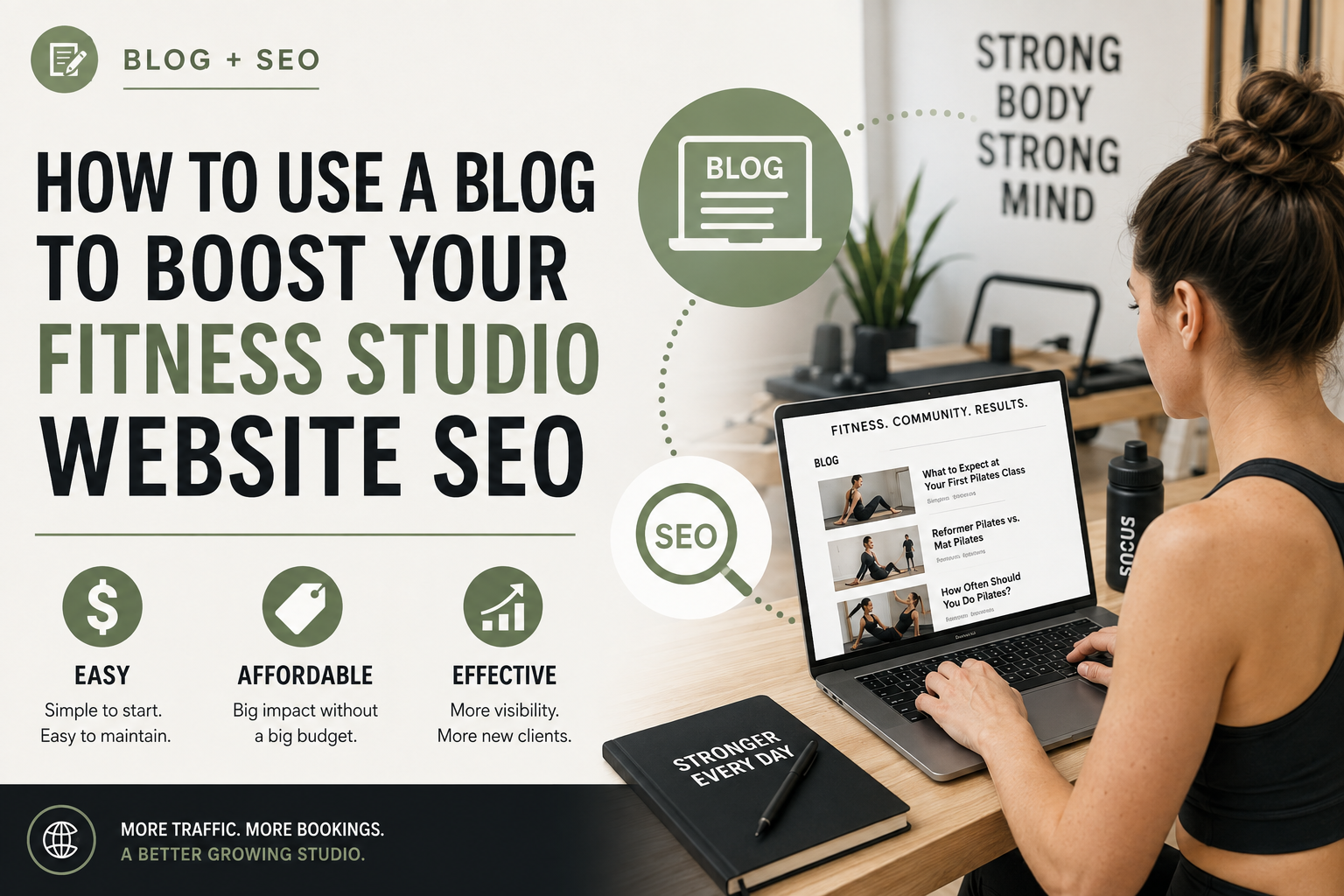
    How to Use a Blog to Boost Your Fitness Studio’s SEO

    Your fitness studio website shouldn’t just look good, it should help new clients find you.

    One of the simplest and most affordable ways to improve your website’s visibility on Google is also one of the most overlooked: blogging.

    You don’t need to become a full-time content creator or publish something every week. A small library of useful, well-written articles can help your website show up for more searches, answer questions prospective clients are already asking, and build authority for your studio over time.

    Here’s how it works, and how to make blogging manageable.

    Why Blogging Helps Fitness Studio SEO

    Think about how someone searches for a fitness studio.

    They may search directly for:

    • Pilates studio in Austin
    • Reformer Pilates near me
    • Spin classes in Denver
    • Best yoga studio in Scottsdale

    But those aren’t the only searches happening.

    Potential clients are also asking questions like:

    • What should I expect at my first Pilates class?
    • Is reformer Pilates good for beginners?
    • What should I wear to hot yoga?
    • How often should I take Pilates?
    • What’s the difference between Lagree and Pilates?
    • How do I prepare for my first cycling class?

    These searches create opportunities.

    Your homepage and class pages can only cover so much. A blog gives your website additional pages that can answer these specific questions and appear in relevant search results.

    Over time, those articles also help search engines better understand what your studio offers, where you operate, and what topics your website is an authority on.

    Blogging Is More Affordable Than You Might Think

    SEO can sound like something that requires a large marketing budget, an agency, or complicated software.

    Blogging doesn’t.

    If your website already has a blog, the primary investment is creating useful content. You can start with the knowledge your team already has.

    Your instructors answer questions every day. Your front desk explains memberships, class formats, and what first-timers should expect. Your studio probably already creates educational content for Instagram, newsletters, or other marketing channels.

    Much of that knowledge can become searchable website content.

    And unlike a social post that may disappear from your audience’s feed within a few days, a useful blog article can continue attracting visitors through search for months—or even years.

    What Should a Fitness Studio Write About?

    Start with your customers, not with keywords.

    Ask yourself: What does someone want to know before they book their first class?

    Those questions are often some of your best blog topics.

    For a Pilates studio, that might include:

    • Reformer Pilates vs. mat Pilates
    • What to expect at your first reformer class
    • Pilates for beginners
    • How often should you do Pilates?
    • What to wear to Pilates
    • Benefits of Pilates
    • Private sessions vs. group classes

    A cycling studio could cover first-ride preparation, cycling shoes, class intensity, recovery, or different class formats.

    A yoga studio could create resources around beginner yoga, class styles, heated vs. non-heated classes, equipment, flexibility, or preparing for your first class.

    The goal isn’t to write about everything related to fitness. Write about the subjects most closely connected to what your studio actually does.

    Make Your Content Local

    For a fitness studio, local visibility matters.

    You generally don’t need thousands of website visitors from around the country. You need the right people in your market discovering your studio.

    That makes local content particularly valuable.

    Instead of only writing:

    “A Beginner’s Guide to Reformer Pilates”

    you might publish:

    “A Beginner’s Guide to Reformer Pilates in Austin”

    Where appropriate, naturally mention your neighborhood, city, instructors, studio, or local community within the article.

    Don’t force your location into every sentence. Write naturally for a real person first, while giving search engines enough context to understand where your business operates.

    Connect Your Blog to the Rest of Your Website

    A blog shouldn’t be an island.

    If you write an article explaining what someone should expect during their first Pilates class, link readers directly to your Pilates class page or schedule.

    If you write about membership options, link to your pricing page.

    If you mention a specific studio, link to its location page.

    These internal links make it easier for visitors to take the next step while also helping search engines understand the structure and important pages of your website.

    A simple path might look like:

    Google Search → Helpful Article → Class Information → Schedule → Book

    That’s where SEO becomes more than website traffic. It becomes part of your customer journey.

    You Don’t Need to Post Every Week

    Consistency is useful, but quality matters more than volume.

    For most boutique fitness studios, publishing one or two genuinely useful articles per month is a much better strategy than trying to publish several low-quality posts every week.

    Start with 10–20 questions your team hears regularly.

    Turn each into an article.

    You now have months of potential content without having to constantly brainstorm new ideas.

    Even publishing once per month gives you 12 new searchable pages every year.

    A Few Simple Tips for Better Results

    Answer one clear question per article.
    A focused article usually has a better chance of being useful than trying to cover an entire fitness category at once.

    Use descriptive titles.
    “5 Things to Know Before Your First Reformer Pilates Class” tells both readers and search engines exactly what the page is about.

    Use headings.
    Break longer articles into clear sections so visitors can quickly scan for the information they need.

    Write like your studio.
    SEO content doesn’t need to sound robotic. Your blog should still reflect your studio’s personality and expertise.

    Include your location naturally.
    Your city, neighborhood, and studio locations can provide important context for local searches.

    Link to relevant pages.
    Guide readers toward classes, instructors, pricing, locations, schedules, and other useful parts of your website.

    Keep old articles updated.
    If pricing, policies, class formats, or recommendations change, update the article rather than letting outdated information remain online.

    Prioritize helpfulness over keyword stuffing.
    You don’t need to repeat “Pilates studio Austin” 15 times. Write the best answer to the question and make the topic and location clear.

    Turn Content You’re Already Creating Into Blog Posts

    You may already have more blog content than you realize.

    A strong Instagram caption can become the foundation of an article. A frequently asked question can become a 700-word guide. An instructor Q&A can become an educational post. A newsletter explaining a new class format can become an evergreen website resource.

    One idea can also work across multiple channels:

    Blog article → Email newsletter → Instagram post → Stories → Google Business Profile update

    Instead of constantly creating more content, get more mileage out of the content you’re already producing.

    Does Blogging Actually Work for Fitness Studios?

    Blogging isn’t an overnight SEO trick.

    A new article may take time to be discovered and gain visibility in search. But every useful article adds another relevant page to your website and another potential way for someone to discover your business. For the newer discovery context, see our guide to AI-assisted studio discovery.

    Publish 20 useful articles answering questions about your services, classes, instructors, and local market, and your website now has 20 additional opportunities to meet potential clients while they’re searching.

    That effect can compound over time.

    And because the content lives on a website you control, you’re building an asset for your studio rather than relying entirely on paid advertising or social media algorithms.

    Start Simple

    You don’t need an elaborate content strategy to get started.

    Pick five questions your studio gets all the time.

    Choose one.

    Write the clearest, most useful answer you can.

    Add a few headings, link to the relevant pages on your website, include a clear next step, and publish it.

    Then do it again next month.

    SEO is rarely about finding one magic tactic. It’s about consistently making your website more useful, relevant, and discoverable.

    For fitness studios, a simple blog is one of the easiest ways to start doing exactly that.

    Build a Website That Can Grow With Your Studio

    Your website should do more than provide basic information. It should help people discover your studio, understand what makes it different, and move easily from search to booking.

    IPSTUDIO Fitness Websites™ are built specifically for boutique fitness studios, with integrated booking experiences, mobile-first design, managed hosting, ongoing support, and a website foundation your studio can continue building on as you grow.