Tag: Member Experience

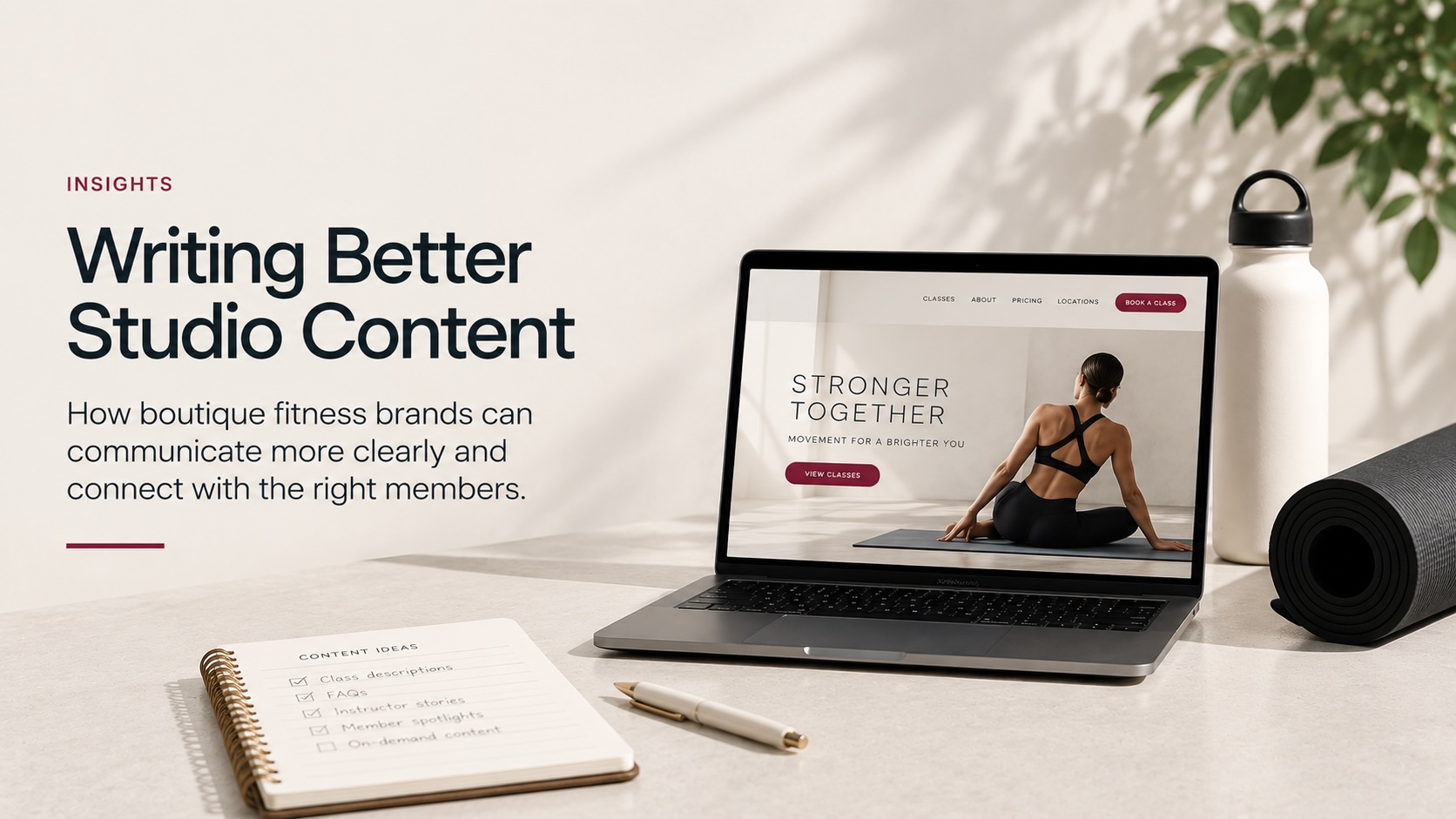
  • Writing Better Studio Content: How Boutique Fitness Brands Can Communicate More Clearly

    Writing Better Studio Content: How Boutique Fitness Brands Can Communicate More Clearly

    Better fitness content isn’t about saying more. It’s about helping the right person understand your studio, trust your brand and know what to do next.

    Boutique fitness brands have more places to communicate than ever: websites, email, social media, mobile apps, booking platforms, push notifications and search.

    Yet one of the most common problems we see is surprisingly simple:

    Studios know exactly what makes their experience special, but their digital content doesn’t always communicate it.

    The result can be beautiful branding paired with vague messaging, confusing class descriptions or important information buried where prospective members can’t find it.

    Better content starts with clarity.

    Write for Someone Who Has Never Visited Your Studio

    Studio owners and instructors live inside their brands every day.

    Your prospective member doesn’t.

    Terms, class formats and policies that seem obvious internally may be completely unfamiliar to someone considering their first class.

    Before publishing content, ask:

    • Would a first-time visitor understand this?
    • Does it explain what the experience actually is?
    • Does it answer the questions someone might have before booking?
    • Is the next step obvious?

    Don’t assume familiarity.

    A statement like “50 minutes. Full body. No excuses.” might sound great, but it doesn’t tell a new visitor what they’re signing up for.

    Pair brand language with useful information:

    50 minutes. Full body. No excuses.
    Our instructor-led strength classes combine resistance training and conditioning in a high-energy, small-group environment.

    You can have personality and clarity at the same time.

    Answer the Questions Members Actually Ask

    Some of your best content ideas are already sitting in your inbox.

    Think about what prospective and current members repeatedly ask:

    • What should I expect during my first class?
    • Is this suitable for beginners?
    • What should I wear?
    • Do I need grip socks?
    • How early should I arrive?
    • Where should I park?
    • What’s the difference between your class types?
    • Which introductory offer should I choose?
    • Can I attend multiple locations?

    If your team answers the same question repeatedly, there’s a good chance the answer should exist somewhere in your digital experience.

    These questions can become FAQs, website sections, onboarding emails, social content and longer educational articles.

    Good content reduces uncertainty.

    Focus on Benefits, Not Just Features

    Studios naturally describe what they offer:

    “45-minute reformer class.”

    “12 reformers.”

    “Heated studio.”

    “On-demand library.”

    Those details matter, but members are ultimately trying to understand what those features mean for them.

    Connect the feature to the experience.

    Instead of:

    Access our on-demand library.

    Consider:

    Can’t make it into the studio? Train with your favorite instructors from home, while traveling or whenever your schedule changes.

    The feature hasn’t changed. The value is simply clearer.

    Give Every Page One Primary Job

    Trying to make every page communicate everything usually makes the experience harder to navigate.

    A homepage might primarily introduce the brand and move someone toward their first class.

    A class page should help someone understand the workout.

    A location page should help someone evaluate and visit that specific studio.

    A pricing page should make purchasing easier.

    A first-visit page should remove uncertainty.

    Before writing a page, decide:

    What should someone understand, and what should they do next?

    Then build the content around that objective.

    Make Your Calls to Action Specific

    “Learn More” isn’t always wrong, but it often wastes an opportunity to tell someone exactly what happens next.

    Consider calls to action such as:

    • View Schedule
    • Book Your First Class
    • Explore Memberships
    • Find Your Studio
    • Meet the Instructors
    • Start Your Free Trial
    • Watch On Demand

    The CTA should match the visitor’s stage in the journey.

    Someone learning about a class may not be ready to “Buy Now.” Someone already reviewing memberships probably doesn’t need another “Discover More.”

    Good content creates progression.

    Write for People First and Search Second

    Search optimization matters, but awkward keyword-heavy copy rarely creates a great member experience.

    Instead, clearly describe:

    • What you offer
    • Where you offer it
    • Who it’s for
    • How it works
    • What makes it different

    For example, a heading like “Reformer Pilates in Austin” communicates substantially more than “Move Differently.”

    You can still use “Move Differently” as brand language. Just give search engines, AI systems and prospective members enough context to understand what it means.

    This is becoming increasingly important as discovery expands beyond traditional search engines into AI-powered search experiences.

    Your Location Pages Should Actually Be Local

    For multi-location brands, copying the same paragraph across every location page and changing the city name misses an opportunity.

    Give each location useful information such as:

    • Neighborhood
    • Address and directions
    • Parking
    • Amenities
    • Class offerings
    • Instructors
    • Introductory offers
    • Local FAQs
    • Schedule

    Your location page should feel like the digital front door to that specific studio.

    Don’t Let AI Make Your Brand Generic

    AI can dramatically speed up content production, but it can also make every fitness studio sound the same.

    Phrases like “transform your journey,” “unlock your potential” and “become the best version of yourself” communicate very little when they could describe almost any fitness business.

    Use AI to help organize, edit, brainstorm and repurpose content.

    But give it real inputs:

    • Your actual methodology
    • Your audience
    • Your instructors
    • Your terminology
    • Your positioning
    • Your customer questions
    • Your brand voice

    AI works much better when it has something distinctive to work with.

    Repurpose What You Already Have

    You don’t need to start every piece of content from scratch.

    One strong piece of studio knowledge can become:

    Instructor expertise → Blog article → Newsletter → Social posts → FAQ → Website content

    A detailed explanation of your training method could become a class page, educational article and onboarding email.

    A frequently asked question could become a short video, social post and website FAQ.

    This creates consistency while reducing the amount of new material your team has to produce.

    Review Content Like a Member

    Before publishing, forget what you know about the business and read the page as a prospective customer.

    Can you quickly answer:

    What is this?

    Is it for me?

    Where is it?

    What does it cost?

    What should I expect?

    What do I do next?

    If the page can’t answer the questions that matter to its intended visitor, another paragraph of marketing copy probably isn’t the solution.

    Better structure and clearer information usually are.

    Better Content Creates a Better Member Experience

    Content isn’t separate from the customer experience.

    It’s part of it.

    Clear information can make someone more comfortable booking their first class. Better class descriptions can help members choose the right experience. Strong location pages can make studios easier to discover. Useful onboarding content can remove friction before someone ever walks through the door.

    The strongest boutique fitness content doesn’t try to sound impressive.

    It makes the experience easier to understand.

    Be specific. Be useful. Keep your brand personality. And always make the next step clear.
  • Why Fitness Studio Websites Should Be Mobile-First

    Most prospective members won’t experience your fitness studio for the first time in person. They’ll experience it on their phone.

    Whether someone discovers your studio through Google, Instagram, a friend’s text message, or a local search, the first impression almost always happens on a mobile device. If your website isn’t built with mobile users in mind, you’re likely losing members before they ever book their first class.

    A mobile-friendly website is no longer a “nice-to-have.” It’s one of the most important investments a fitness studio can make for marketing, member experience, and long-term growth. Most boutique fitness traffic now comes from mobile devices, making mobile-first design essential rather than optional. (See modern fitness website strategy.)

    What Does “Mobile-First” Actually Mean?

    Many websites are designed for desktop computers first and then squeezed down to fit smaller screens.

    Mobile-first design flips that process.

    Instead of asking, “How does this website look on a phone?”, you ask:

    • Can someone book a class with one hand?
    • Is pricing immediately visible?
    • Can someone find your schedule in under five seconds?
    • Are buttons large enough to tap?
    • Does every page load quickly on cellular data?

    Every design decision starts with the mobile experience because that’s where most visitors begin their journey.

    Your Website Is Your Front Desk

    Imagine walking into a beautiful studio where nobody greets you, the schedule is hidden, pricing is confusing, and it takes five minutes before someone helps you.

    Most people would leave.

    The same thing happens online.

    Your website acts as your digital front desk. It should immediately answer the questions every prospective member has:

    • What classes do you offer?
    • Where are you located?
    • How much does it cost?
    • How do I book?
    • Why should I choose your studio?

    If visitors have to pinch, zoom, or hunt for information on their phone, many simply return to Google and visit the next studio.

    Mobile Speed Directly Impacts Conversions

    Every extra second your website takes to load increases the chance that a visitor leaves before seeing what you offer. Fast websites don’t just feel better—they improve conversion rates, user satisfaction, and search visibility. (Zen Planner)

    For fitness studios, speed matters because many visitors are:

    • Walking between meetings
    • Sitting in their car before work
    • Comparing multiple studios
    • Looking for tonight’s class

    They aren’t waiting ten seconds for a homepage animation to finish.

    They’re moving on.

    Mobile Experience Affects Google Rankings

    Google primarily evaluates websites using their mobile version when determining search rankings. That means a poor mobile experience can reduce your visibility in local search results. (Zen Planner)

    If two Pilates studios offer similar classes, the one with the faster, better mobile experience often has an advantage in search.

    Mobile optimization helps improve:

    • Local SEO
    • User engagement
    • Bounce rate
    • Time on site
    • Organic traffic

    Those improvements compound over time.

    Keep the Booking Journey Simple

    One of the biggest mistakes fitness studios make is creating unnecessary friction.

    A visitor should be able to go from discovering your studio to booking their first class in just a few taps.

    That means:

    Every additional click creates another opportunity for someone to abandon the process.

    Thumb-Friendly Navigation Matters

    Designing for mobile isn’t just about shrinking content.

    People interact with phones differently than computers.

    Good mobile navigation uses:

    • Large tap targets
    • Sticky navigation where appropriate
    • Clear calls to action
    • Short paragraphs
    • Readable font sizes
    • Plenty of spacing

    The easier your website is to use, the more likely visitors are to become members.

    Mobile-First Doesn’t Mean Mobile-Only

    Desktop users still matter.

    Many prospective members will research your studio from work or compare membership options on a larger screen.

    The goal isn’t to ignore desktop.

    The goal is to ensure your website performs exceptionally well on every device by designing for the smallest screen first and expanding from there.

    Signs Your Website Isn’t Mobile-First

    If any of these sound familiar, it may be time to revisit your website:

    • Text is difficult to read without zooming
    • Buttons are too small to tap comfortably
    • Booking requires multiple redirects
    • Images load slowly
    • Navigation feels cluttered
    • Important information sits below large banners
    • Google Search Console reports mobile usability issues

    Small usability problems often translate into lost bookings. Explore IPSTUDIO’s mobile-first fitness websites for implementation support.

    Mobile-First Is Good Business

    A great fitness website doesn’t exist to win design awards.

    It exists to help people discover your brand, trust your studio, and book their first class.

    When your website is fast, easy to navigate, and designed around the way people actually browse today, everything improves:

    • More organic traffic
    • Better Google visibility
    • Higher booking conversion rates
    • Lower bounce rates
    • A stronger first impression
    • A better overall member experience

    As member expectations continue to rise, the studios investing in mobile-first websites today will be better positioned to grow tomorrow. Modern fitness websites are increasingly viewed as connected member experiences rather than static marketing sites.

  • How Boutique Fitness Studios Can Use AI to Improve Marketing, Retention and Member Experience

    AI is no longer just a copywriting tool, it’s becoming part of the modern fitness operating system.

    Over the past few years, AI tools like ChatGPT have dramatically changed how businesses create content, communicate with customers and streamline operations.

    But in boutique fitness, the opportunity goes far beyond generating social captions or writing newsletters.

    Studios are beginning to use AI to:

    • Improve website conversion
    • Speed up marketing workflows
    • Personalize member communication
    • Support retention initiatives
    • Generate SEO content
    • Build stronger digital member experiences

    The studios that learn how to integrate AI effectively into their workflows will likely operate faster, communicate better and scale more efficiently than those who don’t.

    AI Should Support Your Brand, Not Replace It

    One of the biggest misconceptions about AI is that it should completely replace human creativity.

    In reality, the best results happen when AI supports:

    • Brand strategy
    • Operator knowledge
    • Instructor expertise
    • Community voice
    • Marketing execution

    AI works best as a multiplier.

    Studios still need:

    • Strong branding
    • Clear positioning
    • Authentic messaging
    • Quality experiences
    • Human connection

    The goal is not robotic content.

    The goal is operational leverage.

    Using AI for Website Content

    For a clearer starting point, review our guidance on website messaging. Most studio websites struggle because the messaging is:

    • Generic
    • Unclear
    • Overwritten
    • Inconsistent
    • Not conversion-focused

    AI can help studios create:

    • Homepage copy
    • SEO landing pages
    • Location pages
    • Membership descriptions
    • FAQ sections
    • Blog posts
    • Calls to action

    The key is giving AI the right context.

    Instead of asking:

    “Write me a fitness homepage.”

    Better prompts include:

    • Your target demographic
    • Training style
    • Studio personality
    • Market positioning
    • Desired conversion goal

    The more specific the context, the stronger the output.

    AI + SEO Is Becoming a Major Advantage

    Content velocity matters more than ever.

    Studios consistently publishing useful content around:

    • Fitness education
    • Studio updates
    • Local SEO
    • Wellness insights
    • Beginner guides
    • Instructor expertise

    often build stronger long-term search visibility.

    AI can help studios:

    • Generate article structures
    • Expand newsletters into blogs
    • Create SEO-focused metadata
    • Identify keyword opportunities
    • Repurpose existing content

    This allows smaller teams to maintain more consistent content output without dramatically increasing workload.

    Improving Member Communication

    Studios spend enormous amounts of time answering repetitive questions.

    AI can help streamline communication around:

    • First visit expectations
    • Membership information
    • Studio policies
    • Waitlist workflows
    • Intro offers
    • Email sequences
    • Retention messaging

    This creates:

    • Faster response times
    • More consistent communication
    • Better member experiences

    The strongest operators are increasingly combining automation with personalization.

    AI Will Not Replace Community

    Boutique fitness has always been relationship-driven.

    Community, coaching and accountability remain irreplaceable.

    What AI can do is reduce operational friction so teams can spend more time focused on:

    • Coaching
    • Member relationships
    • Experience quality
    • Retention
    • Growth

    The future of fitness is not less human.

    It’s better supported humans operating more efficiently.

    Where We See the Industry Going

    Over the next few years, AI will likely become embedded throughout the fitness ecosystem:

    • Websites
    • Marketing systems
    • Member communication
    • Content creation
    • Search experiences
    • Retention workflows
    • Digital products

    Studios that embrace these tools early will have a significant operational advantage.

    The winners will not necessarily be the studios using the most AI.

    They’ll be the studios using AI most intentionally.

    Final Thoughts

    AI is rapidly becoming one of the most important operational tools available to boutique fitness brands.

    Used correctly, it can help studios:

    • Move faster
    • Communicate better
    • Improve SEO
    • Create stronger digital experiences
    • Scale marketing efforts more efficiently

    But the studios that stand out will still be the ones with:

    • Strong brands
    • Clear positioning
    • Great instructors
    • Consistent experiences
    • Real community

    AI amplifies what already exists.

    The best fitness brands will use it to strengthen the member experience, not replace it.

  • The Modern Boutique Fitness Website in 2026

    Why the fitness industry is moving beyond generic websites toward connected digital member experiences.

    The boutique fitness industry has evolved dramatically over the past few years. Members now expect a seamless digital experience across discovery, booking, purchasing, account management and ongoing engagement. In 2026, a studio website is no longer just a marketing asset — it’s a core operational and conversion platform.

    Yet many fitness brands still operate on outdated websites that create friction, slow down registrations and disconnect the member journey.

    The modern boutique fitness website looks very different.

    The Website Is Now Part of the Product

    For many studios, the website is the very first interaction a potential member has with the brand. Before someone walks through the studio doors, they’ve already judged the business based on:

    • Mobile experience
    • Site speed
    • Booking flow
    • Ease of navigation
    • Pricing clarity
    • Brand presentation
    • Account experience

    A slow or confusing website creates immediate drop-off.

    Today’s members expect the same level of digital polish they experience from leading consumer apps and subscription platforms. If the booking flow feels disconnected, outdated or frustrating, conversion rates suffer.

    Modern fitness brands are increasingly investing in websites that function as connected member experiences rather than static brochure sites.

    Mobile-First Is No Longer Optional

    Most boutique fitness traffic now comes from mobile devices. This means websites must be designed mobile-first from the very beginning.

    That includes:

    • Fast page loads
    • Thumb-friendly navigation
    • Simplified booking flows
    • Optimized forms
    • Clear calls to action
    • Embedded purchasing experiences

    Many generic website builders still prioritize desktop layouts first, then adapt them for mobile afterward. The result is often cluttered layouts, awkward booking experiences and unnecessary friction.

    In boutique fitness, small UX issues directly impact registrations and purchases.

    Booking Friction Kills Conversion

    One of the largest problems in the fitness industry is fragmented booking experiences.

    A common flow still looks like this:

    1. User lands on the studio website
    2. Clicks “Book”
    3. Gets redirected to another platform
    4. Sees different branding
    5. Needs to log in again
    6. Encounters multiple steps before purchase

    Every additional step creates drop-off risk.

    Studios using connected embedded flows through platforms like Mariana Tek are increasingly reducing this friction by creating more seamless digital journeys.

    Integrated schedules, pricing pages, account management and registration flows help maintain brand consistency while improving conversion rates and member trust.

    The best fitness websites today feel unified from discovery through checkout.

    Speed Matters More Than Most Studios Realize

    Website performance directly impacts:

    • SEO visibility
    • Conversion rates
    • Bounce rates
    • Mobile usability
    • Advertising efficiency

    Slow-loading websites create frustration before users even engage with the brand.

    This is especially important in fitness where users are often browsing quickly between work, commuting or daily activities. If a website takes too long to load, many users simply leave.

    Modern fitness websites should prioritize:

    • Lightweight page structures
    • Optimized hosting environments
    • Efficient media delivery
    • Clean codebases
    • Minimal unnecessary plugins/scripts

    Performance is no longer just a technical concern — it’s a business metric.

    SEO Should Be Built In From Day One

    Many studio websites treat SEO as an afterthought. In reality, technical SEO decisions made during the build process can significantly impact long-term visibility.

    Modern boutique fitness websites should launch with:

    • Proper page hierarchy
    • Structured metadata
    • Mobile optimization
    • Local SEO foundations
    • Fast performance
    • Clean URLs
    • Optimized location pages

    Studios competing in crowded markets need every advantage possible in local search visibility.

    Strong SEO foundations compound over time.

    Connected Member Experiences Are Becoming the Standard

    The strongest fitness brands are increasingly connecting:

    • Websites
    • Booking systems
    • Member accounts
    • Mobile apps
    • Streaming platforms
    • Retail experiences

    Members expect continuity across all touchpoints.

    This is one reason connected platforms like On Demand by IPSTUDIO™ and integrated ecommerce experiences are becoming more important inside the boutique fitness ecosystem.

    Studios are no longer thinking only about registrations. They’re thinking about retention, engagement and long-term digital relationships with members.

    The website now sits at the center of that ecosystem.

    The Future of Fitness Websites

    The modern boutique fitness website is:

    • Fast
    • Mobile-first
    • Conversion-focused
    • SEO-ready
    • Deeply integrated
    • Brand-consistent
    • Retention-oriented

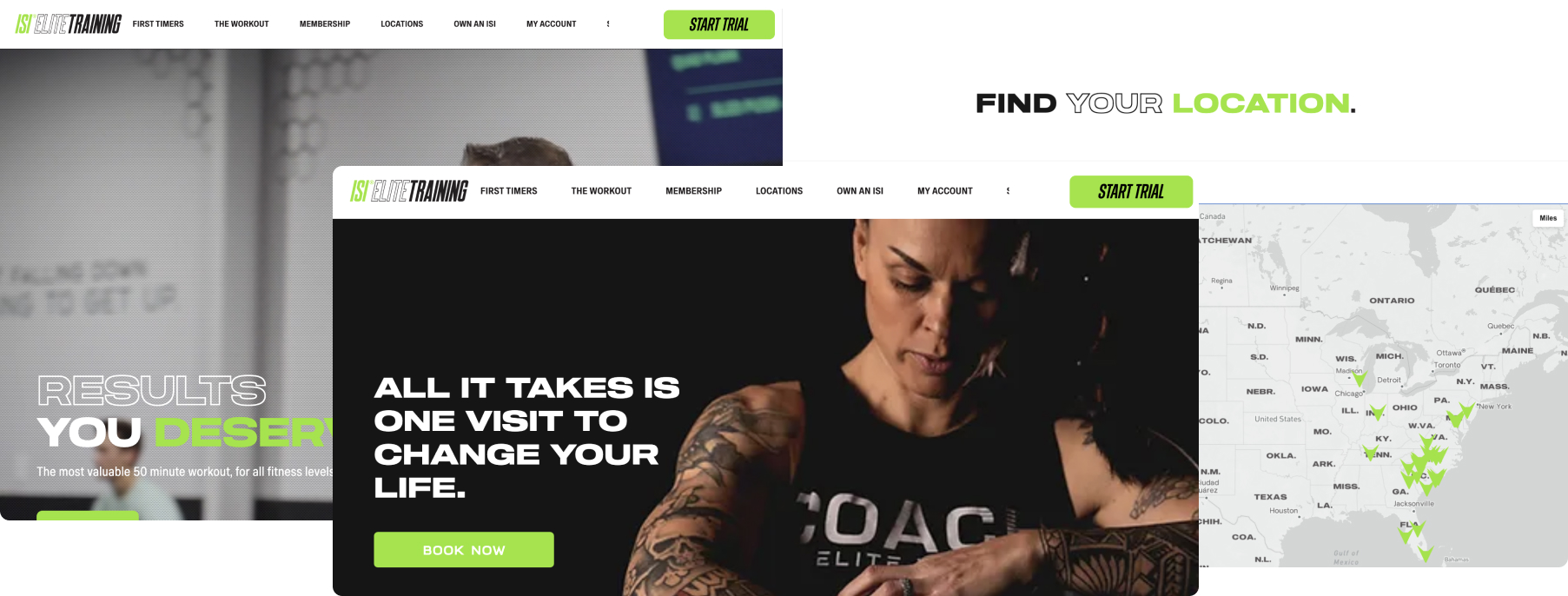
    Studios that continue relying on disconnected or outdated digital experiences will increasingly struggle to compete as consumer expectations continue rising. For a migration example, see ISI Elite Training’s website migration.

    The fitness brands seeing the strongest growth in 2026 are investing in connected digital ecosystems that reduce friction, improve engagement and support long-term member retention.

    Your website is no longer just a website.

    It’s part of the member experience. For implementation, explore IPSTUDIO’s fitness website platform.

  • IPSTUDIO’s Digital Transformation Service

    IPSTUDIO’s Digital Transformation Service

    Is your current website platform holding your business back? Do you feel limited by the features, flexibility and scalability of your website? IPSTUDIO understands the challenges businesses face with their online presence and is here to help. Our digital transformation service can help your business overcome these limitations and provide a seamless migration to a new platform that is tailored to your business needs.

    Recently, IPSTUDIO successfully migrated ISI® Elite Training from Wix to WordPress, hosted on a virtual private server. This migration has allowed ISI® Elite Training to take advantage of the many benefits that come with a WordPress platform and has allowed them to achieve more flexibility, scalability and cost savings.

    Wix is a popular website builder, but it can limit a business’s growth due to its limitations in terms of features, flexibility and scalability. WordPress, on the other hand, is an open-source content management system that offers a wide range of features and is highly flexible and scalable. By hosting WordPress on a virtual private server, businesses can enjoy even more control over their website and can tailor their website to their specific business needs.

    The migration process was smooth and seamless, with no downtime for the ISI® Elite Training website. IPSTUDIO’s experienced team of developers and designers worked closely with ISI® Elite Training to ensure that the new website was tailored to their specific needs and reflected their brand image.

    One of the biggest benefits of the migration was the cost savings. Hosting a website on a virtual private server provides a fast, safe and affordable solution. This allowed ISI® Elite Training to reduce their monthly website hosting costs while still enjoying all the benefits of a powerful and flexible platform. For performance context, see website speed and studio conversions.

    The new WordPress website is now more flexible and scalable, allowing ISI® Elite Training to expand their online presence and reach a larger audience. With WordPress, they can now add new pages and features to their website with ease, allowing them to grow their business and reach their goals.

    IPSTUDIO’s digital transformation service is not limited to just website migrations. We can help businesses with a wide range of digital transformation services, from website design and development to digital marketing and e-commerce solutions. Our team of experts will work closely with you to understand your business needs and provide a tailored solution that will help your business succeed online.

    In conclusion, IPSTUDIO’s digital transformation service is the perfect solution for businesses that are looking to take their online presence to the next level. Whether you are looking to migrate to a new platform, improve your website design, or expand your online presence, IPSTUDIO has the expertise and experience to help. Contact us today to learn more about how we can help your business succeed online.

    hello@ipstudio.co