Tag: Studio Operations

  • Demystifying DMARC Policies: Enhancing Email Security with Precision

    Demystifying DMARC Policies: Enhancing Email Security with Precision

    In the digital age, email has become a cornerstone of communication, both personally and professionally. However, with the convenience and ubiquity of email comes a host of security challenges, chief among them being email spoofing and phishing attacks. To combat these threats, organizations are turning to DMARC (Domain-based Message Authentication, Reporting, and Conformance) policies. In this blog post, we’ll delve into what DMARC policies are, why they’re needed, and provide examples to illustrate their importance.

    Understanding DMARC Policies:

    DMARC is an email authentication protocol that builds on two existing mechanisms: SPF (Sender Policy Framework) and DKIM (DomainKeys Identified Mail). SPF allows senders to specify which IP addresses are authorized to send emails on behalf of a domain, while DKIM adds a digital signature to emails, verifying their authenticity.

    DMARC goes a step further by providing a framework for receivers (mail servers) to determine how to handle emails that fail SPF and DKIM checks. It allows domain owners to publish policies instructing receivers on how to handle such emails, whether to deliver them, quarantine them, or reject them outright.

    Why DMARC is Needed:

    1. Preventing Email Spoofing: Email spoofing involves forging the sender’s address to make it appear as if the email originated from a trusted source. DMARC helps prevent this by allowing domain owners to specify strict policies for email authentication.
    2. Combatting Phishing Attacks: Phishing emails often impersonate legitimate entities to trick recipients into divulging sensitive information or downloading malicious content. DMARC helps identify and block these fraudulent emails, thereby safeguarding users against phishing attacks.
    3. Enhancing Email Deliverability: By implementing DMARC policies, organizations can improve their email deliverability rates. ISPs (Internet Service Providers) and email providers are more likely to deliver emails from domains with properly configured DMARC records, reducing the risk of legitimate emails being marked as spam.

    Examples of DMARC Policies in Action:

    1. Reject Policy: A domain owner sets a DMARC policy to “reject,” instructing receivers to reject any emails that fail both SPF and DKIM checks. This ensures that only authenticated emails from authorized senders are delivered to recipients.
    2. Quarantine Policy: In a quarantine policy, emails that fail authentication checks are diverted to the recipient’s spam or quarantine folder rather than being outright rejected. This provides an additional layer of protection while allowing recipients to review potentially suspicious emails.
    3. Monitoring Policy: Some domain owners initially opt for a “monitoring” policy, where DMARC reports are generated and sent to the specified email address without taking any action on failing emails. This allows organizations to assess the impact of implementing DMARC before enforcing stricter policies.

    Example DMARC Policies:

    Reject Policy:

     v=DMARC1; p=reject; rua=mailto:dmarc@example.com; ruf=mailto:dmarc@example.com; fo=1; pct=100; aspf=r; adkim=r

    Explanation:

    • v=DMARC1: Indicates the DMARC version being used.
    • p=reject: Instructs receivers to reject any emails that fail both SPF and DKIM checks.
    • rua=mailto:dmarc@example.com: Specifies the email address where aggregate DMARC reports should be sent.
    • ruf=mailto:dmarc@example.com: Specifies the email address where forensic DMARC reports should be sent.
    • fo=1: Indicates that forensic reports should be generated if the DMARC policy fails.
    • pct=100: Specifies that the DMARC policy should be applied to 100% of emails.
    • aspf=r: Specifies relaxed alignment mode for SPF.
    • adkim=r: Specifies relaxed alignment mode for DKIM.

    Quarantine Policy:

     v=DMARC1; p=quarantine; rua=mailto:dmarc@example.com; ruf=mailto:dmarc@example.com; fo=1; pct=100; aspf=r; adkim=r

    Explanation:

    • p=quarantine: Instructs receivers to quarantine emails that fail authentication checks by diverting them to the recipient’s spam or quarantine folder.
    • Other parameters remain the same as in the “Reject Policy” example.

    Monitoring Policy:

     v=DMARC1; p=none; rua=mailto:dmarc@example.com; ruf=mailto:dmarc@example.com; fo=1; pct=100; aspf=r; adkim=r

    Explanation:

    • p=none: Specifies that no action should be taken on failing emails. This is typically used for monitoring purposes.
    • Other parameters remain the same as in the previous examples.

    Minimum Policy:

    v=DMARC1; p=none; rua=mailto:dmarc@example.com

    Explanation:

    • p=none: This tag sets the DMARC policy to “none,” which means no specific action will be taken on emails that fail the DMARC checks. Instead of rejecting or quarantining these emails, the policy instructs email receivers to generate and send DMARC reports to the domain owner without enforcing any strict action on the failed emails.
    • Other parameters remain the same as in the previous examples.

    These sample DMARC policies demonstrate how domain owners can configure DMARC to enforce different levels of email authentication and handling based on their security requirements and risk tolerance.

    Conclusion:

    In an era where cyber threats continue to evolve, securing email communication is paramount for organizations of all sizes. DMARC policies serve as a powerful tool in the fight against email fraud, offering granular control over email authentication and helping protect both senders and recipients from malicious activities. By understanding and implementing DMARC policies effectively, organizations can bolster their email security posture and foster trust among their stakeholders in an increasingly digital world.
  • IPSTUDIO’s Digital Transformation Service

    IPSTUDIO’s Digital Transformation Service

    Is your current website platform holding your business back? Do you feel limited by the features, flexibility and scalability of your website? IPSTUDIO understands the challenges businesses face with their online presence and is here to help. Our digital transformation service can help your business overcome these limitations and provide a seamless migration to a new platform that is tailored to your business needs.

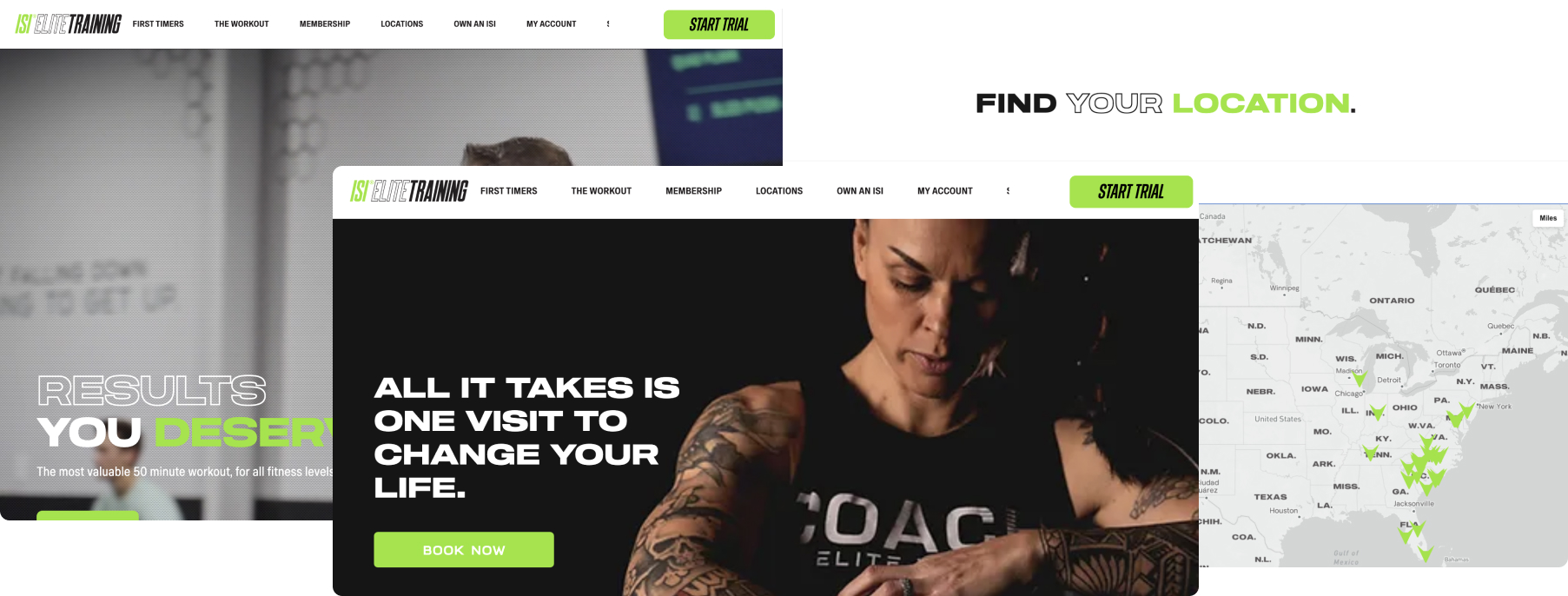
    Recently, IPSTUDIO successfully migrated ISI® Elite Training from Wix to WordPress, hosted on a virtual private server. This migration has allowed ISI® Elite Training to take advantage of the many benefits that come with a WordPress platform and has allowed them to achieve more flexibility, scalability and cost savings.

    Wix is a popular website builder, but it can limit a business’s growth due to its limitations in terms of features, flexibility and scalability. WordPress, on the other hand, is an open-source content management system that offers a wide range of features and is highly flexible and scalable. By hosting WordPress on a virtual private server, businesses can enjoy even more control over their website and can tailor their website to their specific business needs.

    The migration process was smooth and seamless, with no downtime for the ISI® Elite Training website. IPSTUDIO’s experienced team of developers and designers worked closely with ISI® Elite Training to ensure that the new website was tailored to their specific needs and reflected their brand image.

    One of the biggest benefits of the migration was the cost savings. Hosting a website on a virtual private server provides a fast, safe and affordable solution. This allowed ISI® Elite Training to reduce their monthly website hosting costs while still enjoying all the benefits of a powerful and flexible platform. For performance context, see website speed and studio conversions.

    The new WordPress website is now more flexible and scalable, allowing ISI® Elite Training to expand their online presence and reach a larger audience. With WordPress, they can now add new pages and features to their website with ease, allowing them to grow their business and reach their goals.

    IPSTUDIO’s digital transformation service is not limited to just website migrations. We can help businesses with a wide range of digital transformation services, from website design and development to digital marketing and e-commerce solutions. Our team of experts will work closely with you to understand your business needs and provide a tailored solution that will help your business succeed online.

    In conclusion, IPSTUDIO’s digital transformation service is the perfect solution for businesses that are looking to take their online presence to the next level. Whether you are looking to migrate to a new platform, improve your website design, or expand your online presence, IPSTUDIO has the expertise and experience to help. Contact us today to learn more about how we can help your business succeed online.

    hello@ipstudio.co

  • Top 3 CRMs in Boutique Fitness 

    Top 3 CRMs in Boutique Fitness 

    Fitness has evolved over the decades. It is no longer about big box brands and racking up the weights. As boutique fitness continues to evolve wellness brands are turning towards boutique fitness focused software services to streamline and simplify both in studio and online experiences.

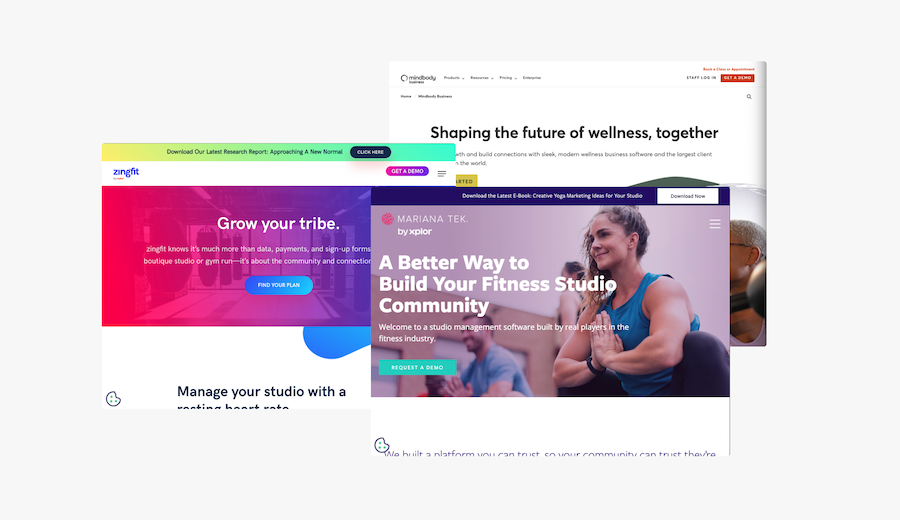
    We’ve made this short list based on the number of fitness brands being serviced and the product offerings.  

    MindBody

    This wellness service company has witnessed exponential growth across the world servicing over 130 countries and over 50,000 wellness, fitness businesses globally. As a boutique fitness software titan, MindBody earns a spot on every fitness software list.

    PROS

    • Intuitive UI for customers
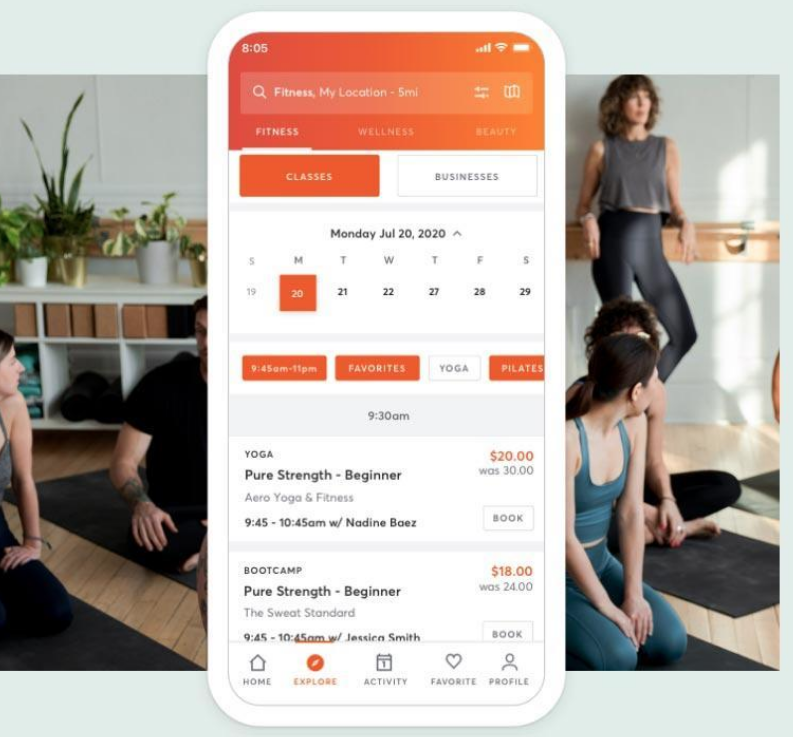
      • The Mindbody fitness app for customers is relatively intuitive and easy to use. Fitness enthusiasts can peruse the options in nearby areas for different classes offered by fitness boutiques and book them online.
    • Dedicated suite for Marketing
      • Marketing is the backbone of future and flourishing businesses. You have to stay ahead of the curve to beat the competition. Mindbody offers a range of marketing tools to increase reach and acquire customers through various media channels. 

    CONS

    • Unreliable software updates
      • Business owners often complain about the updates to the app, that break payment gateways and more. It results in loss of business, lower customer retention and more.
    • Slow customer support
      • Todays customers need answers, fast. With MindBody having tens of thousands of customers to manage their customer support is often lackluster.

    Mariana Tek

    Built by boutique fitness industry veterans, Mariana Tek ticks all the right boxes when it comes to fitness boutique CRMs. From their best-in-class mobile app, to streamlined booking flow, Mariana Tek is in a league of their own. This company packs a major punch and offers top notch service and support.

    PROS

    • Maximize Revenue Generation
      • From a seamless booking flow to their award winning mobile app, Mariana Tek’s platform is sure to increase conversions and boost revenue. Veering revenue upwards is one the primary goal of any business and Mariana Tek facilitates that with their software.
    • Seamless Mobile App
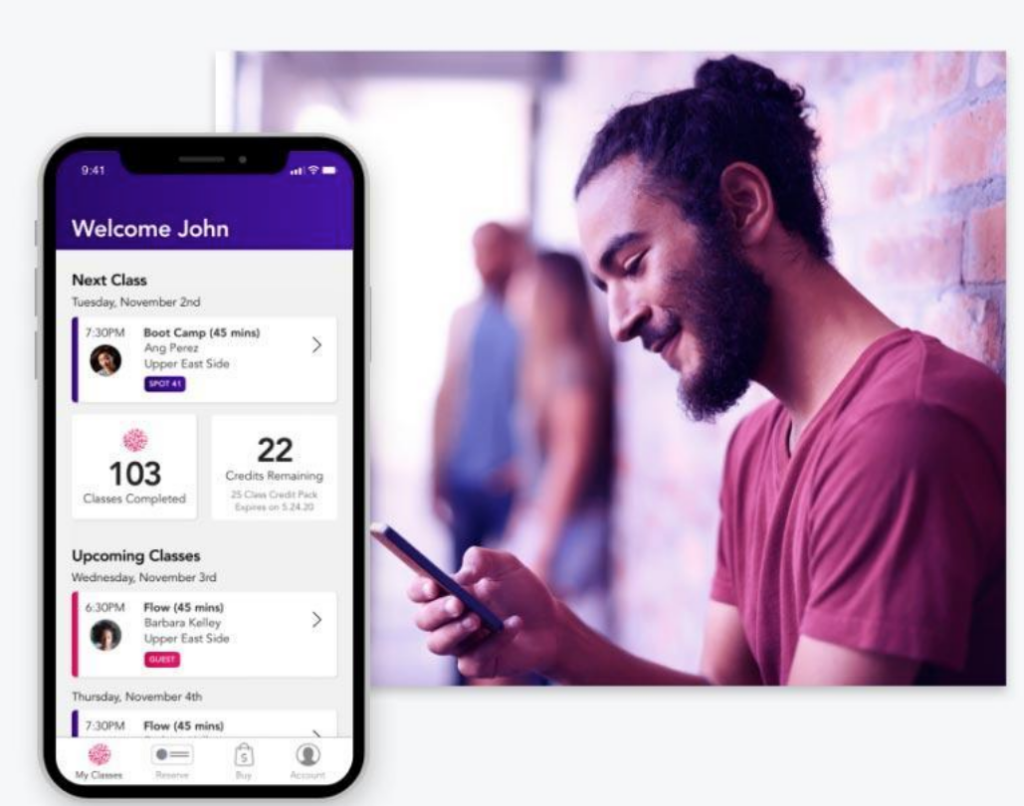
      • Beautifully designed, seamlessly built the Mariana Tek iOS and Android experiences are by far the best in the boutique fitness industry. Packed with a customizable area where your own integrations can fit, to advanced notification alerts, the Mariana Tek app is second to none.
    • Easy to Switch
      • It is not too late if you are discovering Mariana Tek. Migrate to Mariana Tek easily with the assistance of onboard dedicated migration specialist and easy to use tools. Hit the road with little down-time for your business with dedicated customer support.  For the website side of a Mariana Tek transition, see our integration-launch overview.
    • API + Support
      • Having experienced API development across the boutique fitness landscape, there is no better platform than Mariana Tek to work with. From their dedicated integrations team to technical support and developer documentation, everything is on point.

    Cons

    • Slightly more expensive than competition
      • You get what you pay for, right?

    Zingfit

    An industry vet and global service provider, Zingfit’s boutique software product lays particular emphasis on the backend aspects of running a successful fitness boutique. 

    PROS

    • Spot Scheduling
      • Online spot scheduling allows customers to book a particular space in class, equipment like one specific treadmill, mat, bench amongst other things from their app in advance. They don’t need to wait or arrive early to secure a spot.  
    • Instructor Management
      • Build your instructor’s schedule with Zingfit’s tools and manage instructor schedules with ease. Identify your star instructors by enabling ratings for them, whom the customers enjoy the most. Your best instructors are the face of the business. They help increase footfall in the long-run through positive word of mouth alone. 
    • Multi-Studio
      • Zingfit’s multi-studio configuration enables customers to manage several fitness studios from one administrator panel. Business owners would not need to shuffle between multiple dashboards for different studios. 

    CONS

    • No API available
      • No custom API development resources or integrations are currently available. Achieving customized experiences isn’t possible with Zingfit. 

    Bottom Line

    To sum it up, choosing the right boutique fitness software for your business requires a clear assessment of your needs, objectives and budget. If it were up to us, we’d choose Mariana Tek every time.