Tag: boutique fitness

  • AI Marketing Automation for Boutique Fitness Studios

    AI Marketing Automation for Boutique Fitness Studios

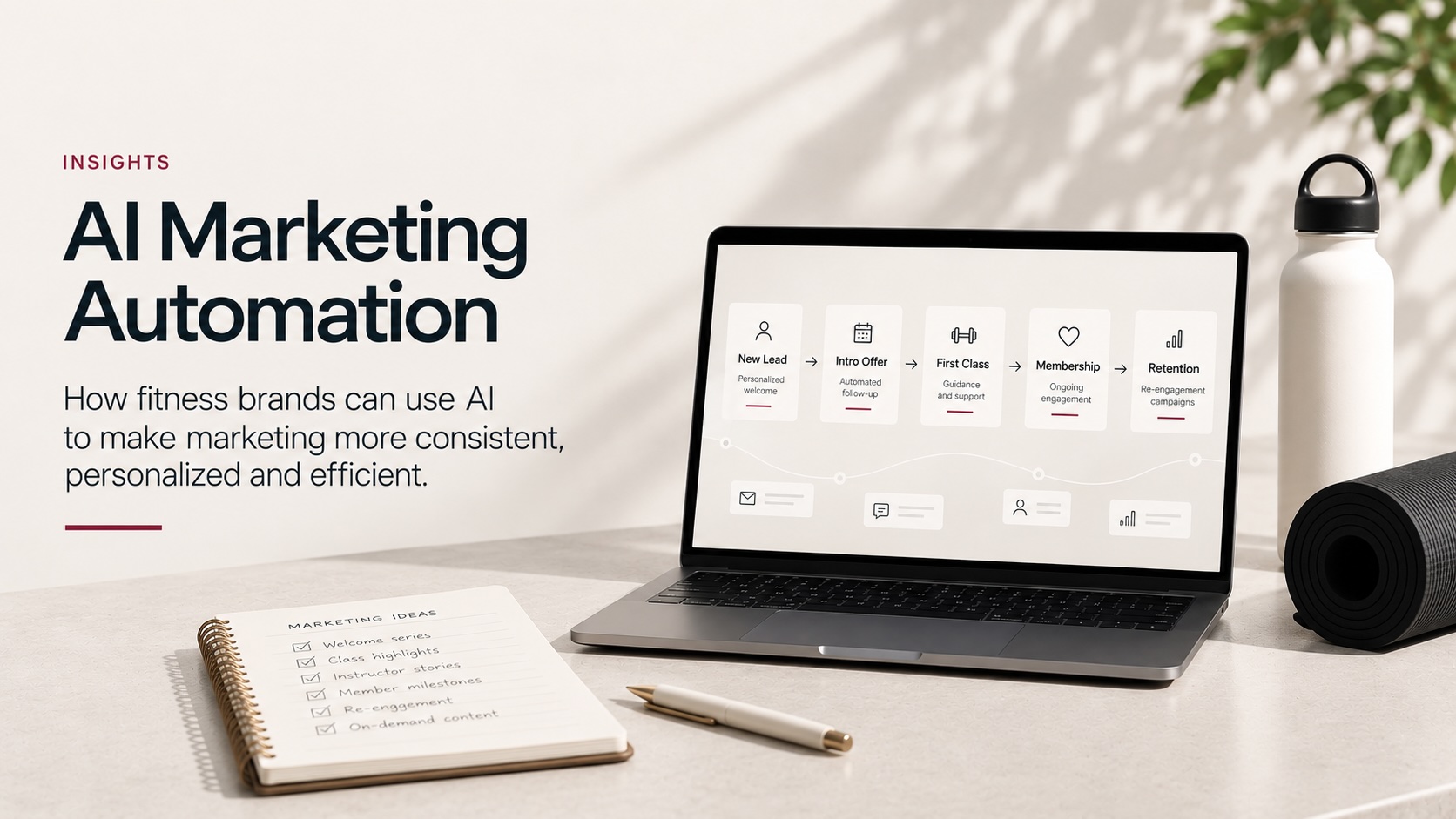
    How fitness brands can use AI to make marketing more consistent, personalized and efficient — without losing the human voice that makes their studio unique.

    Marketing a boutique fitness studio requires constant attention.

    There are intro offers to promote, leads to follow up with, members to retain, classes to fill, emails to write, social content to publish and campaigns to manage.

    For smaller studio teams, keeping everything moving can become a full-time job.

    AI marketing automation creates an opportunity to change that.

    The goal isn’t to automate every interaction or replace your marketing team. It’s to use AI and automation to handle repetitive work, identify opportunities and help your team communicate more effectively at the right moments.

    What Is AI Marketing Automation?

    Traditional marketing automation generally follows predefined rules.

    For example:

    Someone purchases an intro offer → Send a welcome email.

    AI can add another layer by helping businesses create content, analyze information, personalize communication and make workflows more intelligent.

    For a fitness studio, that could mean using AI to help:

    • Draft campaign content
    • Segment audiences
    • Personalize messaging
    • Repurpose content across channels
    • Identify disengaged members
    • Summarize marketing performance
    • Generate campaign ideas
    • Maintain consistent communication

    The opportunity isn’t simply to send more marketing.

    It’s to make the marketing you’re already doing easier and more relevant.

    Start With the Member Journey

    Before adding AI, map the basic member journey.

    A typical boutique fitness customer might move through:

    Discovery → Website Visit → Lead → Intro Offer → First Class → Repeat Visits → Membership → Retention → Win-Back

    Each stage creates different communication needs.

    Someone considering their first class needs very different messaging from a member who has attended 100 classes.

    Automation becomes much more useful when it’s built around those moments rather than sending the same campaigns to everyone.

    Automate the First-Class Experience

    The period between purchasing an introductory offer and attending the first class is an important opportunity to remove uncertainty.

    A studio can build an automated onboarding experience that covers:

    • What to expect
    • What to wear
    • When to arrive
    • Parking information
    • Equipment requirements
    • Studio policies
    • How to book
    • What happens after the first class

    AI can help adapt and maintain this content across email, website FAQs and other communication channels.

    The result should feel helpful, not automated.

    A prospective member shouldn’t need to search through your website or contact the front desk to understand their first visit.

    Turn One Idea Into Multiple Pieces of Content

    Content production is one of the most practical uses of AI for studio marketing.

    Imagine an instructor records a two-minute explanation of proper reformer positioning.

    That single piece of expertise could become:

    Video → Blog post → Email → Social caption → FAQ → Short-form video script

    Instead of asking AI to invent generic fitness content, give it original expertise from your team and use it to expand that knowledge into different formats.

    This preserves your brand’s point of view while dramatically reducing production time.

    Build Smarter Lead Follow-Up

    Not every prospective member converts immediately.

    Someone may:

    • Submit a form
    • Create an account
    • View pricing
    • Purchase an intro offer
    • Attend once
    • Stop attending

    Those behaviors represent different levels of intent.

    Rather than relying entirely on broad promotional emails, studios can build workflows around meaningful stages in the customer journey.

    For example:

    New lead
    Introduce the studio and explain how to get started.

    Intro offer purchased
    Help them book their first visit.

    First class completed
    Explain the next logical step.

    Intro offer ending
    Present relevant membership options.

    Previously active member
    Create an appropriate re-engagement message.

    Automation handles the timing. AI can help improve the communication.

    Use AI to Support Retention

    Marketing shouldn’t stop once someone becomes a member.

    Retention is where automation can become particularly valuable.

    Studios can create engagement around moments such as:

    • First class
    • Fifth or tenth visit
    • Membership anniversaries
    • Attendance milestones
    • Reduced attendance
    • Challenge participation
    • Membership expiration

    The objective isn’t to bombard members with notifications.

    It’s to recognize meaningful moments and communicate when there is actually something useful to say.

    Personalization Needs Context

    “Hi Sarah” isn’t meaningful personalization by itself.

    Useful personalization comes from understanding context.

    A member who primarily takes cycling classes may benefit from different communication than someone attending yoga.

    A member who attends four times per week shouldn’t receive the same “We miss you!” campaign as someone who hasn’t visited in a month.

    Studios should think about segmentation around signals such as:

    • Location
    • Membership
    • Class preferences
    • Attendance
    • Instructor engagement
    • Purchase history
    • Member lifecycle

    AI becomes much more powerful when paired with accurate first-party information.

    Use AI to Understand Marketing Performance

    Studio operators often have data spread across several systems:

    • Website analytics
    • Booking platforms
    • Email platforms
    • Advertising platforms
    • Ecommerce
    • Social media

    The problem isn’t always a lack of data.

    It’s finding the time to interpret it.

    AI can help teams summarize reports, identify changes and generate questions worth investigating.

    Instead of simply asking:

    “How much website traffic did we get?”

    Operators can start asking:

    “Which pages are bringing prospective members into the booking journey?”

    “Which campaigns generated intro-offer purchases?”

    “Where are prospective members dropping off?”

    “Which content is driving meaningful engagement?”

    AI can make analysis faster, but studios still need reliable data and human judgment before making business decisions.

    Don’t Automate Everything

    Some interactions should remain human.

    A frustrated member doesn’t necessarily need an AI-generated response.

    A sensitive membership conversation probably deserves personal attention.

    Community engagement shouldn’t become a stream of obviously automated messages.

    Boutique fitness succeeds because of relationships.

    Use automation for repetitive processes so your team has more time for those relationships, not less.

    Protect Member Data

    AI adoption also requires discipline around customer information.

    Before connecting member data to an AI service, studios should understand:

    • What information is being shared
    • Where it is processed
    • How it is retained
    • Who has access
    • Whether the workflow complies with applicable privacy requirements
    • What the vendor’s data policies allow

    Don’t paste sensitive member information into AI tools simply because it’s convenient.

    Automation should improve operations without compromising trust.

    A Practical Place to Start

    You don’t need an elaborate AI system on day one.

    Start with a few high-value workflows:

    1. First-visit onboarding
    Automatically give new customers everything they need before arriving.

    2. Content repurposing
    Turn original studio expertise into multiple marketing formats.

    3. Intro-offer follow-up
    Create consistent communication throughout the conversion window.

    4. Member re-engagement
    Identify appropriate audiences for thoughtful win-back communication.

    5. Reporting summaries
    Reduce the time required to understand marketing performance.

    Once those workflows work reliably, expand from there.

    AI Should Create Leverage, Not Noise

    The easiest mistake with AI marketing is using increased production capacity to simply produce more.

    More emails.

    More social posts.

    More notifications.

    More content.

    That’s not necessarily better marketing.

    The real opportunity is using AI to create better timing, better relevance and better operational efficiency.

    For boutique fitness brands, the competitive advantage won’t come from automating every customer interaction.

    It will come from building smarter systems behind a distinctly human experience.

    Automate the repetitive work. Keep the relationships human.
  • Writing Better Studio Content: How Boutique Fitness Brands Can Communicate More Clearly

    Writing Better Studio Content: How Boutique Fitness Brands Can Communicate More Clearly

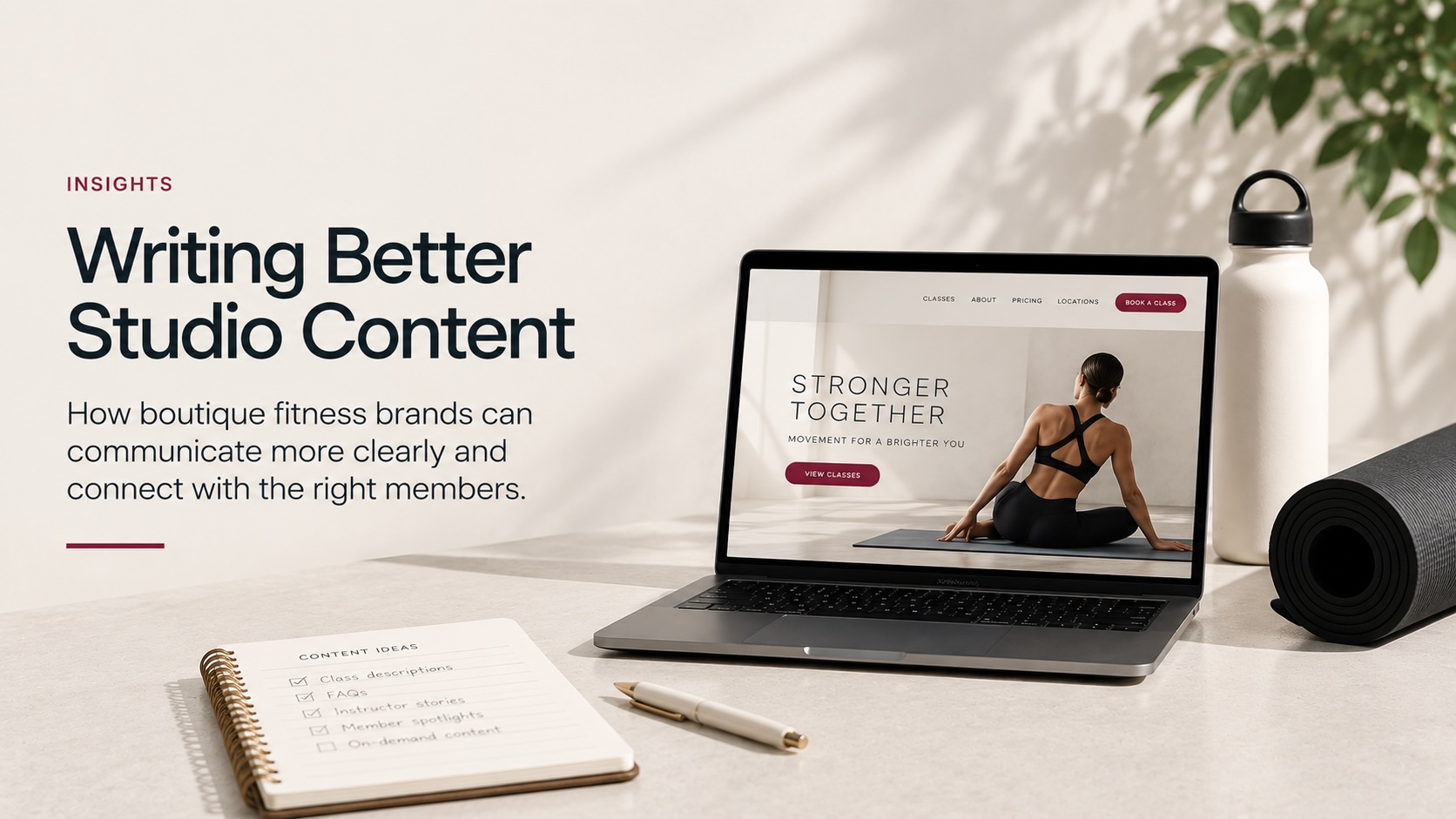
    Better fitness content isn’t about saying more. It’s about helping the right person understand your studio, trust your brand and know what to do next.

    Boutique fitness brands have more places to communicate than ever: websites, email, social media, mobile apps, booking platforms, push notifications and search.

    Yet one of the most common problems we see is surprisingly simple:

    Studios know exactly what makes their experience special, but their digital content doesn’t always communicate it.

    The result can be beautiful branding paired with vague messaging, confusing class descriptions or important information buried where prospective members can’t find it.

    Better content starts with clarity.

    Write for Someone Who Has Never Visited Your Studio

    Studio owners and instructors live inside their brands every day.

    Your prospective member doesn’t.

    Terms, class formats and policies that seem obvious internally may be completely unfamiliar to someone considering their first class.

    Before publishing content, ask:

    • Would a first-time visitor understand this?
    • Does it explain what the experience actually is?
    • Does it answer the questions someone might have before booking?
    • Is the next step obvious?

    Don’t assume familiarity.

    A statement like “50 minutes. Full body. No excuses.” might sound great, but it doesn’t tell a new visitor what they’re signing up for.

    Pair brand language with useful information:

    50 minutes. Full body. No excuses.
    Our instructor-led strength classes combine resistance training and conditioning in a high-energy, small-group environment.

    You can have personality and clarity at the same time.

    Answer the Questions Members Actually Ask

    Some of your best content ideas are already sitting in your inbox.

    Think about what prospective and current members repeatedly ask:

    • What should I expect during my first class?
    • Is this suitable for beginners?
    • What should I wear?
    • Do I need grip socks?
    • How early should I arrive?
    • Where should I park?
    • What’s the difference between your class types?
    • Which introductory offer should I choose?
    • Can I attend multiple locations?

    If your team answers the same question repeatedly, there’s a good chance the answer should exist somewhere in your digital experience.

    These questions can become FAQs, website sections, onboarding emails, social content and longer educational articles.

    Good content reduces uncertainty.

    Focus on Benefits, Not Just Features

    Studios naturally describe what they offer:

    “45-minute reformer class.”

    “12 reformers.”

    “Heated studio.”

    “On-demand library.”

    Those details matter, but members are ultimately trying to understand what those features mean for them.

    Connect the feature to the experience.

    Instead of:

    Access our on-demand library.

    Consider:

    Can’t make it into the studio? Train with your favorite instructors from home, while traveling or whenever your schedule changes.

    The feature hasn’t changed. The value is simply clearer.

    Give Every Page One Primary Job

    Trying to make every page communicate everything usually makes the experience harder to navigate.

    A homepage might primarily introduce the brand and move someone toward their first class.

    A class page should help someone understand the workout.

    A location page should help someone evaluate and visit that specific studio.

    A pricing page should make purchasing easier.

    A first-visit page should remove uncertainty.

    Before writing a page, decide:

    What should someone understand, and what should they do next?

    Then build the content around that objective.

    Make Your Calls to Action Specific

    “Learn More” isn’t always wrong, but it often wastes an opportunity to tell someone exactly what happens next.

    Consider calls to action such as:

    • View Schedule
    • Book Your First Class
    • Explore Memberships
    • Find Your Studio
    • Meet the Instructors
    • Start Your Free Trial
    • Watch On Demand

    The CTA should match the visitor’s stage in the journey.

    Someone learning about a class may not be ready to “Buy Now.” Someone already reviewing memberships probably doesn’t need another “Discover More.”

    Good content creates progression.

    Write for People First and Search Second

    Search optimization matters, but awkward keyword-heavy copy rarely creates a great member experience.

    Instead, clearly describe:

    • What you offer
    • Where you offer it
    • Who it’s for
    • How it works
    • What makes it different

    For example, a heading like “Reformer Pilates in Austin” communicates substantially more than “Move Differently.”

    You can still use “Move Differently” as brand language. Just give search engines, AI systems and prospective members enough context to understand what it means.

    This is becoming increasingly important as discovery expands beyond traditional search engines into AI-powered search experiences.

    Your Location Pages Should Actually Be Local

    For multi-location brands, copying the same paragraph across every location page and changing the city name misses an opportunity.

    Give each location useful information such as:

    • Neighborhood
    • Address and directions
    • Parking
    • Amenities
    • Class offerings
    • Instructors
    • Introductory offers
    • Local FAQs
    • Schedule

    Your location page should feel like the digital front door to that specific studio.

    Don’t Let AI Make Your Brand Generic

    AI can dramatically speed up content production, but it can also make every fitness studio sound the same.

    Phrases like “transform your journey,” “unlock your potential” and “become the best version of yourself” communicate very little when they could describe almost any fitness business.

    Use AI to help organize, edit, brainstorm and repurpose content.

    But give it real inputs:

    • Your actual methodology
    • Your audience
    • Your instructors
    • Your terminology
    • Your positioning
    • Your customer questions
    • Your brand voice

    AI works much better when it has something distinctive to work with.

    Repurpose What You Already Have

    You don’t need to start every piece of content from scratch.

    One strong piece of studio knowledge can become:

    Instructor expertise → Blog article → Newsletter → Social posts → FAQ → Website content

    A detailed explanation of your training method could become a class page, educational article and onboarding email.

    A frequently asked question could become a short video, social post and website FAQ.

    This creates consistency while reducing the amount of new material your team has to produce.

    Review Content Like a Member

    Before publishing, forget what you know about the business and read the page as a prospective customer.

    Can you quickly answer:

    What is this?

    Is it for me?

    Where is it?

    What does it cost?

    What should I expect?

    What do I do next?

    If the page can’t answer the questions that matter to its intended visitor, another paragraph of marketing copy probably isn’t the solution.

    Better structure and clearer information usually are.

    Better Content Creates a Better Member Experience

    Content isn’t separate from the customer experience.

    It’s part of it.

    Clear information can make someone more comfortable booking their first class. Better class descriptions can help members choose the right experience. Strong location pages can make studios easier to discover. Useful onboarding content can remove friction before someone ever walks through the door.

    The strongest boutique fitness content doesn’t try to sound impressive.

    It makes the experience easier to understand.

    Be specific. Be useful. Keep your brand personality. And always make the next step clear.

  • Building Member Retention Through Weekly Content Releases

    Building Member Retention Through Weekly Content Releases

    Your on-demand library shouldn’t just attract members at launch. It should give them a reason to keep coming back.

    Retention is one of the most important metrics in boutique fitness.

    Studios spend significant time and money acquiring members, but long-term growth depends on keeping those members engaged.

    On-demand fitness can support that goal, particularly when studios treat content as an ongoing experience rather than a one-time library.

    The Problem With the Static Video Library

    A studio launches on-demand with 30 or 50 workouts.

    Members explore it.

    Then nothing changes.

    Over time, even a strong library can start to feel stale.

    Streaming platforms have conditioned consumers to expect new content. Fitness doesn’t need to match the volume of major entertainment platforms, but the same principle applies:

    New content creates a reason to return.

    Consistency Beats Volume

    You don’t necessarily need to publish five workouts every week.

    One meaningful release each week can establish a predictable rhythm.

    For example:

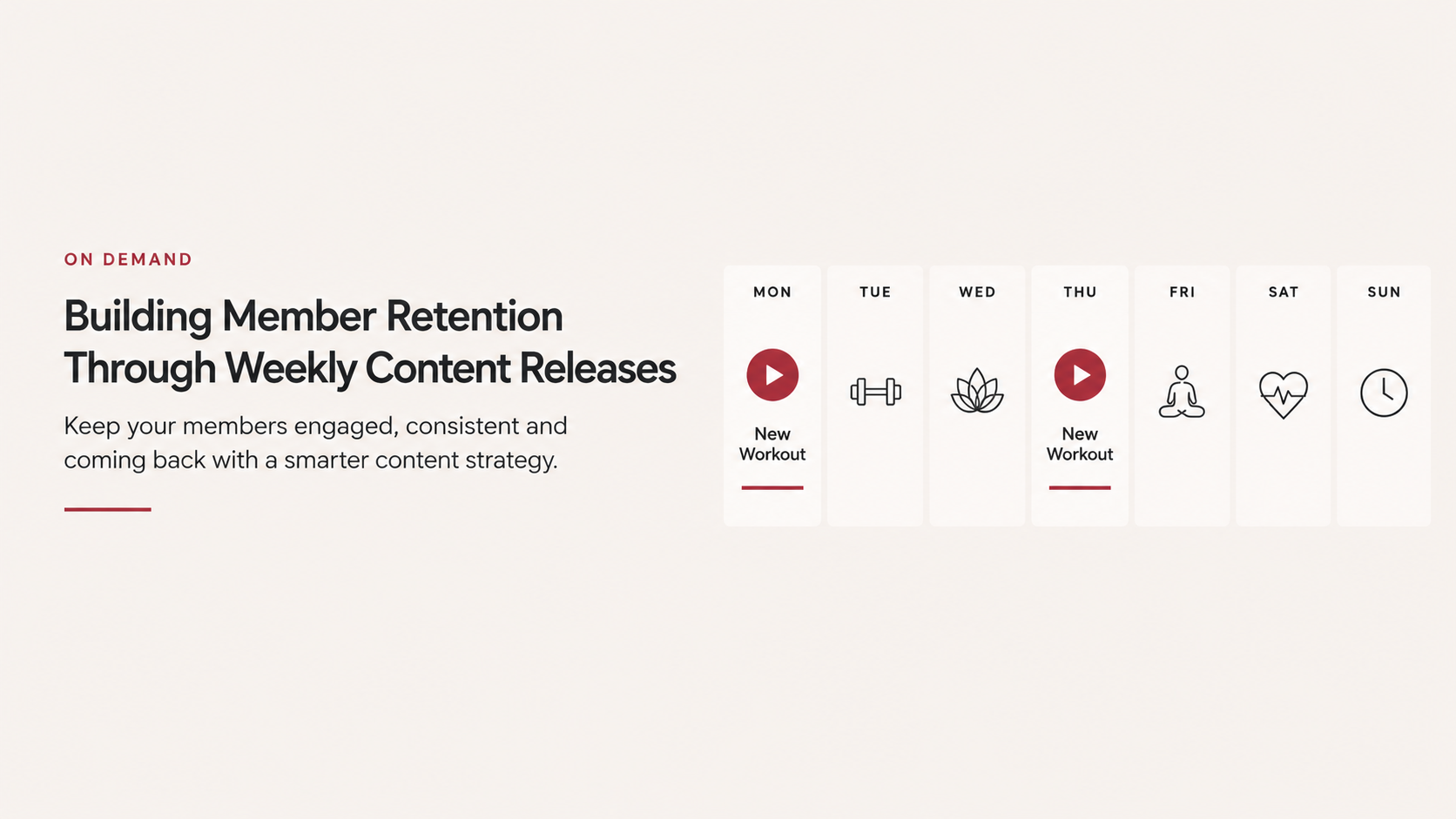
    Monday: New workout
    Wednesday: Highlight the workout on social
    Friday: Feature it in member communications

    Now one piece of content generates multiple member touchpoints throughout the week.

    Over a year, one weekly release also creates more than 50 additional pieces of fitness content.

    That’s a substantial library without an unsustainable production schedule.

    Create Content Around Member Behavior

    Your releases shouldn’t be random.

    Think about when members need additional support.

    January might focus on consistency.

    Summer might feature travel-friendly workouts.

    The holidays might emphasize shorter classes.

    Recovery content could follow demanding studio challenges.

    Beginner series can support new-member acquisition periods.

    This turns on-demand from an archive into an extension of your programming strategy.

    Use Series to Build Habits

    Individual workouts are useful. Series can be even more powerful.

    Consider:

    • 7-Day Core Series
    • 4-Week Strength Program
    • Beginner Foundations
    • Mobility Week
    • Instructor Spotlight
    • 20-Minute Workout Series

    Series give members a reason to continue to the next piece of content.

    Instead of asking, “What should I take today?” the member already has a next step.

    That reduces decision fatigue while creating another opportunity for consistent engagement.

    Bring Your Instructors Beyond the Studio

    Instructor relationships are one of boutique fitness’s strongest retention advantages.

    Members develop connections with the people who coach them.

    On-demand allows those relationships to continue outside scheduled class times.

    A member traveling for work can still train with their favorite instructor. Someone who missed class can stay connected from home. A new member can become familiar with instructors before walking into their first session.

    Digital content shouldn’t replace that human connection.

    It can extend it.

    Connect Digital and In-Studio Experiences

    The most effective strategy isn’t necessarily “in-person versus digital.”

    It’s connected fitness.

    A studio challenge can include an on-demand recovery workout.

    An instructor can recommend a digital mobility session after class.

    A new member can receive a beginner collection after joining.

    A member traveling for two weeks can continue participating remotely.

    The physical studio remains the center of the community while digital content fills the gaps between visits.

    Give Members Something to Look Forward To

    Retention is ultimately about maintaining value over time.

    Weekly content releases communicate something important:

    There’s always something new happening here.

    That doesn’t require a massive production team or hundreds of videos. It requires a sustainable publishing rhythm and content that reflects what members actually need.

    With On Demand by IPSTUDIO™, boutique fitness studios can extend their member experience beyond the studio and build a digital content strategy designed for ongoing engagement.

    Don’t just build a library.

    Build a reason to come back.

  • How to Plan Your First Month of On-Demand Content

    How to Plan Your First Month of On-Demand Content

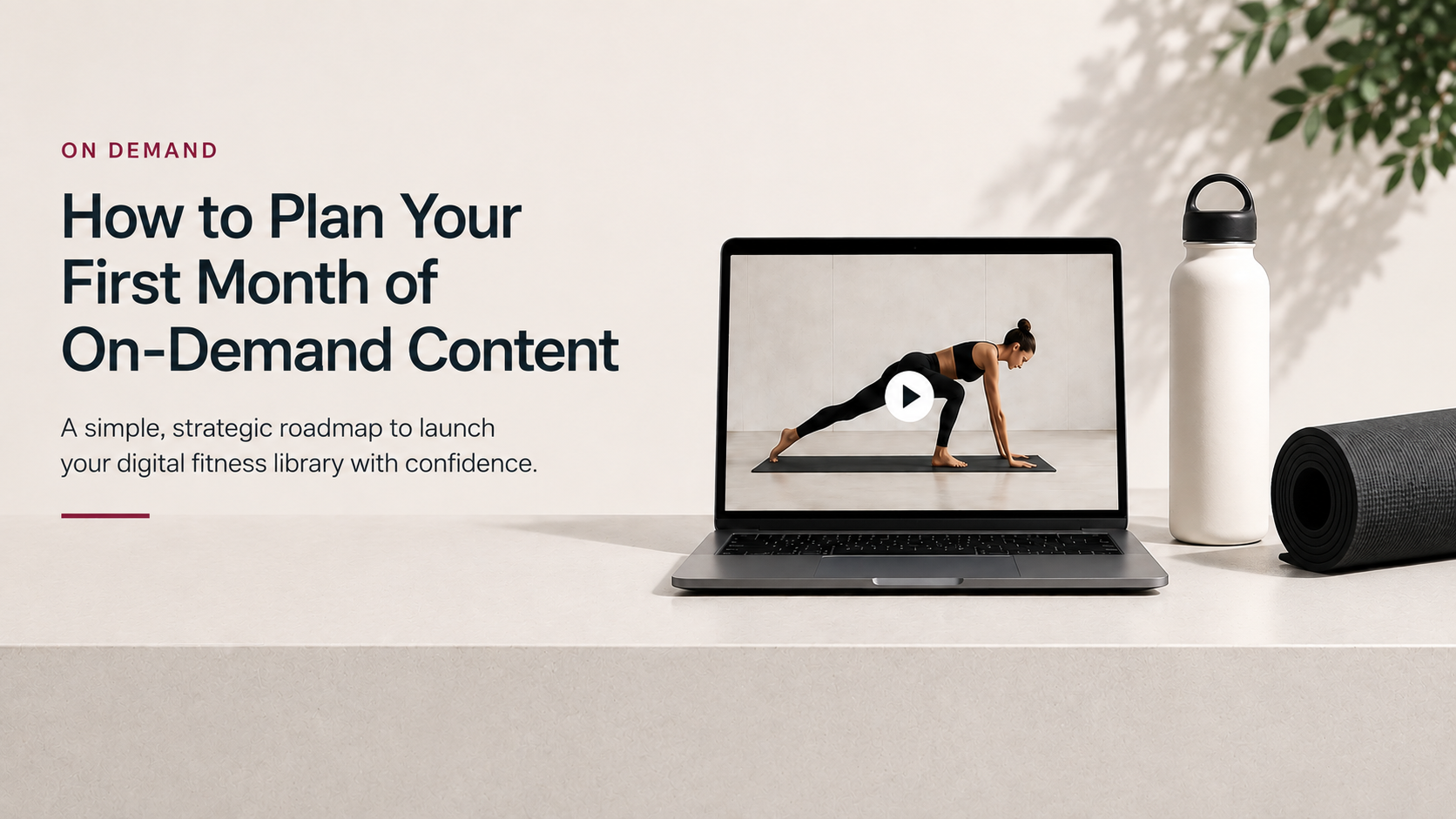
    You don’t need hundreds of videos to launch an effective on-demand fitness experience. You need the right content, organized around how your members actually train.

    Launching an on-demand library can feel overwhelming. How many classes do you need? How long should they be? Which instructors should you feature? How often should you publish something new?

    For most boutique fitness studios, the best approach is to start focused.

    Your first month should give members enough variety to find something they want to take while establishing a sustainable rhythm for your team.

    Start With Your Members, Not Your Camera

    Before recording anything, think about why your members would use on-demand content.

    A member might want to:

    • Take a full class when they can’t make it to the studio
    • Fit a 15-minute workout into a busy day
    • Continue training while traveling
    • Add mobility or recovery to their routine
    • Revisit a favorite instructor
    • Try a class type before taking it in person

    Those use cases should shape your initial library.

    The goal isn’t simply to recreate your studio schedule online. Digital content gives you the opportunity to serve moments that your physical schedule can’t.

    Build a Balanced Starter Library

    Instead of recording 20 versions of the same workout, create variety.

    For example, an initial library might include:

    Full-length classes
    Give members an experience similar to attending the studio.

    Express workouts
    Create 10–30 minute options for busy days.

    Beginner content
    Help newer members understand movements, equipment and class formats.

    Targeted workouts
    Think core, upper body, lower body, mobility or recovery.

    Instructor variety
    Feature different personalities and teaching styles from your studio.

    A smaller, thoughtfully organized library will usually be more useful than a large collection members struggle to navigate.

    Plan Your First Four Weeks

    You don’t need to publish everything on day one.

    Consider launching with a core collection and then adding content weekly.

    Week 1: Establish the experience
    Publish several foundational workouts representing your primary class types and instructors.

    Week 2: Add convenience
    Introduce shorter workouts and content designed for busy schedules.

    Week 3: Add variety
    Release targeted workouts, specialty formats or additional instructors.

    Week 4: Give members a reason to return
    Introduce a new series, challenge or featured workout.

    Now your on-demand experience feels active rather than static.

    Create a Repeatable Production Workflow

    Consistency matters more than perfection.

    Establish a simple workflow:

    Plan → Record → Edit → Upload → Categorize → Publish → Promote

    Batching content can make this dramatically easier. Instead of setting up equipment every week, record several workouts during one production session and release them gradually.

    Your content calendar can then stay active without requiring constant filming.

    Organize Content for Discovery

    Members shouldn’t have to scroll endlessly to find a workout.

    Useful collections might include:

    • 30 Minutes or Less
    • Beginner
    • Full Body
    • Strength
    • Mobility & Recovery
    • Instructor Collections
    • Most Recent

    Think of your library like a streaming service rather than a folder of videos.

    Good organization increases the likelihood that members actually use the content you’re creating. For equipment and delivery choices, use our practical live and on-demand setup guide.

    Promote Every Release

    Uploading a workout doesn’t mean members will discover it.

    Use your existing channels to introduce new content:

    • Email
    • Social media
    • Website
    • Studio signage
    • Instructor announcements
    • Mobile app

    A simple weekly “New this week” message can give members another reason to interact with your brand.

    Don’t Wait for a Perfect Library

    One of the easiest mistakes is delaying launch because you don’t have enough content.

    Start with a useful foundation. Learn what members watch. Then build around actual engagement.

    Your first month isn’t about creating the final version of your on-demand library.

    It’s about establishing the habit, for both your members and your team.

    With a clear content strategy and a connected platform like On Demand by IPSTUDIO™, your digital library can become an extension of the studio experience that keeps members connected wherever they are.

  • A Practical Guide for Recording Professional On-Demand Content

    A Practical Guide for Recording Professional On-Demand Content

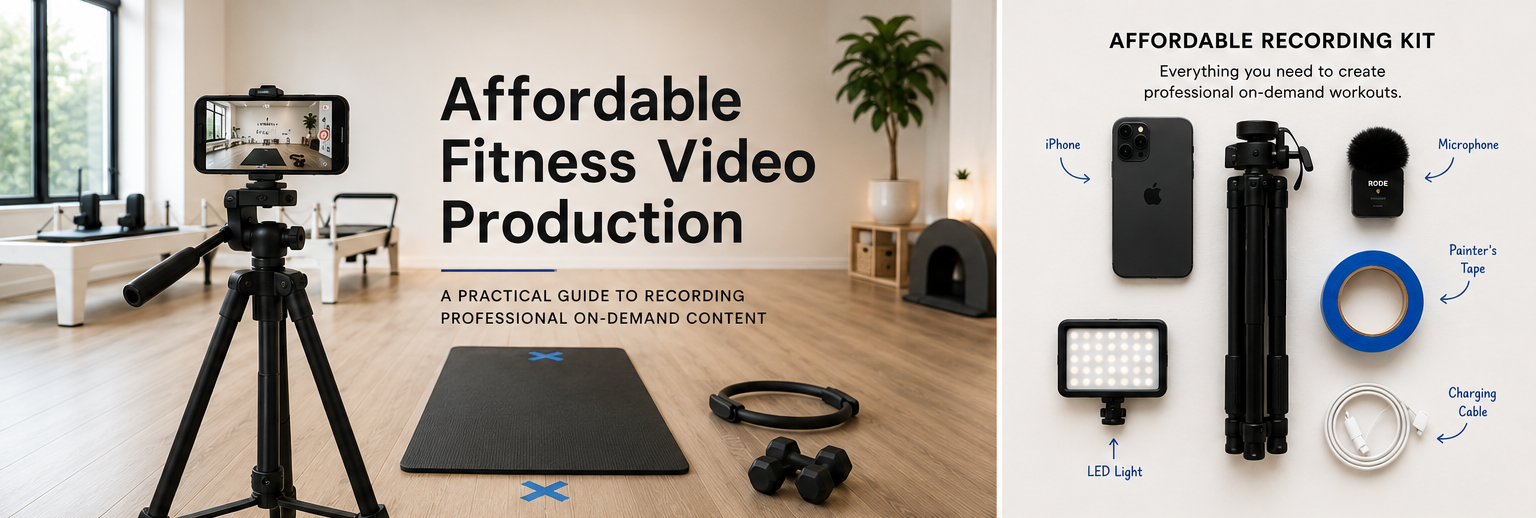
    Launching an on-demand library doesn’t require a production crew, expensive cameras, or a dedicated studio. Many of the most successful boutique fitness brands create engaging content with equipment they already own by focusing on consistency instead of complexity.

    If you’re just getting started, this guide will help you build a repeatable recording process that produces professional-looking classes while keeping costs low.

    Start With the Camera You Already Own

    One of the biggest misconceptions about filming on-demand classes is that you need a DSLR or cinema camera.

    You probably don’t.

    Modern iPhones and flagship Android phones record excellent video that is more than capable of producing a polished member experience.

    A few recommendations:

    • Record in 1080p (Full HD). This provides excellent image quality while keeping file sizes manageable.
    • Use 30 FPS unless you have a specific reason to film at 60 FPS.
    • Clean the camera lens before every recording.
    • Disable notifications or use Airplane Mode so recording isn’t interrupted.
    • Make sure plenty of storage is available before class begins.

    For nearly every boutique fitness studio, 1080p is the sweet spot between quality, upload speed, editing time, and streaming performance.

    Stability Matters More Than Camera Quality

    Nothing makes a video feel amateur faster than a shaky camera.

    Invest in a sturdy tripod and leave it assembled whenever possible.

    Benefits include:

    • Consistent framing
    • Less editing
    • Professional appearance
    • Easier instructor positioning
    • Better continuity between videos

    A simple tripod is one of the highest-value purchases you can make for your recording setup.

    Mark Your Floor

    One of the easiest tricks used by production crews is also one of the cheapest.

    Use painter’s tape or discreet floor markers to identify:

    • Instructor position
    • Camera location
    • Mat placement
    • Equipment placement
    • Lighting locations

    When every recording starts in exactly the same place:

    • Videos look consistent
    • Camera framing stays identical
    • Editing becomes easier
    • Members know what to expect

    Your audience notices consistency—even if they don’t realize why.

    Build a Repeatable Recording System

    The best studios don’t reinvent the process every time they record.

    Instead, create a simple checklist.

    For example:

    Before Recording

    • Set tripod in marked position
    • Clean camera lens
    • Turn on lights
    • Check microphone
    • Enable Airplane Mode
    • Confirm battery level
    • Verify recording settings (1080p)

    During Recording

    • Begin recording before instructor enters
    • Pause briefly before speaking
    • Keep movements inside the frame
    • Smile and maintain energy throughout

    After Recording

    • Review the first minute
    • Rename the file
    • Upload immediately
    • Back up the original footage

    The fewer decisions you make each filming day, the faster you’ll build your content library.

    Keep Your Camera Position Consistent

    Avoid moving the camera around between workouts.

    Instead, establish one “hero” angle that works for your space.

    Try to keep:

    • Camera height consistent
    • Distance from instructor consistent
    • Horizon level
    • Room centered
    • Lighting unchanged

    Members quickly become familiar with your filming style, making the library feel more cohesive.

    Prioritize Great Audio

    Members will tolerate average video much longer than poor audio.

    If your budget allows for one upgrade, make it a microphone.

    Affordable options include:

    • Wireless lavalier microphones
    • Clip-on USB-C or Lightning microphones
    • Shotgun microphones for quiet studios

    Even inexpensive microphones typically produce a noticeable improvement over the phone’s built-in mic.

    Use Natural Light Whenever Possible

    Lighting dramatically affects perceived quality.

    Whenever possible:

    • Face windows instead of having windows behind you.
    • Record during consistent daylight hours.
    • Avoid harsh overhead shadows.
    • Add inexpensive LED panel lights if your room is dim.

    Good lighting often has a bigger impact than upgrading your camera.

    Keep the Background Clean

    Your workout should be the focus—not clutter.

    Before filming:

    • Remove water bottles and bags
    • Hide cleaning supplies
    • Straighten props
    • Check mirrors for unwanted reflections
    • Eliminate distracting signage

    A clean space instantly elevates production value.

    Record Multiple Classes in One Session

    Changing outfits between classes can create the appearance of multiple filming days while maximizing efficiency.

    Batch recording helps you:

    • Build your library faster
    • Reduce setup time
    • Stay consistent
    • Keep instructors in “recording mode”

    Many successful studios film an entire month’s worth of content over one or two dedicated production days.

    Don’t Chase Perfection

    Members are looking for helpful workouts—not Hollywood productions.

    Minor mistakes are usually fine if:

    • Audio is clear
    • Video is stable
    • Instruction is engaging
    • The workout is valuable

    Publishing consistently is far more important than endlessly reshooting content.

    Create Click-Worthy Video Thumbnails

    Your thumbnail is often the first thing members see before deciding to press play.

    A strong thumbnail can significantly improve engagement.

    Recommended Size

    1200 × 628 pixels

    This size works well across websites, social sharing, and most on-demand platforms.

    Thumbnail Best Practices

    Use:

    • A bright, well-lit action shot
    • The instructor clearly visible
    • Plenty of empty space for text
    • Consistent branding
    • High contrast between text and background

    Avoid:

    • Blurry screenshots
    • Tiny text
    • Overcrowded layouts
    • Multiple competing images
    • Dark or underexposed photos

    Include Helpful Information

    Keep text short and easy to scan.

    Examples:

    • Pilates Foundations
    • Upper Body Strength
    • Full Body Flow
    • Beginner Mobility
    • 20 Minute Core
    • Power Yoga

    Including duration or difficulty level can also help members quickly choose the right class.

    Examples:

    • 30 Min • Intermediate
    • 15 Min • Beginner
    • 45 Min • Advanced

    Maintain a Consistent Thumbnail Style

    Every thumbnail should feel like part of the same library.

    Try to standardize:

    • Logo placement
    • Font
    • Text size
    • Color palette
    • Image style
    • Title position

    A consistent design makes your content library feel more polished and easier to browse.

    Focus on Consistency Over Equipment

    Great on-demand libraries aren’t built by buying expensive gear—they’re built through repeatable systems.

    A smartphone, tripod, good lighting, clear audio, and a consistent production process are enough to create a professional content library that members will enjoy returning to.

    Start simple, improve over time, and focus your energy on creating valuable classes rather than chasing perfect production quality. The more streamlined your recording workflow becomes, the easier it is to keep your on-demand library fresh with new content.

  • Local SEO for Pilates, Yoga and Boutique Fitness Studios

    If someone searches for “Pilates near me” or “Yoga studio in Austin,” your website and Google Business Profile should help your studio appear among the top local results. Local SEO is one of the highest-return marketing investments for boutique fitness businesses because it connects you with people actively looking for classes nearby.

    Optimize Your Google Business Profile

    Keep your business name, address, phone number, website, hours, and photos current. Encourage members to leave reviews and respond thoughtfully to feedback. An active profile signals credibility to both Google and prospective members.

    Build Location-Focused Pages

    If you operate in multiple neighborhoods or cities, create dedicated pages for each location. Include unique descriptions, directions, amenities, instructors, and class offerings rather than duplicating content.

    Keep Information Consistent

    Ensure your business name, address, and phone number are identical across your website, Google Business Profile, and online directories. Consistency strengthens local search signals.

    Create Helpful Local Content

    Publishing articles about community events, studio updates, wellness tips, or local partnerships demonstrates relevance and keeps your website active.

    Mobile Experience Matters

    Most local searches happen on mobile devices. A fast, responsive website with clear booking actions helps convert visitors into members.

    Local SEO isn’t about gaming search engines—it’s about making it easy for nearby members to discover, trust, and choose your studio. For the newer discovery context, see AI search and local studio discovery.

  • How Boutique Fitness Studios Can Use AI to Improve Marketing, Retention and Member Experience

    AI is no longer just a copywriting tool, it’s becoming part of the modern fitness operating system.

    Over the past few years, AI tools like ChatGPT have dramatically changed how businesses create content, communicate with customers and streamline operations.

    But in boutique fitness, the opportunity goes far beyond generating social captions or writing newsletters.

    Studios are beginning to use AI to:

    • Improve website conversion
    • Speed up marketing workflows
    • Personalize member communication
    • Support retention initiatives
    • Generate SEO content
    • Build stronger digital member experiences

    The studios that learn how to integrate AI effectively into their workflows will likely operate faster, communicate better and scale more efficiently than those who don’t.

    AI Should Support Your Brand, Not Replace It

    One of the biggest misconceptions about AI is that it should completely replace human creativity.

    In reality, the best results happen when AI supports:

    • Brand strategy
    • Operator knowledge
    • Instructor expertise
    • Community voice
    • Marketing execution

    AI works best as a multiplier.

    Studios still need:

    • Strong branding
    • Clear positioning
    • Authentic messaging
    • Quality experiences
    • Human connection

    The goal is not robotic content.

    The goal is operational leverage.

    Using AI for Website Content

    For a clearer starting point, review our guidance on website messaging. Most studio websites struggle because the messaging is:

    • Generic
    • Unclear
    • Overwritten
    • Inconsistent
    • Not conversion-focused

    AI can help studios create:

    • Homepage copy
    • SEO landing pages
    • Location pages
    • Membership descriptions
    • FAQ sections
    • Blog posts
    • Calls to action

    The key is giving AI the right context.

    Instead of asking:

    “Write me a fitness homepage.”

    Better prompts include:

    • Your target demographic
    • Training style
    • Studio personality
    • Market positioning
    • Desired conversion goal

    The more specific the context, the stronger the output.

    AI + SEO Is Becoming a Major Advantage

    Content velocity matters more than ever.

    Studios consistently publishing useful content around:

    • Fitness education
    • Studio updates
    • Local SEO
    • Wellness insights
    • Beginner guides
    • Instructor expertise

    often build stronger long-term search visibility.

    AI can help studios:

    • Generate article structures
    • Expand newsletters into blogs
    • Create SEO-focused metadata
    • Identify keyword opportunities
    • Repurpose existing content

    This allows smaller teams to maintain more consistent content output without dramatically increasing workload.

    Improving Member Communication

    Studios spend enormous amounts of time answering repetitive questions.

    AI can help streamline communication around:

    • First visit expectations
    • Membership information
    • Studio policies
    • Waitlist workflows
    • Intro offers
    • Email sequences
    • Retention messaging

    This creates:

    • Faster response times
    • More consistent communication
    • Better member experiences

    The strongest operators are increasingly combining automation with personalization.

    AI Will Not Replace Community

    Boutique fitness has always been relationship-driven.

    Community, coaching and accountability remain irreplaceable.

    What AI can do is reduce operational friction so teams can spend more time focused on:

    • Coaching
    • Member relationships
    • Experience quality
    • Retention
    • Growth

    The future of fitness is not less human.

    It’s better supported humans operating more efficiently.

    Where We See the Industry Going

    Over the next few years, AI will likely become embedded throughout the fitness ecosystem:

    • Websites
    • Marketing systems
    • Member communication
    • Content creation
    • Search experiences
    • Retention workflows
    • Digital products

    Studios that embrace these tools early will have a significant operational advantage.

    The winners will not necessarily be the studios using the most AI.

    They’ll be the studios using AI most intentionally.

    Final Thoughts

    AI is rapidly becoming one of the most important operational tools available to boutique fitness brands.

    Used correctly, it can help studios:

    • Move faster
    • Communicate better
    • Improve SEO
    • Create stronger digital experiences
    • Scale marketing efforts more efficiently

    But the studios that stand out will still be the ones with:

    • Strong brands
    • Clear positioning
    • Great instructors
    • Consistent experiences
    • Real community

    AI amplifies what already exists.

    The best fitness brands will use it to strengthen the member experience, not replace it.

  • Why Every Boutique Studio Needs an On Demand Strategy

    Digital fitness is no longer optional — it’s part of the modern member experience.

    The fitness industry changed permanently over the past few years. Members now expect flexibility in how, when and where they engage with fitness content. For historical background, see our pandemic-era live and on-demand snapshot.

    Even studios with strong in-person attendance are increasingly discovering that on demand content improves retention, engagement and recurring revenue.

    Streaming is no longer just an add-on feature. It has become part of the overall studio ecosystem.

    Members Want Flexibility

    Today’s members often balance:

    • Work schedules
    • Travel
    • Family obligations
    • Hybrid routines

    They may not always make it into the studio physically, but they still want to stay connected to the brand and instructors they trust.

    On demand content allows studios to maintain engagement even when members are outside the studio walls.

    That ongoing connection matters.

    Retention Happens Between Visits

    One of the biggest advantages of digital content is increased member touchpoints.

    Instead of interacting with a studio only during physical visits, members can engage through:

    • At-home workouts
    • Recovery content
    • Stretching classes
    • Beginner programs
    • Challenges
    • Instructor-led series

    More engagement typically leads to stronger retention.

    Studios building consistent digital habits often create deeper long-term member relationships.

    Streaming Creates New Revenue Opportunities

    On demand platforms can support:

    • Digital memberships
    • Hybrid memberships
    • Paid content libraries
    • Challenges and programs
    • Remote member access
    • Supplemental recurring revenue

    Many studios are now serving both local and non-local audiences simultaneously.

    The physical studio is no longer the only revenue channel.

    Connected Experiences Matter

    Disconnected streaming experiences often create operational headaches for both members and staff.

    Modern platforms like On Demand by IPSTUDIO™ focus on creating connected experiences through:

    • Unified member accounts
    • Membership-based content access
    • Integrated login experiences
    • Website and app continuity

    Members increasingly expect digital convenience across all touchpoints.

    Content Extends Brand Value

    Your instructors, training style and community are valuable beyond the physical studio itself.

    Streaming content allows studios to:

    • Scale instructor impact
    • Reinforce brand identity
    • Build stronger member loyalty
    • Stay top of mind between visits

    The strongest boutique fitness brands are becoming media brands as much as physical locations. To put that strategy into practice, plan your first month of on-demand content.

    The Future Is Hybrid

    Boutique fitness is no longer strictly in-person or digital.

    It’s both.

    Studios investing in hybrid member experiences are building stronger long-term positioning while increasing flexibility for modern consumers. For equipment and delivery decisions, explore a practical live and on-demand setup.

    The future belongs to connected fitness ecosystems that combine physical experiences with digital engagement.

  • The Modern Boutique Fitness Website in 2026

    Why the fitness industry is moving beyond generic websites toward connected digital member experiences.

    The boutique fitness industry has evolved dramatically over the past few years. Members now expect a seamless digital experience across discovery, booking, purchasing, account management and ongoing engagement. In 2026, a studio website is no longer just a marketing asset — it’s a core operational and conversion platform.

    Yet many fitness brands still operate on outdated websites that create friction, slow down registrations and disconnect the member journey.

    The modern boutique fitness website looks very different.

    The Website Is Now Part of the Product

    For many studios, the website is the very first interaction a potential member has with the brand. Before someone walks through the studio doors, they’ve already judged the business based on:

    • Mobile experience
    • Site speed
    • Booking flow
    • Ease of navigation
    • Pricing clarity
    • Brand presentation
    • Account experience

    A slow or confusing website creates immediate drop-off.

    Today’s members expect the same level of digital polish they experience from leading consumer apps and subscription platforms. If the booking flow feels disconnected, outdated or frustrating, conversion rates suffer.

    Modern fitness brands are increasingly investing in websites that function as connected member experiences rather than static brochure sites.

    Mobile-First Is No Longer Optional

    Most boutique fitness traffic now comes from mobile devices. This means websites must be designed mobile-first from the very beginning.

    That includes:

    • Fast page loads
    • Thumb-friendly navigation
    • Simplified booking flows
    • Optimized forms
    • Clear calls to action
    • Embedded purchasing experiences

    Many generic website builders still prioritize desktop layouts first, then adapt them for mobile afterward. The result is often cluttered layouts, awkward booking experiences and unnecessary friction.

    In boutique fitness, small UX issues directly impact registrations and purchases.

    Booking Friction Kills Conversion

    One of the largest problems in the fitness industry is fragmented booking experiences.

    A common flow still looks like this:

    1. User lands on the studio website
    2. Clicks “Book”
    3. Gets redirected to another platform
    4. Sees different branding
    5. Needs to log in again
    6. Encounters multiple steps before purchase

    Every additional step creates drop-off risk.

    Studios using connected embedded flows through platforms like Mariana Tek are increasingly reducing this friction by creating more seamless digital journeys.

    Integrated schedules, pricing pages, account management and registration flows help maintain brand consistency while improving conversion rates and member trust.

    The best fitness websites today feel unified from discovery through checkout.

    Speed Matters More Than Most Studios Realize

    Website performance directly impacts:

    • SEO visibility
    • Conversion rates
    • Bounce rates
    • Mobile usability
    • Advertising efficiency

    Slow-loading websites create frustration before users even engage with the brand.

    This is especially important in fitness where users are often browsing quickly between work, commuting or daily activities. If a website takes too long to load, many users simply leave.

    Modern fitness websites should prioritize:

    • Lightweight page structures
    • Optimized hosting environments
    • Efficient media delivery
    • Clean codebases
    • Minimal unnecessary plugins/scripts

    Performance is no longer just a technical concern — it’s a business metric.

    SEO Should Be Built In From Day One

    Many studio websites treat SEO as an afterthought. In reality, technical SEO decisions made during the build process can significantly impact long-term visibility.

    Modern boutique fitness websites should launch with:

    • Proper page hierarchy
    • Structured metadata
    • Mobile optimization
    • Local SEO foundations
    • Fast performance
    • Clean URLs
    • Optimized location pages

    Studios competing in crowded markets need every advantage possible in local search visibility.

    Strong SEO foundations compound over time.

    Connected Member Experiences Are Becoming the Standard

    The strongest fitness brands are increasingly connecting:

    • Websites
    • Booking systems
    • Member accounts
    • Mobile apps
    • Streaming platforms
    • Retail experiences

    Members expect continuity across all touchpoints.

    This is one reason connected platforms like On Demand by IPSTUDIO™ and integrated ecommerce experiences are becoming more important inside the boutique fitness ecosystem.

    Studios are no longer thinking only about registrations. They’re thinking about retention, engagement and long-term digital relationships with members.

    The website now sits at the center of that ecosystem.

    The Future of Fitness Websites

    The modern boutique fitness website is:

    • Fast
    • Mobile-first
    • Conversion-focused
    • SEO-ready
    • Deeply integrated
    • Brand-consistent
    • Retention-oriented

    Studios that continue relying on disconnected or outdated digital experiences will increasingly struggle to compete as consumer expectations continue rising. For a migration example, see ISI Elite Training’s website migration.

    The fitness brands seeing the strongest growth in 2026 are investing in connected digital ecosystems that reduce friction, improve engagement and support long-term member retention.

    Your website is no longer just a website.

    It’s part of the member experience. For implementation, explore IPSTUDIO’s fitness website platform.

  • Launch Now, Perfect Later: How to Build a Boutique Fitness Website Without Final Media or Copy

    Launch Now, Perfect Later: How to Build a Boutique Fitness Website Without Final Media or Copy

    Starting a boutique fitness studio is an exciting journey, but one filled with moving parts. From choosing equipment to building your team and planning your grand opening, it’s easy to push website development to the back burner. Many studio owners ask:

    “How can I build a website without brand photos, videos, or finalized copy?”

    The answer: You don’t have to wait.

    With IPSTUDIO Fitness Websites™, you can launch a polished, high-converting site tailored specifically for boutique fitness—even before your studio is open or your content is ready. Here’s how:

    Step 1: Build a Website That Grows With You

    Our platform, delivered by ipstudio.co, is purpose-built for fitness studios. It integrates seamlessly with systems like Mariana Tek, is mobile-friendly by design, and comes with expert support for ongoing updates.

    Even without your own media or copy, you’ll get a modern, professional site that captures leads, builds presale momentum, and introduces your brand with confidence. It’s designed to evolve as your business grows.

    Step 2: Use Stock Media to Represent Your Brand for Now

    No photoshoot? No problem. Until your space is photo-ready, use high-quality stock photos and videos from platforms like Pexels, Unsplash, or Adobe Stock. Choose images that reflect your studio’s energy, whether it’s peaceful yoga flows or heart-pumping HIIT.

    Once you have your own visuals, we’ll help you swap them in seamlessly.

    Step 3: Use AI Tools Like ChatGPT for Copywriting, Scripting & More

    Feeling stuck on copy? Let AI help.

    Tools like ChatGPT can generate professional, on-brand content tailored to your goals and target audience. Whether you’re drafting your homepage or prepping an email announcement, ChatGPT can help you:

    • Write compelling “About Us” and team bios
    • Create persuasive presale or class descriptions
    • Script welcome videos or Instagram reels
    • Brainstorm blog posts, promotions, and more

    You can edit and refine AI-generated content to match your voice—and get past the blank page faster.

    ⚡ Bonus: You can even use AI tools like DALL·E or Canva’s Magic Media to generate placeholder images or branded graphics until your official media is ready.

    Step 4: Include Features That Drive Presales

    Even before you open, your site should be working for you. Here are must-haves for presale success:

    • Email Collection Forms
      Grow your list and generate excitement with early access or grand opening updates.
    • Presale Offers
      Sell memberships, intro packages, or branded merch ahead of launch.
    • Integrated Booking
      Tools like Mariana Tek let you open booking windows, manage class caps, and streamline the signup experience.

    Step 5: Treat Your Site Like a Living Project

    Your first site version is just the beginning. With IPSTUDIO Fitness Websites™, your site evolves with you—whether you’re adding new classes, updating visuals, or showcasing testimonials and results.

    We include ongoing updates and expert support, so your site always reflects the best version of your brand.

    Conclusion

    Launching your fitness website doesn’t have to wait for perfect photos or final copy. With IPSTUDIO’s turnkey platform, high-quality stock media, and creative AI tools like ChatGPT, you can build an online presence that drives revenue and builds buzz—before your doors even open.

    You’ll have a website that’s functional now and scalable for the long haul—with the flexibility to grow alongside your studio.

    Ready to launch your fitness website the smart way?
    Contact us today and let’s build your studio’s digital home—no delays, no stress.